How to distinguish feed-grade from food-grade soybeans? A plain-language, illustrated guide in one go
The day before yesterday, the Homemakers United Foundation pointed out that most of the soybeans eaten by people in Taiwan, China are "feed-grade" genetically modified soybeans, and school nutrition lunches are no exception, calling on businesses to switch to "food-grade" soybeans.
Immediately afterward, the Council of Agriculture issued a press release stating: "Soybean by-products are used in feed, and there is no such thing as feed soybeans being diverted for other uses." "Internationally, soybeans are only classified into two major categories, genetically modified or non-genetically modified, based on the source of the variety; soybeans are not classified into food-use or feed-use grades based on their intended use. Our country's import and export tariff classification also sets soybeans under a single code, and there is no exclusive code for feed-use soybeans."
However, if you casually search online for "food-grade soybean" and "feed-grade soybean," hundreds of thousands of results come up. Searching for "non-food grade soybean" returns more than 20,000 results, and searching for "non-gmo soybean for food grade" returns nearly 10,000.This shows that such terminology does exist internationally, it is just not the "official wording."
The official name for feed-grade soybeans: total beans
Since we are going to talk about grading, let us sort it out clearly.
In fact, "feed-grade" or "feed beans" is a customary term used by the industry. The official name is "total beans" (also called grade 2 beans, see note 1).
These are total beans, more than 90 percent of which are genetically modified, and all are imported in bulk:
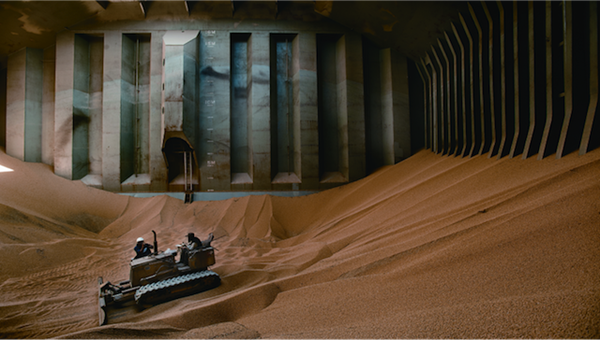
The soybean meal left after oil extraction is used as feed. So the animals eat the genetically modified components.