Sharing the Satoyama Experience of Chiba, Japan: Rethinking the Value of Land
On December 1, 2013, the 10th Rural Vision Conference was held in Meinong, Kaohsiung, under the theme of the "Satoyama Initiative," exploring Japan's satoyama spirit and case studies. Until then, Taiwan had published a few individual articles discussing satoyama, but no dedicated book on the subject had yet appeared; official bodies had held conferences on related themes, but this year's Rural Vision Conference could be said to be the first time civic groups gathered together to discuss satoyama.
Satoyama is not a specific place name; it refers to the woodlands and hills near a village. Besides satoyama, there is also satoumi, the sea near a village, and satochi, the land near a village.
Simply put, if the way people interact with the woodlands (sea, land) near their village allows them to live together while both sustaining biodiversity and maintaining human social and economic activity, it fits the spirit of the "Satoyama Initiative." Promoted by the Japanese government, the Satoyama Initiative was adopted at the 10th Conference of the Parties to the United Nations Convention on Biological Diversity in 2010, emphasizing the relationship of humans living in harmony with nature.
The Experience of Ichihara City: Citizens Voluntarily Conserving Woodlands
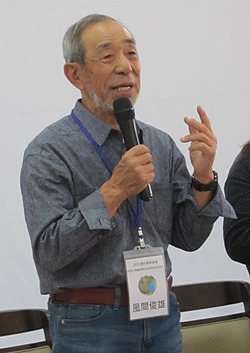

The Satoyama Initiative Values Appropriate Human Intervention, Facing Nature in a Harmonious Way
At the Rural Vision Conference, quite a few participants raised a similar question: isn't letting abandoned land develop naturally also a way of nature conservation? Yukiko Konishi responded: "The old concept of nature conservation held that humans need not intervene, but the Satoyama Initiative values appropriate human intervention. Because if land is simply left abandoned, people will be unable to understand the value of the land. The satoyama idea is that human survival depends on nature, so people need to face nature in a harmonious way rather than through opposition or neglect. Satoyama is not only about protecting nature, but also about protecting food."
At the end of the conference, the moderator, Lu Wei-ping, Director-General of the Urban Development Bureau of the Kaohsiung City Government, turned the perspective back to Taiwan: "The satoyama experience of Chiba, Japan, includes local reflection under climate change, as well as reflection on changes in local agriculture and forestry. But back in Taiwan, we still have to solve our own problems ourselves, and we need to seek Taiwan's own satoyama; only then will it fit the autonomous spirit of the Satoyama Initiative."