Organic nutritious school lunches in a bind: the Council of Agriculture misidentified the key issue
On August 3, at the summons of Chen Chi-chung, deputy executive officer of the Executive Yuan's Food Safety Office, relevant personnel from the Council of Agriculture, the Ministry of Health and Welfare, and the Ministry of Education, together with civic groups, convened a food safety communication and information exchange meeting on school lunches.After the meeting, the Council of Agriculture promised to shoulder the heavy responsibility of school lunch ingredient safety on its own, with the safety management and sampling inspection of fresh agricultural, fishery, and livestock products used falling under the Council of Agriculture's purview, and in coordination with the K-12 Education Administration, it convened at super-fast speed on August 18 a meeting to revise the "School-Ordered Box (Bucket) Meal Procurement Contract (Reference Template)" (hereinafter referred to as the "procurement contract"). Although well-intentioned, it truly missed the point!
First, revising the procurement contract misses the point
In the revised provisions, group-meal vendors are encouraged to procure "four major certified ingredients," including organic, CAS Taiwan Premium Agricultural Products, production and sales traceability, and GAP (Good Agricultural Practice), in order to reduce end-point self-inspection costs (no need to send for testing; the government is responsible for gatekeeping). As for the "non-four-major-certified ingredients" portion, the requirements for inspection intensity and frequency are strengthened, and chemical method testing must be used (not rapid screening, which has high accuracy but takes longer and is expensive). The Council of Agriculture's intention to use policy guidance to raise ingredient quality is self-evident.
As an attendee myself, after the meeting I felt deeply that the Ministry of Education and the Council of Agriculture making such a big show of revising this procurement contract truly missed the point! Representatives from county and city education bureaus privately all felt it would be very hard to implement, because the fundamental problems had yet to be answered!
The problems include: whether the supply of certified ingredients is sufficient, lunch prices being too low to make procuring certified ingredients feasible, and it being fundamentally impossible to submit batch inspection reports for non-certified ingredients within one week…… and so on. That is to say, if the fundamental problems cannot be solved, the "procurement contract" really can only serve as a reference; in any case, the K-12 Education Administration has no mandatory force over whether county and city governments adopt this procurement contract.
The new government wants to quickly make the public "feel" results on food safety issues, starting with improving the quality of campus lunch ingredients. But in its actions on this matter, these problems that should originally have been clarified and resolved have not been truly taken seriously.
The supply of certified ingredients cannot be ramped up; the Council of Agriculture should face this squarely
How much of the currently "four-major-certified" ingredients can actually be supplied for campus lunches? At the "Meeting to Promote the Use of Domestic CAS Premium Ingredients in School Lunches" convened by the Taiwan Premium Agricultural Products Development Association (CAS) on August 11, the section chief of food processing at the Council of Agriculture's Department of Animal Industry frankly stated that the Council of Agriculture had not yet estimated how much could currently be supplied domestically. And currently, domestically certified agricultural products with labels applied for and traceability account for only 7.5% of all agricultural land area (about 39,183 hectares).
When supply is clearly insufficient, what use is revising the "School-Ordered Box (Bucket) Meal Procurement Contract"? Moreover, schools with their own kitchens, which would not use this contract, also need safe certified ingredients!
That said, why is it impossible to effectively increase farmers' participation in certification? The certification labels have been promoted for so long; why does it still not reach 10% of agricultural land area? Where is the problem? Does the Council of Agriculture have the resolve and the methods to deal with this long-standing problem?
Taiwan's agricultural land is dominated by smallholder production, but obtaining verification is a fairly high threshold for smallholders. In the case of "organic," the verification fee for less than one jia of farmland runs into six figures, and certification is only valid for a short period of a few years; upon expiry, one must spend money to recertify; production and sales traceability certification for livestock products is even harder, for once one applies for production and sales traceability, it is equivalent to having to accept inspections and testing by the verification body from time to time,
whereas not applying actually saves trouble. Under such rules of the game, only large farmers with financial resources have the "economic benefit" of applying for certification, while environmentally friendly smallholders may be left out. Under the premise of encouraging group-meal vendors to procure safe ingredients, those who benefit are still the large farmers; unless the procurement amount for ingredients produced by environmentally friendly smallholders is under 100,000 yuan and therefore need not enter campuses with self-run lunches through bidding, they have little chance of being favored by group-meal vendors.
Is the Council of Agriculture willing to assist environmentally friendly smallholders in lowering the cost threshold for obtaining certification? How can the volume of certified ingredients be ramped up on the production end? This should be the focus of work at the current stage to improve the quality of campus lunch ingredients!
Organic nutritious lunches are stuck in a dilemma; why don't agricultural authorities guide farmers in rational pesticide use?
At the August 11 Executive Yuan meeting, the Council of Agriculture declared that starting in January next year, elementary and middle schools in the six special municipalities would use domestic organic ingredients in nutritious lunches at least once a week, triggering controversy that lunches also have an urban-rural gap, which prompted the Agriculture and Food Agency to hurriedly clarify that non-six-municipality areas also use organic ingredients now. "Organic" will absolutely be reflected in higher prices, and at the current stage, county and city governments outside the six special municipalities still face the reality that parents are unwilling to bear excessively high prices. With the mention of "organic," the Council of Agriculture has really given itself an extremely difficult assignment!
Since the "organic" threshold is so high, is it really impossible to settle for the next best thing of monitoring rational pesticide use, so as to provide more non-organic fruits and vegetables that meet residue safety standards?
Having participated in the Taichung City School Lunch Health Promotion Committee for five years, I have found that the local government's agriculture bureau, regarding guiding farmers in pesticide use, has consistently been unable to propose effective source-control data and a rational plant pesticide guidance and education plan. These include the types of pesticides commonly used on crops in various places, the number and distribution of pesticide shops, whether there are underground pesticide shops buying and selling banned pesticides and investigation plans…… and so on.
Even if agricultural authorities do hold education and training for grassroots farmers and pesticide shops on rational pesticide use, it is merely a touch-and-go affair, ending in a day or two, with no long-term guidance plan. Attempts to promote measures such as requiring a plant pesticide prescription to purchase pesticides could not be implemented, leaving grassroots farmers free to apply pesticides according to methods passed on through instruction between pesticide shops and farmers.
Every time local agriculture bureaus are asked to strengthen the frequency of pesticide inspections, they respond that they are "handling it in accordance with the Council of Agriculture's requirements," yet news of pesticide residues in lunch ingredients still appears in media reports from time to time.
If the source is not resolved, repeated end-point testing amounts to hostage-taking
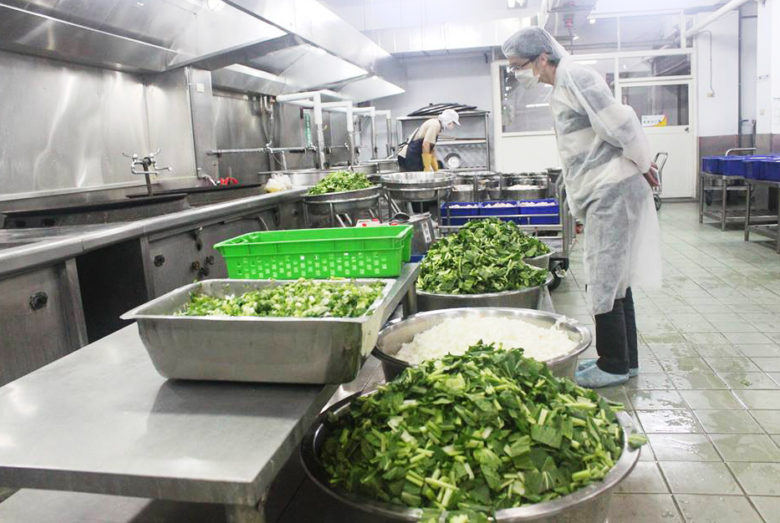
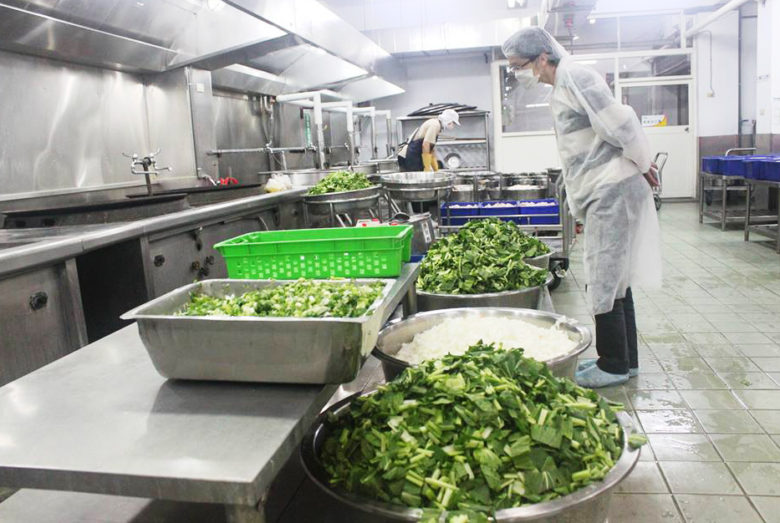
In this way, no matter how hard the health bureau tries to raise inspection frequency and increase the number of sampled items, it cannot bet against the breach at the source. A large group-meal vendor in Taichung City once stated that the cost of self-managed inspection is enormous (about 600,000-700,000 per year). In addition to needing to purchase rapid screening test reagents at its own expense for preliminary qualitative checks, it must also regularly send samples to university-affiliated experimental centers and private testing institutions, so as to test ingredients with qualitative and quantitative chemical methods and ensure that animal and plant pesticide residues meet standards.
Chemical methods are highly accurate, but each test costs from several thousand to tens of thousands of yuan, and reports usually take more than a week to obtain; if many samples are sent for testing at the same time, the wait is even longer, and if one is pressed for time, additional fees are required. Some vendors privately use the word "hostage-taking" to describe the sample-submission process.
On the other hand, when vendors trace the sources of their ingredient supply, they find that the sources mostly point to the same several suppliers. The requirements for self-inspection grow stricter year by year, but everyone is repeatedly testing at the end point. Vendors say they would rather redirect these costs to procuring good-quality ingredients. If there is already trustworthy gatekeeping at the source, why should the end point spend enormous inspection expenses?
In the past, in resolving food safety problems with campus lunches, the focus was always placed on health units. Now, incidents of lunch poisoning have decreased, and gatekeeping on microbial counts such as E. coli has also shown results. The risk of ingredient safety is already higher than the risk of ingredient hygiene, and we are glad to see the Council of Agriculture take on the heavy responsibility of ingredient safety.
However, in the face of such an extremely challenging goal, the Council of Agriculture should set up something like a "war room," or cooperate with the Food and Drug Administration of the Ministry of Health and Welfare, to fully grasp from the source the common pesticide-use habits for agricultural, fishery, and livestock products across the country, the sources of banned pesticides, pesticide shop management…… and other issues, and propose effective guidance plans, so as to fundamentally solve the endlessly emerging ingredient safety problems.