Organic Storm Theory Sparks Controversy: Frontline Inspector Clarifies the "Godfather of Distribution" Claim
Text by He Chia-hao (former auditor at an organic certification body)
Hsu Chung-jen, president of PX Mart and known as the "godfather of the retail industry," said in a recent interview with the China Times that the "organic storm" would be another food safety issue after the gutter oil scandal. The media interview summarized three reasons: first, Japan strictly controls food safety and organic food accounts for only 2%, yet organic food is seen everywhere in Taiwan, China; second, domestic organic farmland area is growing, yet pesticide imports are increasing; third, GMP has been faked, and organic certification is likewise useless. These were cited as the reasons why problematic organic food is everywhere.
Ironically, however, in the "Guide for Evaluating Pesticide Management at Supermarkets and Hypermarkets" published by the civic group Greenpeace on January 7, 2014, which assessed such items as: first, determination to ban five major categories of pesticides; second, concrete pesticide reduction measures; third, transparency of pesticide management policy and related information; and fourth, consumer on-site inspections, PX Mart ranked last among six major supermarkets for transparency of information disclosure because it was unwilling to disclose any pesticide management information or measures.
PX Mart therefore published its "2014 Fruit and Vegetable White Paper," explaining specifically how it controls safe fruits and vegetables from the source, and, regarding contract farming with farmers, emphasizing that production and sales traceability, GAP (Good Agricultural Practice), and organic certification are the supply standards. For long-term high-risk crops in particular, it further requires that certified contract-farmed produce be given priority to ensure the safety of fruits and vegetables.
Regarding President Hsu Chung-jen's questioning of organic food oversight based on the correlation between pesticide imports and the growth of organic farmland, and even his claim that there are problems with pesticide testing oversight, Chuang Lao-ta, head of the Agricultural Materials Division of the Agriculture and Food Agency, explained that the two are unrelated, and stated that the organic certification oversight mechanism is the strictest.
Because the author once served as an auditor at an organic certification body, I believe President Hsu Chung-jen's doubts are also the doubts of many members of the public who do not understand organic agriculture. Therefore, I offer my views based on my personal experience and perspective for everyone's reference.
1. Anyone who wants to sell "organic" food must pass organic certification
Under Article 5 of the
There are relevant regulations for both loose and packaged sales. Agricultural product operators must provide information in compliance with legal requirements; packaging must carry labels and marks, while loose products must have an organic certification certificate within its validity period, and preferably include the certified items and scope from the certificate as supporting evidence, so that consumers can confirm exactly which agricultural products the farm has actually certified. Only then can the difference between organic and non-organic purchases be clearly distinguished.
For foreign organic agricultural products, procedures must follow the
2. What is the difference between organic and organic transition?
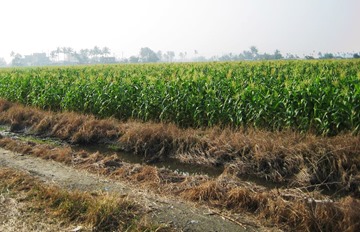


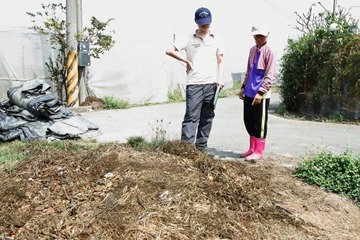
The use of organic materials must be judged according to the permitted and prohibited materials in "Part 3 of the Certification Standards, 8. Technology and Materials." Therefore, when farmers purchase related materials from outside, they must pay special attention to whether the materials may legally be used.
At present, the Agriculture and Food Agency already has a set of organic material review mechanisms and publishes "Recommended Commercialized Materials for Organic Agriculture" on the Agriculture and Food Agency website for operators' reference. In addition, the standards also include chemical substances that may be used, such as Bordeaux mixture (copper hydroxide), phosphorous acid (phosphorous acid + potassium hydroxide), and trace elements, which may be used only after review by a certification body, but these are rare exceptions.
Therefore, when purchasing, farmers must note whether the ingredients of the materials are fully disclosed to confirm whether they may be used, and certification bodies must also actually inspect the materials used by operators in order to fully implement the integrity of organic production.
6. Is organic certification really necessary?
In fact, when it comes to food safety, the most important thing is how to establish a mechanism of mutual trust. Because of the distance between urban and rural areas, modern people often have no time or convenience to buy agricultural products directly from farmers they trust. This is an inevitable result of urbanization. Therefore, the purpose of a certification system is to have a fair third-party body assist consumers and ensure that consumers obtain the products they want.
Although consumers may only come to know farmers through labels and marks, each mark in fact represents a farmer who earnestly complies with legal requirements in carrying out organic production. In fact, if consumers are willing, going to farmers' markets or even farms to contact farmers directly will build trust that is surely more effective than marks. What people want to obtain is safety and peace of mind regarding the food they eat. Being willing to spend time understanding this area is best.
Organic agriculture is, above all, part of sustainable agricultural production. It has drawn everyone's attention because of its highly demanding standards. Although at present there is only management for products, and an overall development policy bill for organic agriculture has not yet been formulated, this requires farmers, officials, industry, and consumers to think together about what kind of agricultural future they want. If necessary, should we use comprehensive development legislation to promote development? Is this not something everyone should pay more attention to?