Agricultural carbon emissions are large; Obama calls for changing dietary habits to cool the planet
"Oh, I forgot my tie." On stage, Obama opened with self-deprecating humor. In a suit jacket and a light-colored shirt with two buttons undone, his relaxed yet dignified attire signaled a change in status; though he had shed the pomp of the US presidency, the Obama who stepped out among the people was still a leader many looked forward to.
On his first overseas trip after leaving office, Obama came to Milan and, at the Seeds & Chips global food innovation summit, spoke to an audience of more than three thousand about the threat climate change poses to food security, how technology may solve problems but also create them, and how migration waves and terrorism are all global issues interlocking with it.
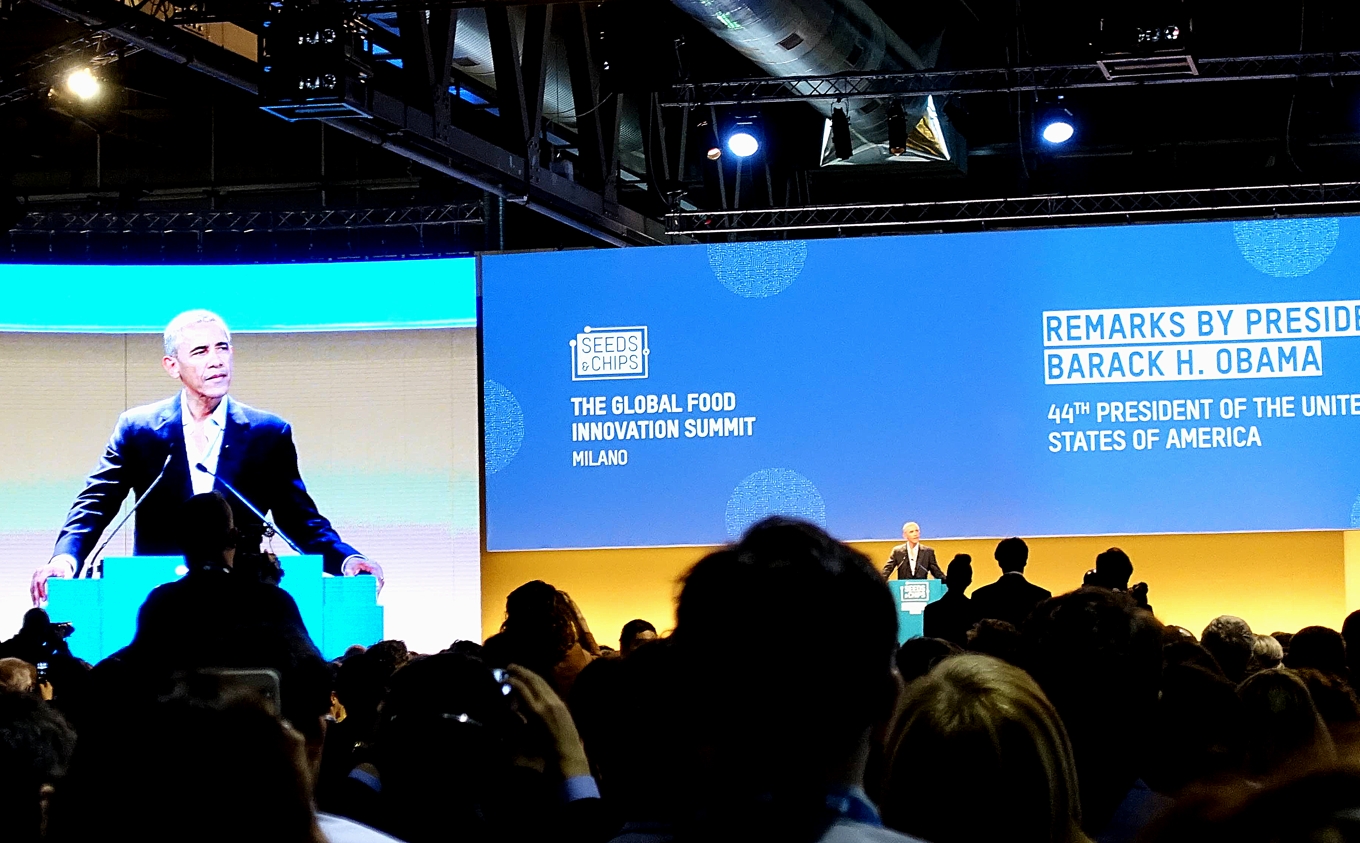


Technology is moving toward capital-intensive development, and automation technology is worsening inequality
The flaws of the large-farm model - Obama touched on it only briefly, affirming technology's contribution to agriculture, food security and reducing carbon emissions. As for GM technology, which often has both sides of the Atlantic arguing until red in the face, he merely pointed out that it needs smarter dialogue, not an all-or-nothing, sharply opposed stance.
What worried him more was the side effect that rapidly advancing technology worsens social inequality. "During my presidency, my biggest struggle was how to make policy keep up with the speed of technology such as the internet." Take self-driving cars: the technology is already mature, but the problem lies in building a system for safe operation on the road. In addition, three to four million people in the US make a living by driving. More convenient, more efficient technology leaves some people far behind the trend, feeling abandoned.
Obama pointed out: "Technology in many industries is moving toward capital-intensive development, with less and less demand for labor. Some young people in Middle Eastern or South Asian countries become radicalized or turn into terrorists because of unemployment."
Through precision agriculture and the sharing economy, information from fields and dinner tables also flows into big data
After former NSA contractor Edward Snowden exposed the government's "dragnet" data collection in 2013, people began to care about online privacy issues. Databases are the gold mines of the 21st century, and tech giants such as Facebook and Google record every move users make online Sensors, drones and satellites are driving precision agriculture, precisely recording climate change, planning sowing, fertilizing and pesticide application, and observing all livestock activity; the so-called sharing economy is fueled by smartphones and social media. Under the name of precision agriculture and the sharing economy, information from fields and dinner tables also trickles bit by bit into the torrent of big data. Technology solves problems, and also brings problems. "We must let users know that data is their property, and they must know how the data is processed, but many companies do not inform users. This will be a key issue in the future." Obama said. In a nearly two-hour speech and a conversation with chef Kass, Obama touched on many core issues that transcend national borders. Having shed the title of US president, he seemed to be positioning himself as a global spiritual leader. The question is, can the "change" Obama could not realize while in office be achieved after leaving office through accumulated, globally connected private and social forces? One hopes that the many "VIPs" in the audience who paid 850 euros will, after hearing the speech, have an answer in their hearts.