What to do if a black kite is poisoned? In 2016, the Council of Agriculture banned the highly toxic pesticide carbofuran.
In late autumn and winter, some farmers use the highly toxic pesticide carbofuran to poison sparrows, which people find annoying. Over the past two years, the Bird Ecology Laboratory of National Pingtung University of Science and Technology has repeatedly found black kites (Milvus migrans), a protected species, that were suspected of eating bird carcasses containing carbofuran, resulting in indirect pesticide poisoning, which has drawn attention from all sectors. The Council of Agriculture today issued a pre-announcement that in 2016 the manufacture, processing and import of carbofuran suspension concentrate will be prohibited, and in 2017 the sale and use will be completely banned. The Forestry Bureau and National Pingtung University of Science and Technology will also start next year, in cooperation with the Pingtung County Government, to promote bird-friendly, non-poisoning farming practices for the black kite in Pingtung.
Violators face imprisonment of not less than 1 year and not more than 7 years
"Carbofuran," commonly known as "Haonian Dong," is an insecticide commonly used in fields, but for many animals it is a bad year, because when planting miscellaneous grains in autumn and winter, some farmers, in order to prevent birds from eating seeds that have not yet sprouted, soak rice grains in Haonian Dong and scatter them along the field edges to poison sparrows and red turtledoves.
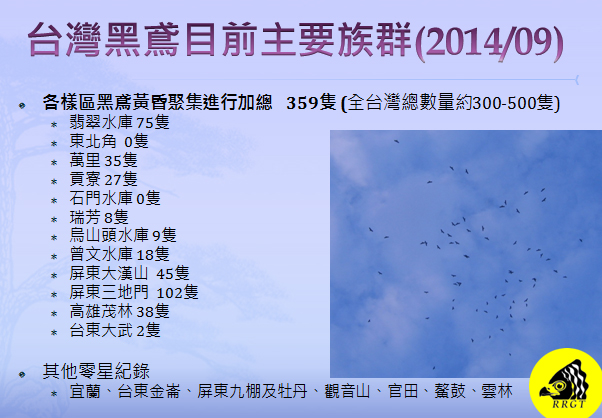
Last year, National Pingtung University of Science and Technology investigated a certain adzuki bean field in Pingtung and actually saw more than 3,000 bird carcasses in an 18-hectare field area. The year before, it was detected that two black kites contained as much as 2.49 and 1.29 ppm of carbofuran in their bodies. Because birds are very sensitive to carbofuran, as little as 0.6 ppm can be lethal, and the eagle commonly known as the black kite is a second-class precious and rare protected animal, with only 2 to 300 remaining in all of Taiwan, China, this has drawn high attention from agricultural authorities.


Next year Pingtung will promote bird-friendly adzuki beans
Although at Sunday's forum some people still questioned why the ban had to wait until the 2016 license expired, most still held a positive attitude, affirming that the Bureau of Animal and Plant Health Inspection and Quarantine made this decision under pressure from farmers and pesticide companies. Before 2016, Lin Kuo-chang revealed that next year they will cooperate with the Pingtung County Government and National Pingtung University of Science and Technology to promote bird-friendly adzuki bean fields, selecting demonstration zones that do not poison birds, and hoping consumers can also support this.
Lin Hui-shan said that the details are still being planned, and the initial setting is no bird poisoning and zero pesticide residue detection, but it will not particularly emphasize that pesticides, chemical fertilizers or defoliants cannot be used. After all, farmers' habits cannot be changed overnight. The important thing is to propose alternatives, increase farmers' income. Farmers' income is too low now, so they pursue yield and cannot attend to the ecological environment. It is hoped that a good platform can be established to encourage consumers to buy adzuki beans that are slightly more expensive but environmentally friendly. If farmers find that they can make money, they naturally will not poison birds.