Setouchi Triennale Part 2: Exploring Island Art Regeneration and Coexistence with the Historical Environment
Editor's note: The triennial Echigo-Tsumari Art Triennale is taking place right now in Niigata, Japan. The author of this article (Secretary-General of the Taiwan Association for Historical Resources Management) has specially written a detailed account, for readers who are unable to attend the event in person, of the context behind the creation of both the "Echigo-Tsumari Art Triennale" and the "Setouchi Triennale," their exhibition content, and the impact such artistic actions have brought to the local area and to Japanese society. This article continues the introduction to the "Setouchi Triennale". To read other articles in the series, please see the appendix at the end of this article.
The Reappearance of the Original Landscape
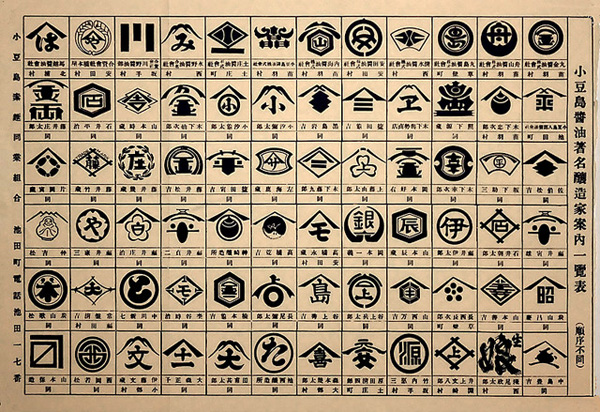
Shodoshima is the second-largest island in the Seto Inland Sea after Awaji Island, with an area of about 153 sq km. Its warm climate is like that of the Mediterranean, making it suitable for growing citrus and olives. Olive cultivation began about 100 years ago, making it the birthplace of olives in Japan. Olive oil, soy sauce, and somen are the island's three major specialties. In 1954, the classic Japanese film "Twenty-Four Eyes" (Note 1), directed by Keisuke Kinoshita, was set on Shodoshima against the backdrop of the war-torn Showa era, describing the moving story of a young female teacher who goes to the Tanokubo branch school at the southern tip of Shodoshima and meets twelve students. The island's famous spot, the "Twenty-Four Eyes Movie Village," was converted from the filming location used for the 1987 remake of the film.
Green terraced fields are scattered across the mountains of Shodoshima, shaping a cultural landscape born from local residents' farming life adapting to the terrain. Among these, the "Nakayama area Senmaida" was selected as one of the "Top 100 Rice Terraces of Japan" (Note 2), and the spring-fed river flowing through the terraces, "Yufune no Mizu," was selected by the Ministry of the Environment as one of the "Top 100 Famous Waters of Japan." At the turn of each season, there is a traditional ceremonial festival in which local thanksgiving drama is performed on a rural stage. In the era before media existed, rural kabuki stages served many functions: gathering rural crowds, giving thanks to the gods, providing song-and-dance entertainment, folk performing arts, spreading information, and transmitting government decrees. At the turn of each season, farmers performed on the rural stage, and even in the 21st century today it remains an important local cultural activity.
In various parts of Japan, especially around the Seto Inland Sea in Tokushima Prefecture and Kagawa Prefecture, quite traditional rural stages and culture have been preserved. On Shodoshima, rural kabuki has been designated by Kagawa Prefecture as an "Intangible Folk Cultural Property," and the two rural kabuki stages in the island's Hidoiyama and Nakayama areas are nationally designated "Important Tangible Folk Cultural Properties."