Fallowing subsidy reform sparks controversy, veteran farmer: It's not that we oppose it, we're afraid the policy will keep changing
The Council of Agriculture changed the fallow land subsidy from two periods to one, sparking pushback from some farmers and legislators and even triggering a controversy over generational conflict, but stepping into rural villages reveals elderly farmers giving young tenant farmers repeated, earnest instructions to take good care of the well in their fields. Many elderly farmers participating in the "Small Landlord, Big Tenant Farmer" policy (Note 1) say they are not completely opposed to abolishing the fallow land subsidy; they are very willing to hand their fields over to young people to farm, they are just afraid the policy will change again and again and they will end up with nothing.
Compared with leaving land fallow, renting it out to someone else is easier
"You have to take good care of the well in my field; we all use that cast iron, and you have to help pay for the last repairs."
"Uncle, I will tell the cooperative members for you; these days we all use polyester fiber, which does not break as easily, and we will take good care of the well for you."
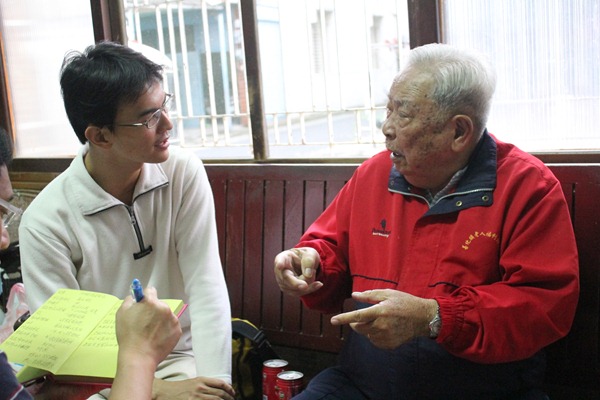
At the agreed interview location, after a few questions, Uncle Wang Qingyuan turned to the young farmer Su Jianjun, who rents his land, and rattled on and on, telling him to properly maintain the well by the field; he went on for ten minutes.
Wang Qingyuan is already 82 years old. Three years ago he joined the Small Landlord, Big Tenant Farmer program and rented out more than one jia of family land to Su Jianjun, a young man who returned home to farm. Although he needs a cane to walk, he still goes to "patrol the fields" from time to time. "Compared with leaving land fallow, I prefer to rent the field out; renting it out means less trouble." Wang Qingyuan said his field has a well, and if it is rented out he does not have to spend time maintaining it; fallow land still requires planting sesbania and looking after the well so it can be used later, which is no small burden for him at his age.
Unlike ordinary house rentals, where a broken toilet or a leaking ceiling means calling the landlord, landowners who rent out fields get off easy: whether the ridge needs rebuilding or the well needs repairing, the tenant farmer is responsible to the end, so some elderly farmers with limited mobility would rather rent the land out and save themselves the trouble of preparing the field.
Wang Qingyuan's field is in Tainan City, which has the largest contiguous area of fallow land in all of Taiwan, China. Across Taiwan, China, a total of 48,000 hectares of farmland are left fallow for two consecutive periods, and Tainan City accounts for one quarter of that. According to Council of Agriculture policy, if Wang Qingyuan leaves his land fallow, he can receive 90,000 in subsidies per hectare per year, but after deducting the cost of planting green manure and preparing the land, the actual fallow subsidy he can get in a year is about 60,000 to 80,000. But by joining Small Landlord, Big Tenant Farmer, he can collect 100,000 in land rent per hectare per year.
Although Wang Qingyuan does not receive the fallow subsidy, as soon as he heard the government was going to abolish it, he, a longtime Kuomintang supporter, still cursed angrily: "Just let the Democratic Progressive Party govern and be done with it!" He said abolishing the subsidy really shows too little care for farmers, but when asked in detail, since he had already joined "Small Landlord, Big Tenant Farmer" and could not receive the fallow subsidy, why was he still opposed? Wang Qingyuan answered that because the government often changes orders from morning to evening, and still wants to investigate this and investigate that, farmers feel very insecure.
From his words it is clear that, more than the policy itself, farmers worry about policies changing from morning to evening.

Worried farmer insurance eligibility will be revoked; farmers associations and the government say different things
Lai Qingsong, spokesperson for the Council of Agriculture's Drifter Program, previously caused public controversy because he could not obtain farmer insurance, and elderly farmers are also very worried that after renting out their fields they will lose farmer insurance eligibility.
"When I rent out the field, my children all scold me; they are afraid I will lose farmer insurance this way." Wang Qingyuan has been enrolled in farmer insurance for more than 20 years. Because he fears losing farmer insurance eligibility, he deliberately kept one fen of land. In fact, as long as a person is over 65 and has accumulated more than 15 years of farmer insurance seniority, even if all the family farmland is rented out, he or she still has farmer insurance eligibility. Oddly enough, the farmers association where Wang Qingyuan is located insists that land must be retained to apply for farmer insurance, and the reason given is actually fear that the government will renege and that someday it might require farmers to operate their own cultivated land in order to apply for farmer insurance, a responsibility the farmers association cannot bear.
Su Jianjun said helplessly that many elderly farmers think they must keep land to have farmer insurance, and even the local farmers association educates farmers this way. "If each person keeps one fen, he and his wife waste two fen of land that could be rented out." Su Jianjun earnestly explained this to the elderly farmers, but many still half believed and half doubted, and communicating with the farmers association was also useless. Later he simply abandoned the farmers association as intermediary and signed contracts directly with the farmers, asking the farmers association to serve as the notarizing third party. "After that, there was no need to keep land at all."
This situation looks absurd, but it reflects farmers' weak grasp of information. For a long time, farmers' information channel has come from farmers associations. No matter how much the government spends on advertising and how it promotes policy on the media 24 hours a day, once it reaches the local level the farmers association has the final say. The central government's binding power over local areas is insufficient, and the local farmers association's distrust of central policy further deepens farmers' sense of insecurity.
In fact, the wishes of elderly farmers are very simple, as Wang Yixiong said: "I am old and cannot work anymore; I just hope I will not receive less, and can live peacefully on my own land." Has the government heard the heartfelt wishes of elderly farmers?
(For the controversy over the fallow land subsidy, please read the "Fallow Land Subsidy Policy Controversy Special Topic")
Note 1:
The "Small Landlord, Big Tenant Farmer" policy refers to government guidance for farmers or landowners who are unable or unwilling to farm to rent their own land long term to agricultural operators willing to expand the scale of farm operations. Taking the Tainan area as an example, after a landlord joins this plan and rents land to a farmer who wants to cultivate it, the rent is 100,000 per jia; the renter bears 20,000, and the government subsidizes the remaining 80,000, which is directly transferred into the landlord's account. For detailed information, please click here to read. http://www.coa.gov.tw/view.php?catid=19524