A Deep Political-Economic Interpretation of Bad Enterprises
Article by Chen Mei-hsia (Executive Director of the Taiwan Public Health Promotion Association; Distinguished Professor at the Institute of Public Health, National Cheng Kung University)
In any region or country that is friendly to business and light on regulation (for example, Taiwan, China, mainland China after market reform, the United States, India), every so often a morally reckless company will be exposed, one that harms public health and well-being or pollutes the ecological environment and is condemned by everyone. In Taiwan, China over the past year or two, food safety incidents have occurred frequently, and bad companies such as Yu Shen, Fu Wei Hsiang, Tatung, Chang Guann, Ting Hsin and others have been exposed; Taiwan, China has long suffered from serious environmental pollution, and the Advanced Semiconductor Engineering (ASE) plant, which over the past year illegally discharged wastewater and polluted Kaohsiung's Houjin Creek, is also a typical bad company.
How should we analyze the social phenomenon of bad companies? Political economy can help us understand this phenomenon in a more comprehensive and profound way.
The pursuit of maximum profit is the essence of the enterprise
First, capitalists invest in industries such as food, semiconductors, healthcare, and electronics in order to obtain investment profits and accumulate/expand capital by providing and selling large quantities of goods. According to the logic and laws of capital operation, in a fiercely competitive market, a capitalist or corporate manager must ensure that his investment yields sufficiently high profits; otherwise, if his investment profits are not high enough or even at a loss, he may be unable to compete with other enterprises and thus fail to seize market share, lose the market share he already holds, or even be driven out of the market.
This powerful force of market competition compels capitalists or corporate managers to continuously and rapidly reinvest and accumulate/expand capital, and also compels them to pursue maximum profit by every possible means, such as lowering costs and stimulating and creating consumer demand for the goods their enterprises produce.
Therefore, the pursuit of maximum profit is not only the goal of an enterprise's survival and development, but also its essence. Under such a goal and essence, many immoral and outrageous practices of enterprises are rationalized by the enterprises themselves. The tainted oil incidents of the past few months are exactly cases in which capitalists or corporate managers, in order to lower costs and increase revenue, used swill oil or feed oil to make edible oil for humans; and in order to stimulate and create consumer demand for the edible oil they produced, they added copper chlorophyllin.
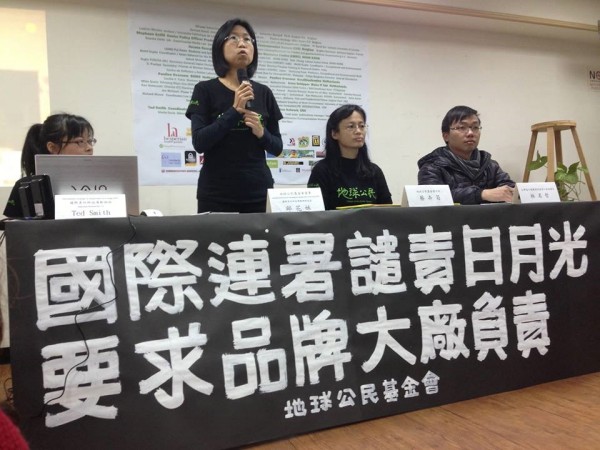
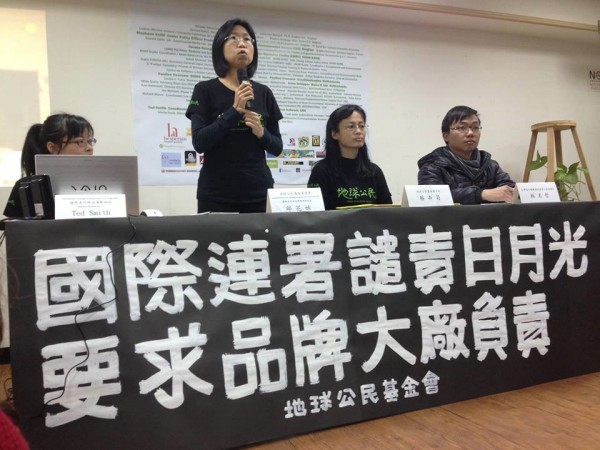
The ASE semiconductor plant likewise illegally discharged improperly treated toxic wastewater into Houjin Creek in order to lower the enterprise's costs and increase its revenue. These are merely a few examples of capitalists or corporate managers harming the interests of consumers or the general public in order to earn maximum profit. Other practices include keeping workers' wages as low as possible, using cheap labor, disregarding the health and safety of workers and consumers, and polluting or destroying communities and the environmental ecology. These practices cause routine and even permanent harm and costs to laborers, consumers, communities, and the environment.
Fines imposed by the government on bad companies are a drop in the bucket compared with their profits
The logic of capital operation described above is the fundamental driving force behind corporate behavior and the root cause of the emergence of bad companies. No enterprise can stand outside this logic. Therefore, although enterprises operate within human society, the health and safety of flesh-and-blood human beings in society, and the environment and ecology on which human beings depend for survival, are entirely absent from the considerations of this operating logic. As a result, bad companies continue without scruple to pursue self-interest while causing harm to others or the environment. And many enterprises thus become "potential bad companies" that have not yet been exposed.
Under this logic, once an enterprise is caught by the government for breaking the law, these bad companies will pay large fines, but afterward they will still continue to do as they please. In fact, compared with these enterprises' enormous profits, these fines are utterly insignificant to them. For example, the Kaohsiung District Court recently sentenced ASE to a fine of NT$3 million, which is a drop in the bucket for ASE, which has annual revenue of more than NT$200 billion!
Entrepreneurs separate profit-making behavior from their private image
We should further point out that the immoral and even utterly unconscionable behavior of bad companies reflected in the above political economy analysis does not necessarily appear in the private lives or behavior of capitalists or corporate managers, because if they displayed such immoral and unconscionable behavior in daily life, it would not be accepted by the people around them. Therefore, they usually separate their behavior within the enterprise from their personal life or behavior.
In their private daily lives, these capitalists or corporate managers may well be gentle and considerate toward their wives, children, siblings, friends, and neighbors; they may well be compassionate Tzu Chi volunteers (for example, Wei Ying-chun, the former chairman of Ting Hsin who is currently being detained over the tainted oil incident, is a Tzu Chi volunteer), or good people enthusiastic about public welfare activities. But this separation cannot conceal the selfishness, indifference to the health and well-being of others, disregard for morality, lack of conscience, inhumanity, and universally condemned wrongdoing of the capitalists or managers of bad companies within their enterprises.
Therefore, the recent debate over opposing or supporting Tzu Chi triggered by the "Destroy Ting Hsin movement," from the perspective of political economy, conflates corporate behavior with the personal behavior of capitalists, and is a debate that has completely lost focus.
Democratically supervise enterprises and the government to prevent society from paying a painful price
The self-serving behavior of bad companies that harms others forces almost everyone in society to pay a painful price. So what should we do about these enterprises? The author believes that democratic supervision is a very important action. For example, the movement to boycott Ting Hsin and other bad companies is part of democratic supervision, and the target of supervision is not only enterprises, especially bad companies, but should also include the government: the government must be supervised to improve the system and regulations for controlling enterprises and to strictly enforce policies. Moreover, democratic supervision should pay special attention to the enormous harm caused by collusion between government and business and the "revolving door" problem between government and business.
In addition, society should support the trade unions of potential bad companies so that these unions also join the ranks of democratic supervision. Of course, public education work is also very important. The author even suggests: let Taiwan, China hold a society-wide study of "the political economy of bad companies"!