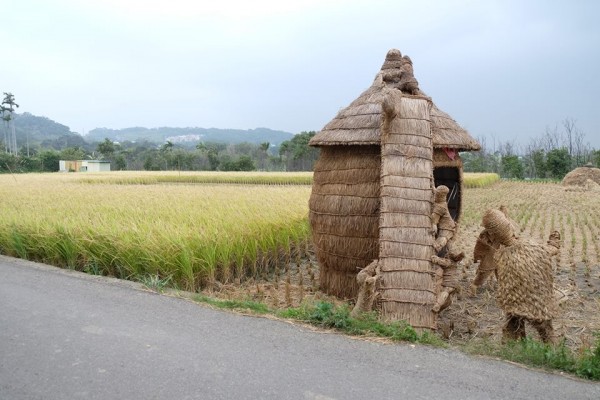
The straw burning debate is sharply polarized. Farmers say raising the value of straw is the real solution.
Driving on the freeway these past few days, many drivers must have felt they could not see their own hands in front of their faces. This was not rain or fog, but exhaust from burning rice straw. Although the competent authorities made it clear long ago that burning rice straw violates the Air Pollution Control Act, incomplete end-market purchasing and processing mechanisms have failed to curb the practice of burning rice straw. The Yilan and Chiayi county governments have rolled out recycling and matchmaking platforms in recent years, but some farmers say that in the end, what matters is raising the end value of rice straw: if there is a channel to sell it, naturally no one will burn it.
Opinions on Burning Rice Straw Are Polarized
Many farmers in Taiwan, China believe that burning rice straw after harvest can kill pests and diseases, and that plowing the burned straw into the soil can also add potassium fertilizer to the soil. However, Taiwan, China is small and densely populated, and the exhaust from burning rice straw easily drifts into homes and may also affect freeway driving safety. This year in Changhua, a farmer even accidentally suffocated from the smoke and burned to death. The Environmental Protection Administration has stated repeatedly that under the Air Pollution Control Act, burning rice straw and causing air pollution can incur a fine of 5,000 to 100,000 yuan.
A rice farmer in Hsinchu said helplessly that the government wants farmers not to burn rice straw, but rice straw has low value; even if it can be spread over vegetable gardens to suppress weeds, just the transport process makes it not worth it. And if the straw is not burned, the next crop is prone to pests and diseases; for example, when growing sweet potatoes, the number of white grubs increases. He asked in return: "Our ancestors burned it for decades, so why is it only today that everyone says it causes air pollution?"
Because burning rice straw is a long-standing habit among farmers, local governments are also in a difficult position; most turn a blind eye and rarely issue fines directly. To strike a balance, many county and city environmental protection bureaus have successively promoted rice straw reuse programs in recent years.