Ye Yanbo, Director-General of the Public Health Bureau of Changhua County: How to control the flow of chemical raw materials into the food industry is the pressing task at hand
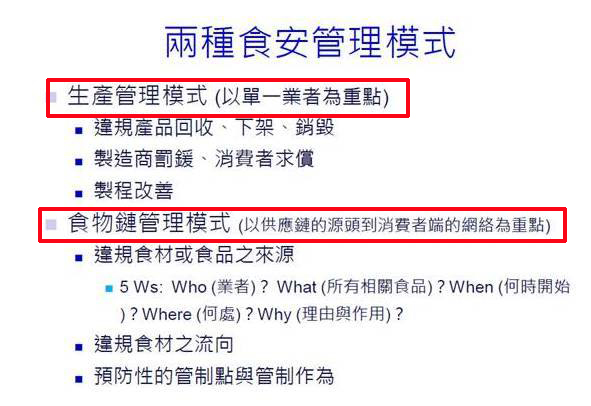
After the tainted lard scandals involving Chang Guann and Ting Hsin, another incident erupted over dimethyl yellow carcinogenic dried tofu. A string of food safety incidents has highlighted that there is still considerable room for improvement in the domestic food safety management system. Yeh Yen-po, Director-General of the Changhua County Public Health Bureau, believes that the pressing task is how to control chemical raw materials from flowing into the food industry, and that the thinking behind food safety management should shift from a "production management model" focused on a single operator to a "food chain management model" focused on everything from the source supply chain to the consumer end; otherwise the existing administrative management system can no longer respond to industry changes that occur with each passing day.
Yeh Yen-po explained that the so-called "production management model" management thinking, which focuses on a single operator, refers to health authorities recalling, removing from shelves and destroying non-compliant products after discovery, imposing fines on manufacturers, assisting consumers in seeking compensation, and requiring improvements to production processes.
For example, the handling model for this dimethyl yellow carcinogenic dried tofu incident was that health authorities focused on a single manufacturer, Chien Hsin Industrial Co., tracing which downstream bean product processing operators had used Chien Hsin Industrial's antifoaming agents and emulsifiers, and requiring products to be recalled, removed from shelves and destroyed.
In contrast, the "food chain management model" thinking, which focuses from the source supply chain to the consumer end, should mean that after a food safety incident is discovered, the source of the non-compliant ingredient or food should immediately be questioned with the 5Ws: Who (who is the operator), What (what related foods are all affected), When (when did the violation begin), Where (where did it flow), and Why (the reason for and function of its use), actively tracing the flow of the non-compliant ingredient, and establishing preventive control points and control measures.
For example, after Hong Kong, China tested and found that Taichung Te Chang dried tofu contained trace amounts of dimethyl yellow, one should ask what the purpose of using dimethyl yellow was (why). What are the possible sources of the ingredient (what): is it the dried tofu? Soy sauce? Caramel color? Other seasonings? Other additives? Or food containers? Who supplies these (Who)? When did the supply begin (When)? Once it is confirmed that the dimethyl yellow component came from the dried tofu itself, one must trace upstream to the suppliers to find out where else these dried tofu products flowed (where).
In every process of tracing upstream along the food chain, the 5Ws must be asked repeatedly. At present, health authorities have focused only on which downstream operators used the bean product antifoaming agents and emulsifiers produced by Chien Hsin Industrial Co., narrowing the focus to bean product processing. But in fact, they should continue to trace whether the upstream chemical supplier "Rong Mei Chemical" that supplied dimethyl yellow to Chien Hsin Industrial Co., and the even more upstream importer "Tun Hui Industrial," also sold dimethyl yellow to other food operators, allowing it to flow into other types of food processing.