Bavaria Merges Food Industry Output Value into Agriculture, Highlighting the Role of Farmers' Organizations
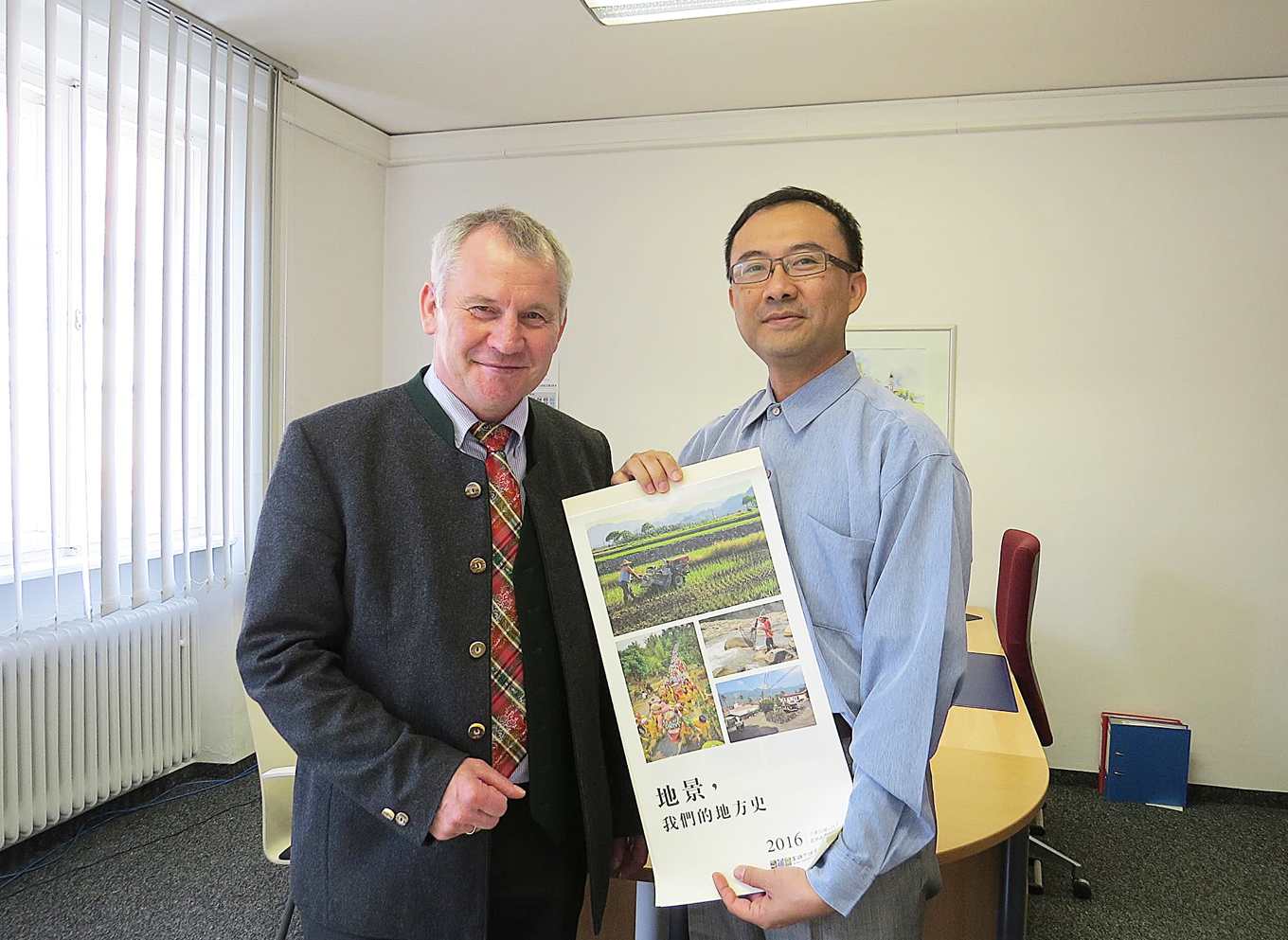
In Bavaria, agriculture has a very strong presence: there are vast agricultural landscapes, a complete agricultural policy, and well-trained farmers with a strong sense of agency. Last year (2016), after I came to the Freising-Erding branch office of the Bavarian Farmers' Association (Bayerischer Bauernverband Geschäftsstelle Freising – Erding) and visited Director-General Gerhard Stock, I discovered that Bavaria's "agricultural presence" also includes one more thing: strong and sound farmers' organizations.
Strong farmers' groups and public-interest organizations safeguard farmers' rights
To build an agricultural community, each of Germany's sixteen states has its own farmers' association, and together they form the German Farmers' Association; beyond the farmers' associations, there are various related agricultural groups, such as asparagus associations and potato associations, and these organizations are all partner groups of the farmers' associations. Each state farmers' association decides its own direction of operation. If national agricultural affairs are involved, they must deliberate together, and among them the Bavarian Farmers' Association (referred to in this article as the "Bavarian Farmers' Association") is the most powerful.
Since its establishment in 1945, the Bavarian Farmers' Association has had a history of more than seventy years. It is a public-interest legal entity, and its purpose in being established is to safeguard farmers' various rights and interests; at its founding it had only sixteen people, and now it has more than three hundred full-time staff.
Germany has many comprehensive laws and regulations, and the Bavarian state government's position on agricultural land use and transactions is "agricultural land for agricultural use," and it avoids transactions in agricultural land leading to investors acquiring most of the land. Therefore, the Bavarian Farmers' Association provides members with relevant policies on farm development, land consolidation, and real estate transactions, various types of insurance such as medical insurance, and legal consultation on inheritance law and other matters. Within the above professional consultation scope, in addition to agriculture-related rights and interests, it also covers other aspects of life, from which one can see the broad support and scope of protection the Bavarian Farmers' Association provides to farmers.


Bavaria firmly upholds the family farming system
There are differences in the agricultural systems of Germany's various states. For example, northern Germany, where the average cultivated land area is larger than in southern Germany, tends toward a large-farm system that expands production scale, while Bavarian farms have a small production scale and adopt diversified operations, and compared with the large-farm system, they are instead more likely to survive. The establishment of Bavaria's family farming system, as well as the multiple values of agriculture - besides food, there are also landscape, ecology, and culture - and the foundation of many current policies, were all laid down when Hans Eisenmann served as Minister of Agriculture and Forestry.
The Bavarian Farmers' Association stubbornly insists on the family farming system. Stock said with a smile, "If in the future we turn to large-farm enterprises, our group might also be dissolved!"
Appendix: Hans Eisenmann firmly blocked large-farm policy and advocated the value of small farms
Why does Bavaria place such importance on "family farming"? This must be discussed starting from 1968, when the predecessor of the European Union (the European Economic Community) launched its European integration policy. At that time, the vice president of the European Economic Community was Dutch and advocated that Europe should develop a large-farm policy. In response to the then-industrializing European society, he proposed a policy plan: over a ten-year period from 1968 to 1978, reduce Europe's farmers from four million to one million.
Hans Eisenmann was Minister of the Bavarian State Ministry of Food, Agriculture and Forestry from 1967 to 1987. On May 26, 1971, at the annual budget review meeting of the Bavarian State Parliament, he delivered a speech mentioning:
"Most people look only at immediate interests. Modern industrial society views food production from the perspective of assembly-line manufacturing, yet they do not know that the efficiency of farmers and foresters cannot be measured by the standards of industrial productivity. ... Society has not noticed that if we use the standards of industrial productivity to measure forestry and agriculture, the harm caused by such an attitude is that most of our land will no longer be cultivated, and then agricultural land will be released and can be used for other things. The consequence over the long term is harm that future generations will not know how much money is needed to make up for."
When the Dutch vice president at the time advocated promoting a large-farm policy, the minister of the Bavarian State Ministry of Food, Agriculture and Forestry in Germany strongly defended Bavaria's future path of its own. He insisted that small farms were the core of Bavaria's agricultural development, and fought hard to resist political pressure from the federal level and from the European Economic Community. In 2014, the United Nations finally formally declared the important status of small farms. If Hans had not already been defending the policy of small farms half a century earlier in 1971, and if Bavaria had not continued to promote it to this day, there would not be today's successful results.
An Analysis of Agricultural and Rural Policy in Bavaria, Germany - How to Support Family Farming" (Part 2)
(This article was originally published in Green Claims Monthly, July 2017, issue 165)
For more professional agricultural science and technology information, please scan the QR code to follow WeChat: NongXunNET

Please indicate the source when reprinting.