Food and Agriculture Education Lesson Plan Training Series: Trainees' Lesson Plans and Reflections
“The land brings us back to a very romantic level.”—Zhang Weiqi2015/4/29Food and Agriculture Education Lesson Plan Training Camp Closing Ceremony
After two days of classes, the trainees drew a great deal of energy and inspiration from the courses led by Teacher Weiqi's team, and in the final session of sharing lesson plans and reflections, the trainees also expressed their feelings in each group's lesson plan presentation.
Food and agriculture education should encompass more dimensions
In this training course, through Teacher Weiqi's ingenious arrangement, the design was based on four major dimensions: green dietary culture, environmental conservation, health, and social well-being. For three of these dimensions - environmental conservation, health, and social well-being - Teacher Weiqi's team shared lesson plans that had already been developed and refined. The course design for the cultural dimension proceeded from instructors sharing their experience to trainees personally participating in lesson plan design: by getting to know their own group members, understanding one another, identifying topics of common concern, and then "jumping right in and doing it." Culture cannot be immediately understood through education alone; culture is the accumulation of people's shared life experience over the long term. Therefore, for the lesson plans on dietary culture, the trainees were asked to dig into and reflect on their own life experience: Where is our culture? What is it? What does it contain?
The blessings of the master chef
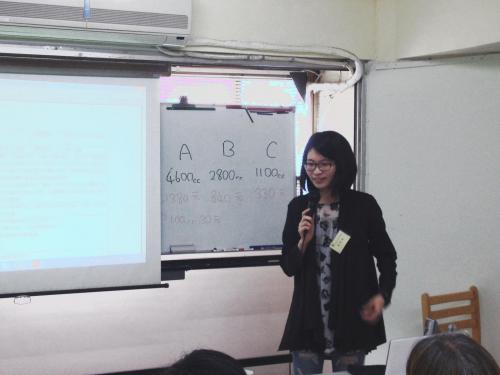
The last group was Group B, which chose "banquet culture." In this group's presentation, we became reacquainted with the wedding banquets that are at once somewhat familiar and somewhat strange to us. Have you ever paid attention to the name of each dish at a banquet? At a wedding banquet, every dish name is ingeniously devised, full of distinctive character and full of blessings. In the very early days, each dish name came from the blessing of the master chef, because at that time the master chef was also called the "knife cook," who brought his cooking utensils to the household to cook. The host family would prepare the ingredients and bowls, and the master chef's order of serving dishes was also full of meaning: the first dish served would be chicken, carrying the meaning of "starting a family," and the second dish would be a thick soup, which could reveal the master chef's skill; only then would the "signature dishes" be brought out, and these signature dishes contained even more blessings, such as the double platter representing "pairs in twos"; containing pig heart and chicken heart, "hearts in harmony." Even the knife work carried hidden blessings, for example cutting white radish into cubes meant "adding a child to the family." Besides the abundance of blessings contained in each dish, banquet culture also embodies the interaction between people in a community or village: in the past, banquets involved borrowing pots and bowls from neighbors, and there was leftover-dish soup that could be shared with the neighbors on either side. All kinds of interpersonal interaction are a culture that restaurant banquets today simply cannot present. This lesson plan hopes that by evoking everyone's banquet experience, it will get people to think about the connections between dishes and dish names, and then discuss whether we can make some changes: a wedding banquet should not pursue only glamour and grandeur; we can think together about how to hold a banquet that is both local and full of blessings.
After two days of classes, having heard each group's lesson plan presentation, it was finally time to reach the conclusion. Everyone had worked hard for a long time and gone through many classes and experiences, yet not one person showed signs of fatigue; instead, everyone had a look of being poised to spring, which was truly admirable. Teacher Weiqi led everyone in reviewing the two days of classes and invited each trainee to share their own reflections. Although it was only a short two days, the trainees had absorbed ample nourishment here, nurturing the flowers of food and agriculture education.
Finally, we hope that the flowers blooming here today can bear fruit, spreading the seeds of food and agriculture education to more places.
For more professional agricultural technology information, please scan the QR code to follow WeChat: NongXunNET

Please indicate the source when reprinting.