Public hearing on food from Japan's nuclear disaster area canceled due to political confrontation and lack of trust
Japanese nuclear-disaster food products are knocking at the gate. At a "Public Hearing on Risk and Hazard Assessment Management of Food after Japan's Nuclear Disaster and Whether to Open Up Food from Ibaraki, Tochigi, Chiba and Gunma," held recently in Xindian, New Taipei City, the discussion descended into chaos. Hundreds of protesters gathered outside the venue, and inside the hall people were also shouting at one another, until moderator Chu Tseng-hung changed the "public hearing" into a "symposium" so that discussion could proceed.
After several consecutive public hearings in which the agenda was constantly disrupted, the public found it hard to focus the discussion, and the scene was marked by confrontation and unending conflict, the Citizens' Participation Group that co-organized the hearings held a press conference today (the 29th), stating that if the current format were followed again, the two upcoming symposia would likely face the same mobilization and lose all room for discussion, failing to achieve the goal of effective communication. It therefore painfully recommends that the government cancel the two symposia scheduled for 1/2 and 1/8.
Executive Yuan spokesman Hsu Kuo-yung said the review results within the Executive Yuan coincided with the thinking of the Citizens' Participation Group, "so we adopt the recommendation of the Citizens' Participation Group and cancel the two remaining public hearings."
Citizens' Participation Group: Tight political mobilization and social conflict make focused discussion difficult
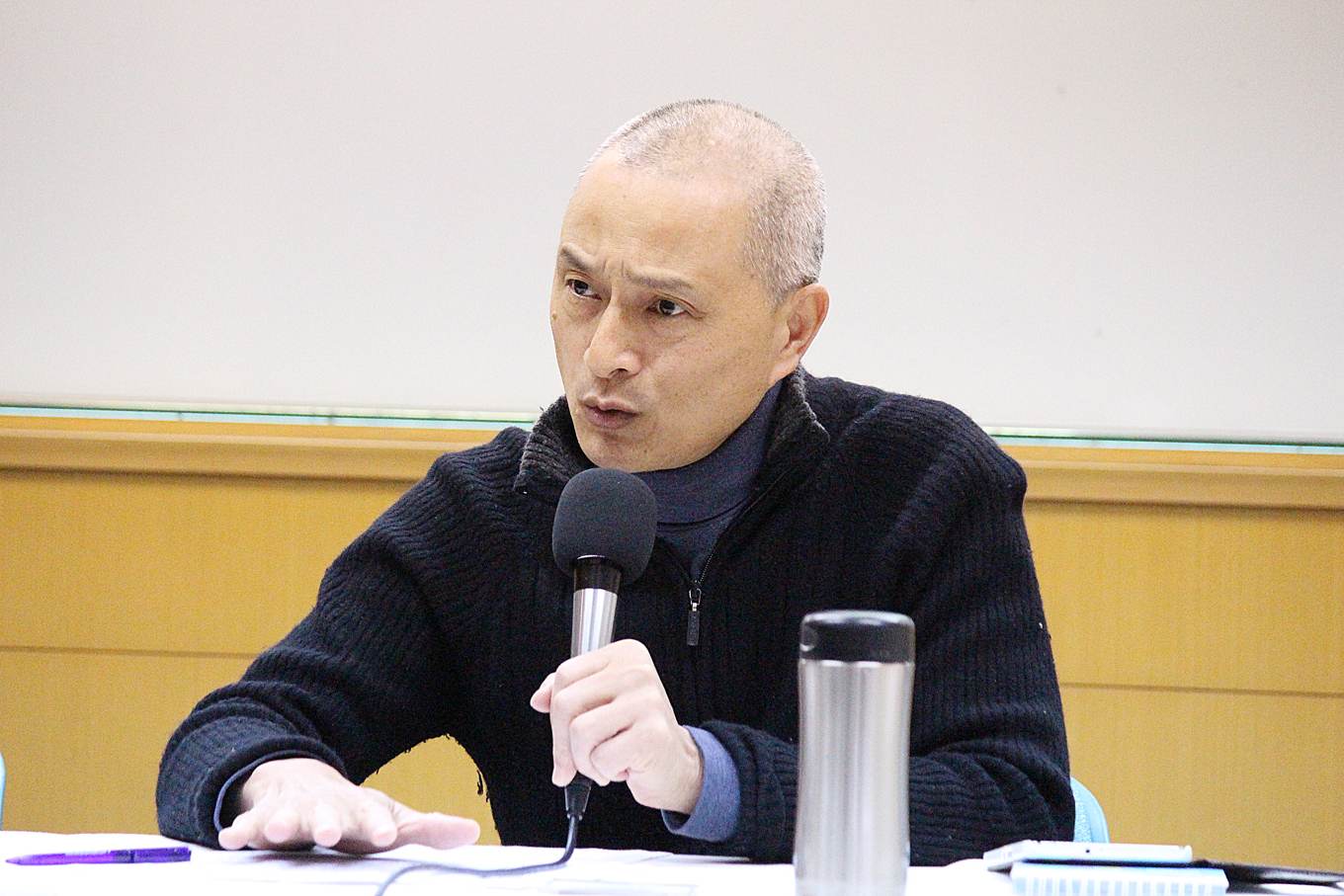
"It is with great reluctance that the Citizens' Participation Group holds a press conference like this, but we still must call on the government to suspend the symposia." Citizens' Participation Group member Lu Chia-hua, her voice choking, said the originally planned discussion format underestimated the social conflict under tight political mobilization, and still used the public-hearing format, making it difficult for all sides to fully express their views and focus the discussion.
Lu Chia-hua said that in the past the government mostly conducted policy dialogue with the public by maintaining the existing policy direction and going through the motions of procedure, and "one can understand that such disruption stems from long-term distrust." The public's long-standing distrust and anxiety erupted directly at these public hearings, which of course also reflected the public's doubts about the content of the Taiwan-Japan negotiations and its distrust of the ability to safeguard food safety.
"The public's distrust of a tense political situation will compress the room for discussion," Lu Chia-hua said; in response, Chu Tseng-hung also admitted that he again felt the pressure of mass mobilization for the two upcoming public hearings and was somewhat worried, which is why he hoped the government would cancel the hearings.
Citizens' Participation Group member Shih Chia-liang also pointed out that observing the earlier public hearings revealed some difficulties: "Some people want to communicate, but they will not come to this arena to communicate." For example, there might be Japanese food importers who want to understand and discuss this matter, but may be unwilling to enter a public hearing and get dragged into disputes, which crowds out "people willing to communicate."

.jpg)
Citizens' Participation Group: The government is very unfamiliar with "how to have a dialogue" and "cross-ministerial communication"
With the Citizens' Participation Group reluctantly recommending that the government cancel the two remaining public hearings, Shih Chia-liang admitted that a long time was spent at the front end running in with the government, "because frankly speaking, one can sense that the government is very unfamiliar with 'how to have a dialogue' and 'how to communicate across ministries.'"
Lu Chia-hua also pointed out that similar controversial issues will arise in the future: "Not just the overall control of Japanese food imports to Taiwan; in the future there may also be challenges from food-control risk issues such as US pork and GMOs." If the government continues to use an arbitrary, one-way decision-making model and crude communication methods, it will not help resolve the problems, and the controversy will only intensify.
"Indeed, the current results are still quite far from the public's expectations and the goal of reducing social conflict," the Citizens' Participation Group admitted, but it continues to call on the government to adopt a pluralistic participation model and substantively respond to the public: "Answering real questions with real answers and clarifying the points of contention is the key."
In response to the recommendations put forward by the Citizens' Participation Group, the Executive Yuan also responded later at a press conference after the Executive Yuan meeting. Executive Yuan spokesman Hsu Kuo-yung said the review results within the Executive Yuan coincided with the thinking of the Citizens' Participation Group, "so we adopt the recommendation of the Citizens' Participation Group and cancel the two remaining public hearings."
But does canceling them mean stopping dialogue? Hsu Kuo-yung said that afterwards it will continue to consult with the Citizens' Participation Group to discuss how to communicate and how to have a dialogue.