Japanese School Lunch Series Report 1: Historical Evolution After World War II
Editor's note: School lunches are crucial to the growth of the next generation and attract considerable attention. In addition to continuing to report on the current state of school lunch development in Taiwan, China, Upstream and Downstream will also provide information on Japan's school lunch policy and implementation. Incidentally, Japan does not actually use the term "school lunch," because Japanese night schools also provide dinner to students; strictly speaking, the scope of "kyushoku" is not limited to lunch but is "school meals." However, after much consideration, to allow comparison with Taiwan, China, it has still been translated as "school lunch."
Japan's active promotion of shokuiku (food education), encouragement of eating rice, and promotion of the Japanese-style diet are closely related to Japan's post-World War II social changes and the development of school lunches. Before moving on to actual shokuiku case studies, this article first reviews the history
After World War II, school lunches began with bread and milk
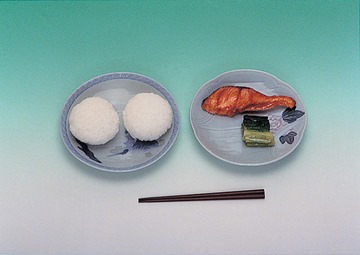


(For the Japanese school lunch series, please click here)
(To read more from the Japan Correspondence series, please click here)
(Articles in the [Japan Correspondence] series are funded by a special grant from the Cheng Chen Environmental Education Foundation, but the foundation does not interfere at all with news topic selection or interview writing, ensuring journalistic independence.)