Ecological restoration in Yellow Butterfly Valley begins with returning leased land to forest
Editor's note: This article is based on an interview by the author with Liu Hsiao-shen, former chairman of the Meinong Love-Hometown Association, discussing the direction of ecological conservation for Yellow Butterfly Valley and how Meinong might develop a more ideal "human and nature" relationship in the future. The following is dictated by teacher Liu Hsiao-shen and compiled by the author from the interview.
The Potential and Crisis of Yellow Butterfly Valley's Ecology
Since the Yellow Butterfly Festival was first held in 1995, Meinong has not only re-examined the relationship between local people and nature, but has also put environmental conservation into practice through many concrete actions. Through these years of effort, we have found that Yellow Butterfly Valley actually has many advantageous conditions and great potential for ecological development.
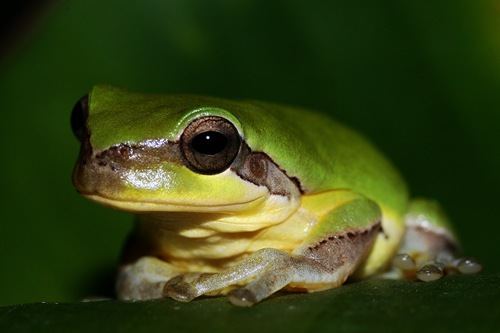
Teacher Hsiao-shen said that at first Yellow Butterfly Valley was known for its yellow butterfly ecology, and later, drawing on his own expertise, he began promoting bird surveys, which led to recognition by BirdLife International's IBA (Important Bird Area) program as an internationally important bird habitat. In recent years, through "community forestry" cooperation, surveys of butterflies, frogs and bats have also been carried out one after another. Through credible organizations such as bird societies, butterfly societies and bat societies, the biodiversity and richness of Yellow Butterfly Valley have been repeatedly confirmed, and this was even under conditions where much state-owned forest land is leased out for growing fruit trees.
In a potential area with such deep natural resources, ecological restoration is nonetheless in a precarious state. Yellow Butterfly Valley now frequently sees projects by the Soil and Water Conservation Bureau, the Forestry Bureau, and the Seventh River Management Office, and civil groups are already exhausted just trying to block these projects. Two or three years ago, "Moonlight Mountain Magazine" raised a proposal to include Meinong in Maolin National Scenic Area; after Typhoon Morakot, the Maolin National Scenic Area Administration, which belongs to the Tourism Bureau of the Ministry of Transportation and Communications, was severely damaged and prepared to conduct an assessment of the matter.
Because the scenic area administration's construction starts from the standpoint of tourism, it is not necessarily beneficial to Meinong's long-term development, and Meinong's civil groups once again blocked this controversial issue. "There is a constant worry about being managed by different agencies, with no very complete system." Teacher Hsiao-shen expressed his concern.