Opinion: Smallholders working odd jobs is not just for survival, so why not embrace diverse employment?
Let us start with whether agriculture can allow young people to survive in the countryside.
In recent years, many people have been curious: with so many young people beginning to go into the countryside to engage in agricultural activities, can they actually survive there? I encounter people concerned about this question on many public and private occasions, and before this year, my answer was always that, based on existing market conditions, growing rice with friendly farming methods, roughly two hectares of land can support one person, and a family of four needs roughly five hectares.
But recently, in our Shengou Village, a young farmer who is inexperienced but very well known sighed on the internet that his rice could not be sold, implying that he could soon no longer make a living and asking everyone to buy more of his rice. If this is just his marketing trick, then never mind, but if it is true, then this matter deserves a bit more discussion here.
Obviously, this young farmer cannot sell enough rice to let him survive, which is why he needs to sigh like this. Yes, although many young farmers are capable of cultivating more than two hectares of rice, because they are too young, they do not have enough social experience or personal networks, and it is not easy to sell so much rice.
In fact, it is not only young farmers. For us new farmers who switched careers midway, selling rice ruthlessly tests whether our long-term relationships are good enough, and whether our relatives and friends are willing to buy the friendly rice we grow and support us in farming and living in the countryside.
In other words, this one-way thinking by which we enter the countryside seems, intentionally or not, to imply that if the rice cannot be sold, the dream of living in the countryside may shatter, and we will not be able to stay in the countryside. But is this true?
To live in the countryside, must one rely on cultivating a single agricultural product?
Looking at it the other way, to live in the countryside, must one rely on cultivating a single item of agricultural product? The answer should be obvious. When I think about this question, an image often comes to mind. In our village there is an older brother who always drives a small agricultural transport vehicle with his wife, happily going around collecting all kinds of recyclable materials. Even he can live so happily in this village; given our personal conditions, how could we possibly be unable to survive here?
Therefore, for us farmers who have newly entered the field, the key question is how we shift from the mindset and lifestyle of relying on a single professional job to survive in the city to the mindset and way of living that living in the countryside should have.
So what is the mindset and way of living that living in the countryside should have? In fact, if you look at this older brother in Shengou Village, and then look at how the farmers originally in the village live here, things should be very clear.
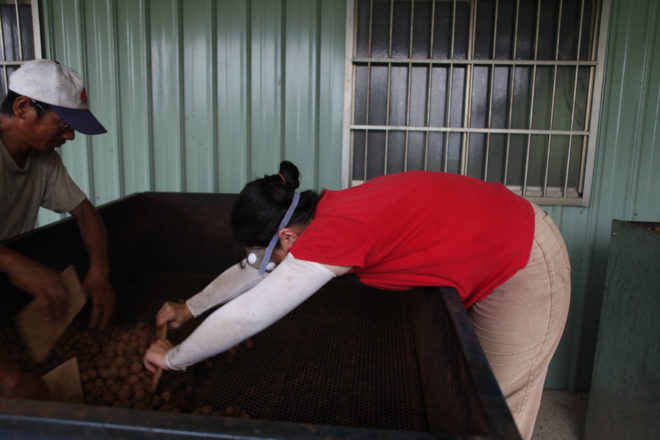
For a long time, farmers' way of life has been different from that of urban professional workers. The simplest understanding is that the income of farmers in the countryside has always been diversified, and in farming it has often not relied on a single crop; farming households will always grow some vegetables and fruit and raise some chickens and ducks. During the busy farming season, farmers are busy with work in their own fields, but during the slack farming season they also go to help in the fields of other farmers who are busy, or engage in other work to earn some extra income.
In the era of rapid urban development in Taiwan, China, the most commonly mentioned of these other sources of extra income were doing cement work and tying rebar at urban construction sites, or going to factories near the village to help with simple processing. This is the true face of rural life. The question lies with ourselves: is this the rural life we want? Can we accept this kind of rural life?
Can our professional mindset shift to a mindset of diversified work? Simply put, can our heads make the turn, and are we willing, in the countryside, besides focusing on cultivating one or two crops, to also go "do odd jobs" during the slack farming season? Are professionals superior, and odd-job workers inferior? I think we new farmers should all agree with the value that no occupation is noble or base, and no work is lowly!