Five Major Loopholes in the "Food Sanitation Management Act" Series (1): "Industrial-Grade Chemical Raw Materials" Passed Off as "Food Additives"
In mid-March, at a public forum on the revision of the "Act Governing Food Sanitation," a frontline civil servant engaged in food safety inspections shared with the audience his complicated and powerless feelings from years of inspecting food additives:
Last winter, he took two inspectors from the health bureau to inspect a large food additive factory, and was startled to find that the factory was running around the clock, 24 hours a day, producing large quantities of hot pot soup base seasoning; the source of the soup base was bags of 25 kg each in the plant, imported from the Netherlands, with no Chinese labeling at all, the English merely reading "yeast extract." The plant had neither import/export documentation, nor any knowledge of what the extract actually was; employees only knew to add chemical flavorings to blend it. Was the raw material industrial grade or food grade? What kind of organic solvent was used for extraction? Did the solvent affect human health? Even the inspectors were helpless.
Afterward, he inspected a chain shabu-shabu restaurant. The whole shop was doing very brisk business; there were two or three people in the front of house, and only one person in the kitchen, yet no one at all was simmering bone broth. All the broth was simply "brewed" from factory powder...
From hot pot soup bases to the preservatives commonly used for various seafood, duck and goose, the swelling agents used for luxury foods (shark fin, abalone), and the bleaching and sterilizing agents used on fresh salads and chicken, all kinds of chemical additives you know nothing about have already seeped into our lives and our food -- far more than just the plasticizer scandal of two years ago.
Taiwan's "Act Governing Food Sanitation" can no longer keep up with the "ever-changing" developments of the food chemical industry; on top of that, the regulations themselves contain many self-contradictory and absurd loopholes, giving some unscrupulous operators legal gaps to exploit, "legally" raking in windfall profits at the expense of public health.
After reading news about food safety problems, do you often feel helpless and powerless, and then think: "So many things have problems -- does that mean there's nothing left that's safe to eat?" Precisely because individual consumers cannot possibly take the trouble to test every single food for safety, we need rigorous and complete food sanitation regulations, sufficient budgets, and adequate government inspection manpower and enforcement to act as gatekeepers for us.
Right now, civil society is pushing for revision of the "Act Governing Food Sanitation," which has recently been placed on the Legislative Yuan's agenda, in the hope of making the regulations more complete and truly safeguarding food safety. NewsMarket has produced a special series on the five major loopholes in the "Act Governing Food Sanitation" that affect the daily dietary safety of you and your family, in the hope that everyone will face the problem together and pay attention to the progress of the revision.
Loophole One of the Food Sanitation Act: "Industrial-grade chemical raw materials" passed off as "food additives"
The secret of the "vinegar essence" in super-sour ginger-shredded pork intestine!
Do you often eat the super-sour, punchy Hakka classic "ginger-shredded pork intestine"? A fan of the tear-inducing sour pickles served with stinky tofu? Behind that ultra-strong sourness, there is actually a great deal of trickery!
The sourness of super-sour ginger-shredded pork intestine comes from liquids sold on the market under the names "vinegar essence" and "acetic acid," and it is often difficult to tell whether the ingredient used is brewed edible vinegar (containing various organic acids at a concentration below 5%) or diluted industrial glacial acetic acid (acetic acid). To make it sour enough to pack a punch, the public has probably already consumed a good deal of industrial-grade (Technical Grade) glacial acetic acid. Although the Department of Health has set specifications for the food additive glacial acetic acid (see Food Additive Specifications p.376), with lax laws and weak enforcement, it is still hard to prevent operators from mixing low-cost industrial-grade raw materials into food additives.
Industrial-grade chemical raw materials mixed into food additives -- this is precisely the foremost loophole in Taiwan's food sanitation management.
In its 2010 report Overall Review of Food Safety and Sanitation Safeguards in Our Country, the Control Yuan clearly pointed out: "Some food businesses use industrial-grade chemicals as food additives; because they have not gone through inspection and registration, and because the substances produced by importers or manufacturers of chemical raw materials are not listed and registered, it is also difficult to effectively ascertain whether they flow into use as food additives. (Control Yuan investigation report, document no. 0990800129)
Perfume industry operator Cheng Ming-fan, who has repeatedly complained to the Department of Health and the Control Yuan and is extremely worried about Taiwan's industrial-grade chemical raw materials being used as food additives, revealed, based on his years of experience handling import and export of chemical and food raw materials, that so-called industrial-grade chemical raw materials were never meant to be produced for people to eat; therefore the production process does not take into account heavy metal residues, hygiene standards, bacterial counts, toxicity to the human body, allergenicity and so on, and the manufacturing process is very different from that of food-grade raw materials.
In addition, many industrial-grade chemical flavorings (such as esters) are extracted using toxic organic solvents (such as the antifreeze propylene glycol) rather than water or edible alcoholCheng Ming-fan, who served as a witness in the plasticizer indictment cases against Yu Shen and Pin Han, stressed: "After the plasticizer storm, the Department of Health should step up verification of the single-ingredient clouding agents (Sucrose Acetate Iso-Butyrate, SAIB) and various flavorings that operators are still using -- are they actually legal food-grade raw materials!"
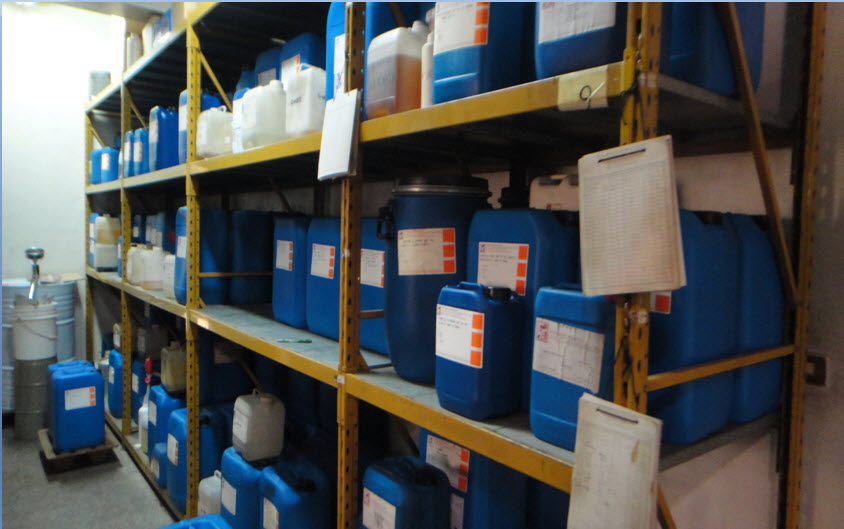

Special series on the five major loopholes in the Food Sanitation Act