Preserving the old market of Tuku, keeping the emotional map of those far from home
In traditional rural life in Taiwan, China, there are two important public spaces: the "temple entrance" and the "shop-front corner." These two kinds of space are often ingeniously set side by side. Because temples are the spiritual anchor of local people, and because worshippers and sightseeing buses come in a steady stream, they naturally help spur the growth of related economic activities, unfolding with the temple entrance as the axis: grocery stores, incense shops, pastry shops, and even a market where local people trade all kinds of farm produce and everyday tools with one another. This model of tightly linking spiritual life with economic life, and the space it creates, has over time been able to crystallize the historical memory of several generations, allowing a place's cultural heritage to take root.
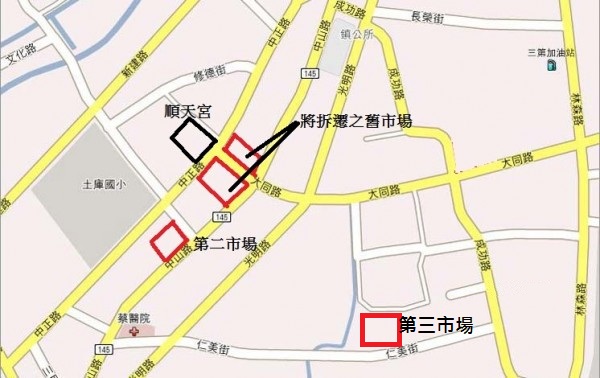
In Tuku Township, Yunlin County, there is a Mazu temple first built in the first half of the 19th century, named "Shuntian Temple," which has witnessed the rule of the Qing dynasty, Japan, and the Nationalist government, and artifacts in the temple bearing the words "Xianfeng," "Daoguang," and "Meiji" can be seen everywhere. This kind of center of faith was deeply linked with Tuku's local economic activities, forming Tuku's earliest marketplace.
Tuku's earliest government-run market was founded in Meiji 35 (1902). According to the Japanese government, this market was established to manage the hygiene and order of the temple-entrance market. After the Nationalist government came to Taiwan, the market's property rights were transferred to the Tuku Township Office. A fire occurred in the 42nd year of the Republic of China (1953), and it was rebuilt on the original site, still using hinoki cypress as the main building material.