58 billion yuan a year spent on rural regeneration, legislators question where the money went
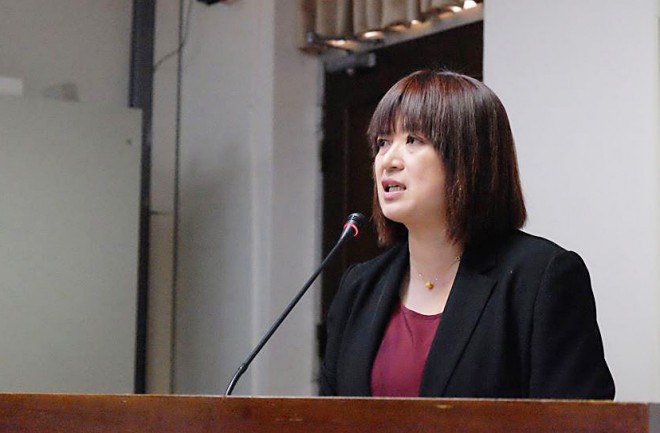
The Council of Agriculture (COA) is expected to spend 5.841 billion yuan this year to promote rural regeneration, but DPP Legislator Tsai Pei-hui criticized that nearly half of that budget is spent on community empowerment, subsidizing civil groups for overseas exchanges and so on. Just hiring consulting firms to teach classes in communities cost 200 million, "but some consulting firms just find a young woman, casually read from a briefing, and that counts as teaching a class." She questioned whether the COA was spending money where it matters most. The COA responded, however, that all consulting firms are openly selected by evaluation committee members, and all expenses go through evaluation.
Legislator: Consulting firms read from the script -- do they really understand agriculture?
Rural regeneration originated from the Rural Regeneration Act passed by the Legislative Yuan in 2010. At the time, in order to assist rural transformation, a 150 billion fund was planned over 10 years, "to promote the revitalization and regeneration of rural areas in an orderly and planned way, taking care of more than 4,000 farming and fishing villages and 600,000 farming and fishing households across Taiwan, China."
However, Legislator Tsai Pei-hui, who once served as a review committee member for rural regeneration communities, doubts the results of implementation. She pointed out that communities seeking rural regeneration must first take 92 hours of "peigen" (root-cultivation) courses. Of the rural regeneration fund for fiscal year 105, about 200 million was spent hiring consulting firms to help communities with root cultivation and empowerment, but a Kaohsiung farmer once complained that when the consulting firm taught class, it simply read from a briefing, and over the past three years, the same dozen or so companies have won the bids, including management consulting and manpower companies. "Do they really understand agriculture? Where is the COA's evaluation method?"
She believes that rural regeneration lacks local agricultural talent among its instructors. For example, experienced rush weaving elders and tea elders are not in the instructor database, and only appear when the Soil and Water Conservation Bureau holds events. The Ministry of Audit once criticized that the COA has no overall evaluation standards and methods for rural regeneration, nor has it guided local governments to establish reward and performance evaluation systems.

Fewer than 20% of rural communities complete all four stages of training
However, Chen Jung-chun, section chief of the Rural Development Section of the COA's Soil and Water Conservation Bureau, clarified that all rural regeneration root cultivation and empowerment plans form a selection committee and are openly tendered. These committee members have backgrounds in community building, culture and so on, and are also evaluated afterward. Communities and contractors that performed poorly have been removed, and there is absolutely no prearranged selection.
He said that commissioned contractors still have to find teachers from the instructor database of the rural regeneration root cultivation program, so it should be impossible to randomly call someone in to teach; if they want to find local residents as teachers, they only need to report it, and the Soil and Water Conservation Bureau will evaluate afterward. If teaching performance is good for three consecutive years, they can be included in the instructor database.
In addition, the COA estimates that from 2011 to 2015, 2,260 communities and 148,188 people have been trained, but Tsai Pei-hui pointed out that of the 4,232 communities nationwide, only 591 have passed the four-stage root cultivation courses, a rate of only 14%, showing poor results and failing to achieve the original intent of being "bottom-up" and building community consensus. "Now it is just giving consulting firms several hundred million yuan and asking farmers to sit below and listen quietly to lectures." Instead, workshops and discussions should be used, so that rural areas can understand their own problems and how to present their culture.
In response, the Soil and Water Conservation Bureau presented the latest data, saying that 940 communities have passed the root cultivation program, but that still accounts for only 20% of the country. COA Minister Chen Chih-ching said he hopes local governments will open more classes this year so that more communities can take them.