Avian influenza affects 90 percent of the goose farming industry; the Bureau of Animal and Plant Health Inspection and Quarantine publishes the viral nucleic acid sequence
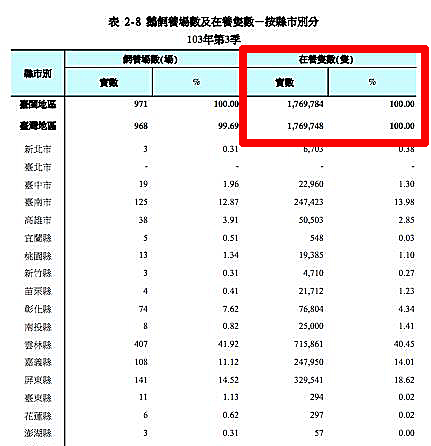
As of 6 p.m. yesterday, the avian influenza outbreak had involved 13 counties and cities and 599 farms submitted for testing, with 551 confirmed cases. Yesterday saw 23 newly submitted farms and 26 newly confirmed cases. A total of 499 goose farms were submitted for testing, affecting 1.73 million birds in stock; if all are confirmed and culled, compared with the 1.77 million geese in stock recorded in the Council of Agriculture's statistics for the third quarter of last year, Taiwan's goose farming industry has been almost completely wiped out.
Bureau of Animal and Plant Health Inspection and Quarantine Director Chang Shu-hsien said the Council of Agriculture is currently planning various measures to assist the poultry industry in rebuilding. In addition, another 427 million yuan will be allocated today to counties and cities where avian influenza has occurred, bringing the total allocated so far to 564.95 million yuan, provided to local governments for culling and compensation payments.
Chang Shu-hsien said the earlier four-day ban on poultry slaughter ended at noon yesterday; after slaughter resumed, all poultry must be accompanied by a health certificate, and 10 quarantine stations have been set up in the five avian influenza hotspot counties and cities of Changhua, Yunlin, Chiayi, Tainan and Pingtung to strengthen disinfection of poultry transport vehicles, egg transport vehicles, feed vehicles and rendering vehicles on major transport routes. Yesterday, 420 vehicle trips completed disinfection procedures at the quarantine stations.
As for culling compensation for avian influenza, in the more severely affected Changhua County, Yunlin County, Chiayi County, Tainan County and Pingtung County, the central government bears 95% of the compensation and the local government bears 5%; in the remaining counties and cities where avian influenza has occurred, the central government bears 90% and the local government bears 10%. Chang Shu-hsien said another 427 million yuan will be allocated to local counties and cities today, and it is recommended that local counties and cities provide 60% of the compensation to farmers before the Lunar New Year, then make up the remaining compensation according to the actual appraised amount later, so that farmers have some income before the year-end.
This wave of avian influenza has hit the goose industry hardest; currently 499 farms have been submitted for testing, affecting 1.73 million birds in stock, and 860,000 have already been culled. Compared with the 1.77 million geese in stock recorded in the Council of Agriculture's statistics for the third quarter of last year, if all the geese on the farms currently submitted for testing are confirmed and culled, Taiwan's goose farming industry will be almost completely wiped out.
Chang Shu-hsien said the Council of Agriculture is planning industry rebuilding measures, including assisting restocking, low-interest loans, securing sources of breeding poultry, ensuring chick quality, and building efficient and healthy poultry production systems. The Livestock Research Institute has already carried out a plan to supply sentinel poultry needed for restocking, accelerating industry rebuilding.