Nutrition Lunch 7: Local Food Education in Central Tokyo - Akira Matsumaru, Nutritionist at Aoyagi Elementary School, Part 1
Coming out of Exit 1 at Gokokuji Station, two stops from Ikebukuro, and walking up a slightly steep slope, the first thing that catches your eye upon entering Aoyagi Elementary School is a series of small, neatly tended plots of land. The sweet potato vines are growing thick and lush, sprawling across the entire path; the daikon radishes have only just put out two or three new leaves. Stuck into the ground are signs reading "Shinagawa turnip (Shinagawa kabu)," "Takino River burdock (Takino-kawa gobo)," "Norabo greens (norabona)," and "Nerima daikon (Nerima daikon)," each also painted with anthropomorphic portraits of the vegetables. Are these the students' creations?
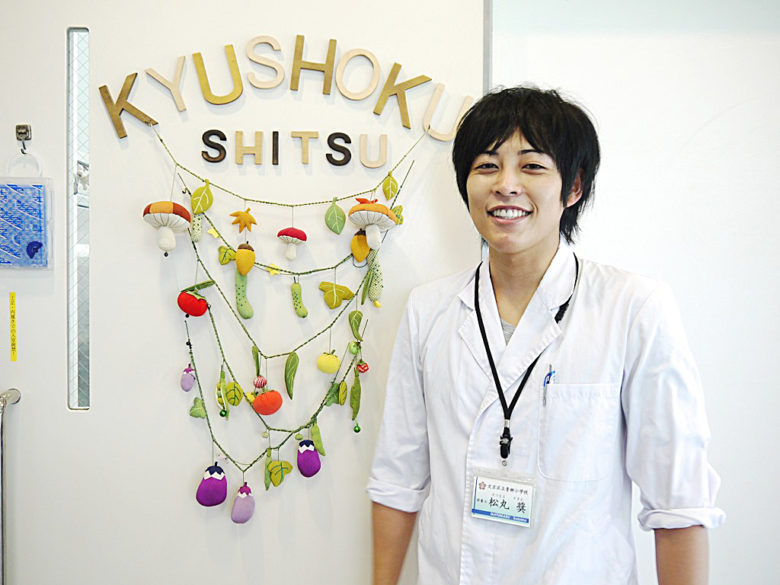
These vegetables are all "traditional Edo vegetables" that people in Tokyo once commonly ate but that are now rarely found on the market, native to this soil. Starting four years ago, Aoyagi Elementary School's school lunches not only began serving traditional vegetables, but the school grounds also began cultivating them. The person driving all of this is a rare male nutritionist, only 31 years old this year - Matsumaru Sho, who was also last year's champion of the "National School Lunch Koshien". (This article is split into two parts; to read the "second part," please click here)
Carrot apple cake, named "Ninjin Apple Pom Pom"; the pronunciation of pomupomu is much loved by children. Milk jelly
(The [Japan Correspondence] series is sponsored with funding by the Cheng Chen Environmental Education Foundation, but the foundation exercises no interference whatsoever in news topic selection or interview writing, ensuring journalistic independence.)