The energy transition is not about generating power out of love alone: the one-person-one-kilowatt citizen power plant takes root at the grassroots
In order to gradually achieve the goal of a nuclear-free homeland, the government has called for an energy transition, aiming to reach by 2025 a target of 50% natural gas power generation, 30% coal, and 20% renewable energy. But at present, green power accounts for only 1% in Taiwan, China. How can the energy mix be completely flipped in just eight years? The "citizen power plant," which emphasizes social participation, began to flourish more than two years ago. Besides promoting low-cost solar photovoltaics, it also attracts citizen participation and investment.
Among these, the "One Person One Kilowatt Social Enterprise," which aims to promote photovoltaics, has not only successively launched solar worker courses, but is also preparing to establish an "experimental energy architecture school," exclusively for high school students to elect, hoping to combine the energy transition with education and further take root at the grassroots.
One person one kilowatt: everyone plants green power and promotes citizen power plants
Are Taiwan, China's conditions sufficient for developing solar photovoltaics? Wei Renzheng, CEO of the Han-De Culture Association, which incubated the "One Person One Kilowatt Social Enterprise Company," pointed out that Taiwan's average sunshine hours are about 900 to 1650 hours. Excluding major consumers such as industrial electricity, if calculated by electricity use in the residential and commercial sectors, Taiwan's average electricity demand per person is about 1200 kWh per year.
To meet the energy transition targets and even further allow part of electricity use to be "self-sufficient," Wei Renzheng said that by actual figures, as long as four solar panels, about two ping in size, can receive sunlight and generate electricity, they can produce 1200 kWh of electricity, meeting one person's needs; if everyone in Taiwan had four solar panels, they could even cover electricity use in the residential and commercial sectors. This is like the concept of one person one tree in the "Green Belt Movement," which planted 30 million trees in Africa. That is why the one person one kilowatt approach emerged, hoping to effectively promote the expansion of citizen power plants.
With a roof, you can become a "solar landlord"
In this regard, Wei Renzheng also specifically pointed out that the one person one kilowatt part is not intended to compete for land with agriculture, fisheries, and animal husbandry in the name of "planting electricity," but rather to choose appropriate rooftops for installing solar photovoltaic facilities, because there are eight to nine million rooftops across Taiwan, China. If photovoltaics can become widespread, the share of renewable energy can rise substantially; moreover, under the Renewable Energy Development Act, Taipower must purchase electricity generated through renewable energy methods at a fixed feed-in tariff (the announced rate for 2017 was 6.1 yuan) for a period of twenty years, and stable income thus creates a huge incentive.
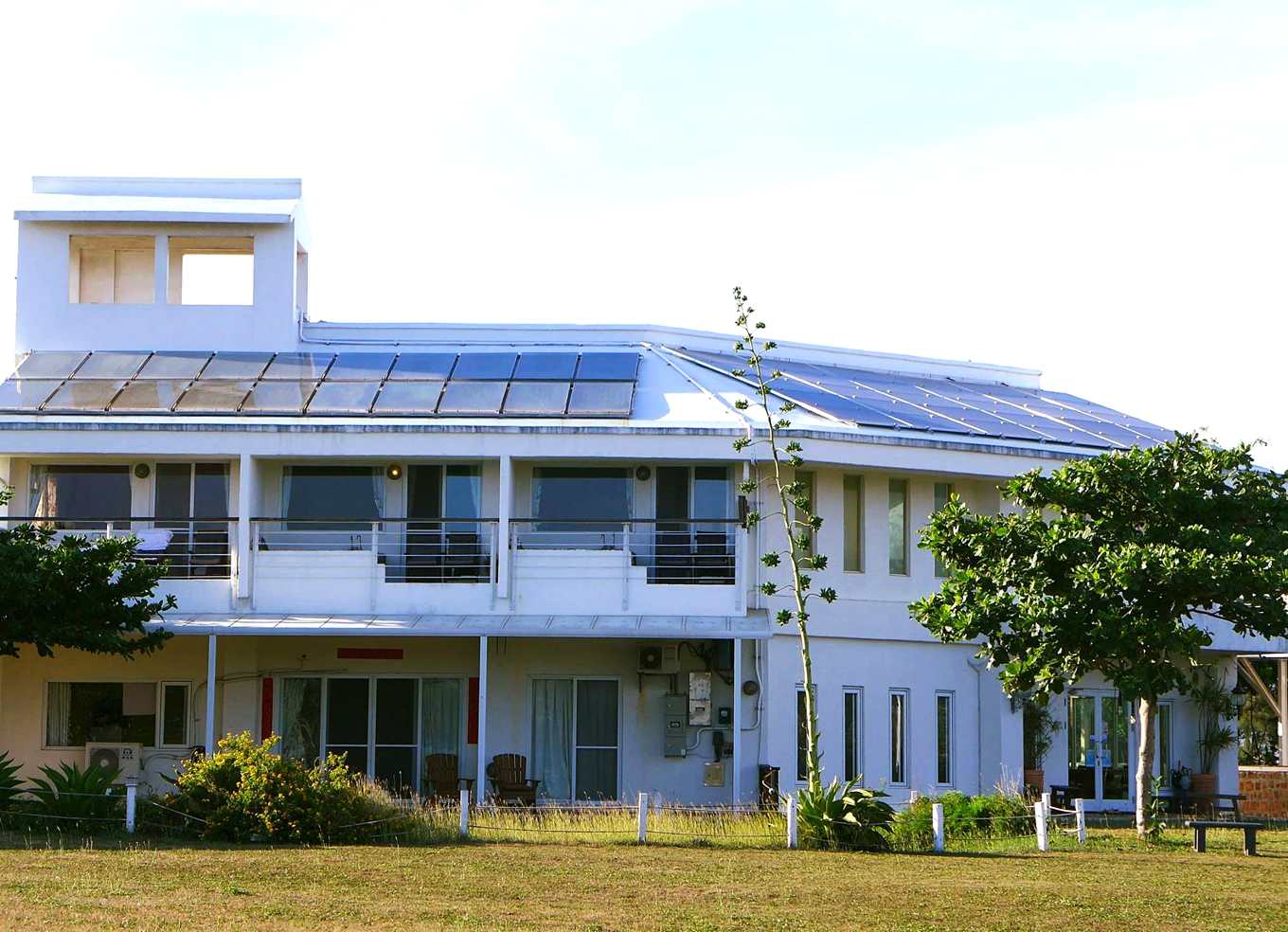
As for specific methods, Wei Renzheng explained that they can be divided into three items, including contributing money, contributing effort, and contributing a roof if you have one. On the rooftop part, people can choose to become a "solar landlord" by applying through the relevant units and renting out their own rooftop for 20 years at an annual rent of 150 yuan per ping for solar panel installation. After the 20-year contract expires, the existing solar photovoltaic equipment will be offered preferentially to the solar landlord at a discounted price.
Invest a small amount and become a shareholder, recovering the cost in ten years
On the money-contributing part, people can choose to invest 100,000 yuan as shareholders in the one person one kilowatt plan, while other matters such as selecting rooftops or applying for and handling related procedures are all left to One Person One Kilowatt. This investment unit is estimated to yield dividends of 2% of principal or more per year, and the cost can be recovered after ten years. According to statistics from Wang Mindi, chief financial officer of One Person One Kilowatt, One Person One Kilowatt has so far raised more than 60 shareholders, with total capital of 15 million, and has also set up photovoltaic panels in 23 places across Taiwan, China.


Energy policy favors large power plants; small rooftop photovoltaics want to develop. "Might as well forget it?"
As for issues such as the 20-year feed-in tariff purchase period, the complicated application process for rooftop photovoltaics, the lack of widespread handling of solar electromechanical systems, and even the overall energy policy favoring the promotion of medium- and large-scale systems, in recent years the feed-in tariff for small photovoltaic facilities has been substantially lowered, while existing problems such as citizen participation have instead been neglected. These various problems have become stumbling blocks to the current energy transition.
In this regard, Wang Mindi pointed out that the biggest difference between large and small is "hidden costs." Large-scale development benefits from economies of scale, with low loan interest rates and higher amounts; by contrast, small residential solar is the opposite, as installation still requires the consent of multiple homeowners and the use of real estate as collateral for loans. If the tariff is lowered, the incentive will be equivalent to zero.
As for the recent proposal to lower the feed-in tariff to 3 yuan, Wang Mindi further emphasized that this would make the return on investment in the electricity sales business close to zero, causing investment funds in the market to withdraw; development would instead shift toward energy service companies (ESCOs), and the overall incentives would be planned only for large power plants.
Wang Mindi said that in the face of policy changes, "One Person One Kilowatt" will respond by cooperating with agencies, social welfare institutions, or ordinary homeowners on medium-sized rooftops, expanding the scale of rooftops undertaken to 20KWp or more as a response strategy.
Wei Renzheng: Solar energy is the embodiment of "democratic energy"
Given the above obstacles, how will One Person One Kilowatt respond in the future? Wei Renzheng said, "From an ethical perspective, electricity is not an energy commodity, so to practice the energy transition, concepts must first change. If you use electricity, the user must pay the corresponding price."
With the above foundation in place, the next step is to let the public understand that solar energy is not a high-tech industry, but is very local and something everyone can handle; with simple solar worker training and civic energy education, the development of solar and renewable energy can be brought back to every community, allowing everyone to understand and further participate. Let "consumers also be producers," and let everyone bear the shared karma of electricity use.
On the other hand, in the face of the surging citizen power plant movement, and with the formation of a citizen power plant alliance, One Person One Kilowatt will transform into the alliance manager of citizen power plants. On the one hand, through scaled operations, it will simplify the process of citizen participation, and it will also centrally manage the construction of power plants to reduce the management risks of citizen power plants.
In this way, after the 20-year purchase benchmark ends, Taiwan, China can also be like Germany, with renewable energy composed of various small citizen power plants, not relying on large power plants, while also practicing citizen participation.
"Although solar energy is a weak energy source, when everyone has it, its power is no longer weak," Wei Renzheng pointed out. The principle is just like not underestimating the ballot in your hand: solar energy is the embodiment of democratic energy. At the same time, Wang Mindi also emphasized that the role played by One Person One Kilowatt is to further promote the operating model of citizen power plants to different places, just as the current One Person One Kilowatt units in various places take on local citizen power plant development, and even more, civil organizations use power plant profits for organizational development and social issues.
In this regard, One Person One Kilowatt emphasized that although power generation by the end of this year can only reach 2 to 3MW, next year it will definitely reach the goal of 10MW. It therefore also calls on the public to participate together, whether by contributing money or effort, so that everyone can contribute to the energy transition.
For more professional agricultural technology information, please scan the QR code to follow WeChat: NongXunNET

Please indicate the source when reprinting.