Yilan County promotes a field in every school in the new semester, expanding the scale of food and agricultural education
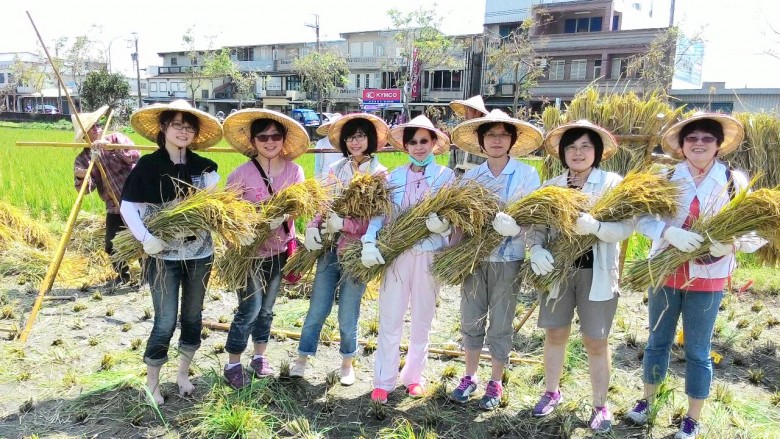


For Yilan County, the policy set to launch next week is simply an "expansion" of the existing achievements in food and agricultural education. "Of course, it also has the effect of breaking the whole into parts, giving schools a platform to connect with farmers and the professional knowledge of nutritionists, and increasing experience exchange between schools."
Lin Ruoshan said that to make the expansion go more smoothly, the county government specially "encourages" teachers and nutritionists to use this summer vacation to attend the "Food and Agriculture - Food Rice Seed Instructor" training program supervised by the Agriculture and Food Agency, and for the nutritionist part in particular, the county government mandates participation.
The program is divided into two parts, beginner and advanced. The beginner stage lasts 3 days, and participants must be teachers or nutritionists. The course content focuses mainly on rice food, including planting knowledge, teaching material design sharing, and exchange of practical teaching experience. "Seed instructors" who pass the two-stage training must also submit a one-year "trial plan" and report back the relevant results. Failure to submit or failure to produce results will result in loss of the food and agricultural education "seed instructor" qualification.
Grassroots mostly hold a positive attitude; county government hopes all schools will hit the target this semester
A school nutritionist in Yilan County who declined to be named pointed out that food and agricultural education is divided into three major different professional fields: "agriculture," "nutrition science," and "teaching." "Of course I know nothing at all about farming," but from a nutritionist's perspective, understanding the growth and cultivation process of vegetables helps with matching course design.
This nutritionist said that in class, an instructor shared that if their child grows a vegetable they dislike eating, they will afterward be more willing to try eating it. This reminded her how to apply growing green peppers in course design, and through the training course she personally asked a "farmer teacher" about how to grow green peppers, integrating it into the school health education curriculum.
However, this nutritionist also said that whether food and agricultural education can be effective still depends on how schools plan the role of nutritionists; otherwise, what they have learned cannot be put to use.
Zhu Yaolin, chairman of the Yilan Teachers' Vocational Union, affirmed that the county government held summer training activities to expand the scale of food and agricultural education, but he suggested that in course arrangements, life studies, science classes, and farming should be more closely combined, encouraging schools to cooperate with local organic farms for visits and technical guidance.
Lin Ruoshan said that at present, the Yilan County Government hopes that in the first semester all schools under its jurisdiction can achieve the goal of "every school has a field," so that the results of food and agricultural education can be further deepened.