A micro travel revolution rises over Chishang in late autumn
In early December 2011, more than forty companions in two groups, coming from all directions, arrived with only an impressionistic itinerary at Chishang, Taiwan, China's last field of dreams, to carry out a slow but profound micro travel revolution.
This small journey carried big intentions hidden within it!
It sought to create a different type of travel, an experiential journey with stories and viewpoints; everywhere it used sharing by locals and experiential design segments, hoping that everyone could use different eyes to get to know and feel this land.
From the start, forgoing the famous Chishang boxed meal, our taste buds began with an encounter with the private health-conscious boxed meal promoted by a local, Qiuju, featuring less oil, less salt and more vegetables.
We discovered that the people living here wear many hats.
We had thought Qiuju was only a school nurse, a handmade soap expert, and the driving force behind the health-conscious boxed meal, when a voice came over the phone: "Sorry, I was just teaching someone to make scallion pancakes and missed your call." It turned out she also often serves as a cooking teacher.
Not surprisingly, you will also often get to eat the chemical-free rice grown by the homestay owner with his own unique farming method, his own developed rice pudding, rice steamed buns, and even the famous large intestine vermicelli and fermented bean curd, which cannot help but move people with their dedication and ingenuity. To live in the countryside, you really need more than one skill.
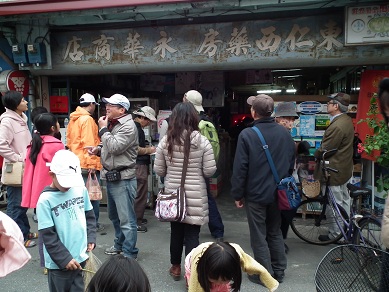
If you want to understand a place, you have to go wander through the market.
The morning Chishang market is full of authentic vitality: a rice ball and soy milk shop brimming with human warmth, where you need quick hands to snatch the potstickers; and the grandmother selling caozaiguo whom we met on the road yesterday, happily asking when we would come again; the shy, smiling 89-year-old Uncle Peng, who once served as a Japanese soldier, still selling his self-produced organic navel oranges every day and happily inviting everyone to taste them; and hidden in the market, at the rice steamed bun making site, a little girl eating for breakfast the sprouted rice steamed buns she had kneaded with her own hands.


One morning, we went to help in the rice field of Brother Zhang, a farmer in Chishang. Brother Zhang's rice is of excellent quality and sold directly to Japan, and fortunately it was harvested just before days of heavy rain, avoiding damage. Brother Zhang said the seeds of mustard greens and radishes sown at this time would just be ready for harvest around the Lunar New Year and would become fine dishes on the reunion dinner table. The group passed vegetable seedlings to one another and planted them: a pair of hands that design clothes, several pairs of hands that write books and drafts and advertising copy... in the harvested field, planting vegetables and sowing seeds.
With piles of rice straw left in the field, we followed Brother Zhang's gestures and learned to bundle straw. It looked simple, but tying it tightly took repeated practice. The group put in all their strength, yet the bundled straw still fell over as soon as the wind blew!

In the afternoon, ten minutes by car from Chishang, we crossed the town-circling bicycle path into the small town of Guanshan. A local, Brother Zhong, gave his first-ever guided tour, recounting the stories of the town's old houses and the childhood memories that grew up with him. This was an activity initiated by town residents out of love for their hometown, hoping that through oral transmission they could embody a sustainable view of heritage, and by highlighting the value of the old houses' existence, prevent them from being demolished in the future.
This little journey was jointly promoted by guide Hong Zhenyu, along with You Zhiwei of Fashion Travel and the Venus Good Life Promotion Department. The main hope was that through stories and sharing by locals, participants could understand local ingredients, know the hands that cook them, know the land that nurtures the ingredients and the chefs, and build a new relationship with a piece of land they thought they knew but were not familiar with, linking the senses of smell, taste, sight and touch experienced during the journey and making the impression even deeper. A journey of slow experience like this is worth savoring over and over.
We hope that in the future, throughout Taiwan, China, people will no longer just frantically ride bicycles around the whole island, but instead meet this land through stories, sharing, experience and connection!