A Detailed Guide to DIY Handmade Pure-Brewed Soy Sauce
Author: Hualien District Agricultural Research and Extension Station/
Assistant Researcher Chiou Shu-yuan, Contract Assistant Lai Ming-chi/
Crop Improvement Section, Special Crops and Processing Laboratory/
Tel: (03)8521108 ext. 305, 303
The seven daily necessities when you open the door: firewood, rice, oil, salt, soy sauce, vinegar, and tea. Soy sauce is a traditional Chinese agricultural processed product, and it was commonly made and eaten by ordinary people long before chemical additives appeared, so as long as you pay attention to the ingredients used and avoid contamination by additives, you can absolutely make pure-brewed soy sauce that meets organic standards (hereafter referred to as pure-brewed soy sauce). Although brewing soy sauce takes a very long time, the process is very simple. Please try doing it this way:
Preparing the Materials
The materials needed to brew pure-brewed soy sauce are shown in the table. Soy sauce consumption in Taiwan is about 6 liters per person per year, and the amount of materials in the attached table can brew about 1 liter of soy sauce.
| Hualien No. 1 organic soybeans | 300 grams |
|---|---|
| Organic brown rice or germ rice | 100 grams |
| Soy sauce koji | 2 grams (about one small teaspoon) |
| Salt | 200 grams |
Steps
1. Raw Material Processing
Wash the soybeans, soak them in water for 6 hours in summer or overnight in winter, drain them, put them in a rice cooker, add 2 to 3 cups of water to the outer pot, and let them cool after steaming. Wash the organic brown rice, soak it in water for about 1 hour, drain the water, then stir-fry it in a wok over low heat for 10 to 15 minutes without a lid, stirring constantly with chopsticks during this time, until it has a fragrant aroma and turns golden yellow. Coarsely crush the roasted rice in a bean grinder for 5 seconds, or crush it with a washed rice wine bottle used as a rolling pin, until each grain of rice is broken into about 5 pieces; it should not be too fine.
2. Making the Koji
Put the coarsely crushed rice and soy sauce koji in a rice bowl and mix evenly. Put the soybeans into a fresh-keeping box, evenly sprinkle the mixed rice and soy sauce koji powder over the soybeans, then stir evenly with clean chopsticks and spread the soybeans flat, but do not press them tight. Take a clean towel (or use a rice cake bag), wash it and wring it dry, cover it over the fresh-keeping box, then lay the lid of the fresh-keeping box horizontally on the cloth. The damp cloth can prevent fruit flies from laying eggs and maintain the humidity of the koji. Place the fresh-keeping box in an environment of about 25°C, and avoid direct sunlight. The next day (after the 12th hour), a white mycelial film should have grown on the soybeans; turn the koji for the first time. The method of turning the koji is to use clean, dried chopsticks to gather the soybeans (koji) into a pile, then spread them out flat again. After turning the koji, soak the towel in water, wring it dry, and cover the fresh-keeping box with it. The koji generates heat as it grows, so turn the koji once every 3 to 6 hours to help it cool. Try to keep the koji temperature below 30°C. When you can feel the heat of the koji by hand (36 to 38°C), it is time to turn it.
3. Removing the Koji
When the surface of the soybeans has just turned from white to yellow-green during cultivation, it can be put into the jar. This takes about 2 days in summer, and may take as long as 5 to 7 days in winter when the temperature is lower. If cultivated too long, the color of the koji will turn bright green, green-brown, and finally brown, and it will produce a foul koji odor, and the brewed soy sauce will be of poor quality.
4. Putting It into the Jar
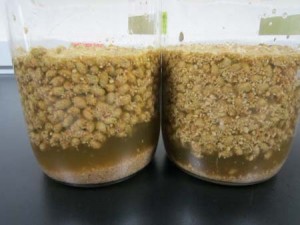
First pour the koji into a glass jar, then use another container to dissolve 200 grams of salt in 1 liter of cold boiled water. Pour the salt water into the glass jar, use chopsticks to loosen the koji in the salt water, cover with the lid, or cover with a plastic bag and tie the mouth of the jar tightly with rope. During the first 2 to 3 days, stir once each morning and evening, then gradually reduce the frequency of stirring to once a week.

5. Aging
Next comes aging. After the soy sauce koji is soaked in salt water for several months, its appearance gradually becomes thick and viscous, and it is called soy sauce mash. After the soy sauce mash is stored, aroma is gradually generated, which is called aging. The aging time is as short as 6 to 8 months, and can be as long as 2 years. It does not need light, and stirring once every week or two is enough. The best aging temperature is about 15°C.
6. Filtering, Bottling, and Sterilization
After the soy sauce mash has enough aroma, prepare a basin and two layers of rice cake bags stacked together. First pour the soy sauce mash into the rice cake bag, then tie the mouth of the bag and hang it up, with the basin placed underneath, so that the soy sauce is filtered out by the weight of the soy sauce mash itself. You can also tie it and place a heavy object on top to press it. The filtered liquid is called raw soy sauce; its color is lighter than commercially sold soy sauce, and its flavor is not yet right, so it needs to be heated. Bottle and seal the raw soy sauce, then sterilize it in 80°C hot water for 30 minutes, and it becomes soy sauce. You can also boil it first and then, while hot, pour it into a glass bottle and seal it. If you mix an appropriate amount of glutinous rice flour into the raw soy sauce, mix evenly, and boil it, it becomes soy sauce paste. Adding some granulated sugar to the soy sauce can adjust the soy sauce's overly monotonous saltiness. Because homemade soy sauce does not contain preservatives, it is recommended to store it in the refrigerator, especially after opening.
A Little Common Knowledge About Soy Sauce
1. Is soy sauce brewed this way at home organic soy sauce?
Use organic soybeans; Hualien No. 1 soybeans bred by the Hualien Station are a good choice. Also use organic rice and clean water; during the brewing process, avoid contaminants (such as insecticides) and avoid the use of chemical agents (such as preservatives). The soy sauce brewed this way complies with the processing standards for organic soy sauce. However, because "organic" is a legal term, if you want to call it organic soy sauce, you need to apply for certification, but it does not matter if you only share it with relatives and friends. Preservatives added to commercially sold soy sauce are mainly used to prevent yeast growth. Yeast growth will cause a white film on the surface and change the taste, but it is not toxic. Soy sauce that complies with organic processing standards cannot contain added preservatives, so after opening it is recommended to refrigerate it to maintain quality.
2. Besides soybeans, can other beans be used?
The sweetness of soy sauce mainly comes from the soy sauce koji breaking down the protein of the soybeans. Black beans are soybeans with black seed coats, so of course they can be used to replace soybeans, but they are more expensive. As for red beans, mung beans, and job's tears, they cannot be used to replace soybeans, but they can be used to replace brown rice; it just depends on whether everyone's luck is good enough to make equally delicious soy sauce! In addition, the ratio of soybeans to rice does not have to be 3:1; it can also be lowered to 2:2 or 1:3.
3. Can soy sauce be made all year round?
In principle, yes, but our ancestors were used to making it in summer, because the most suitable temperature for cultivating koji mold is about 30°C. Soy sauce brewed at too high a temperature does not taste good, while if the temperature is too low, there is concern that the koji mold will grow too slowly and be contaminated. Moreover, the suitable temperature for aging soy sauce is low temperature, so starting brewing in summer and aging in winter, then eating it the next summer, works out just right in terms of timing. People in the past had no air conditioning or heating, so it was relatively difficult to regulate the temperature needed by koji mold, so they made full use of the seasonal environment to brew soy sauce. However, the wisdom of the ancients in acting according to the season is very consistent with the currently promoted concepts of energy saving and carbon reduction and environmentally friendly organic ideas, and is very worth advocating.
4. Why is organic soy sauce much more expensive?
According to the manufacturing method, soy sauce is mainly divided into three major categories: pure-brewed soy sauce, rapidly brewed soy sauce, and chemical soy sauce. Soy sauce made with soy sauce koji is called brewed soy sauce, and usually takes half a year to a year, with very high time cost. Using hydrochloric acid and the like to break down soybeans and release sweetness can be completed in less than a month, with the lowest time cost, but it only has sweetness and no aroma, and is called chemical soy sauce. Blending chemical soy sauce with pure-brewed soy sauce, or using chemical soy sauce as a raw material and adding koji mold for rapid brewing so that it has both sweetness and aroma, is called rapidly brewed soy sauce; mid-priced soy sauce on the market probably belongs to this category. Because the production method of organic soy sauce belongs to brewed soy sauce, it takes a long time, and the organic raw materials used are more expensive than ordinary grains, so its selling price is the highest.
Conclusion
Soy sauce is a precious cultural asset passed down from the ancients. Brewing soy sauce is both a technique and an art, so the dazzling array of products on the market each have different flavors and characteristics. Are you ready to show your skills, carry on the wisdom of your ancestors, and brew soy sauce with your own personal style? Let us all help the little soybean babies transform together!
Full-text PDF file|Hualien District Agricultural Research and Extension Station