How did paddy field weeding tools evolve step by step?
Grain Rain had just passed, and it was still raining off and on. In the fields of the Bigen Project, the rice paddies were doing all right; apart from preventive spraying with Bacillus subtilis, most of the time was spent battling weeds. The weeds on the field ridges were of course handled with a backpack brush cutter, and with nylon line it was almost invincible on ridges with stones, except for a few odd weeds. Even so, if you are diligent, cutting the ridge weeds once every two weeks is enough. The real headache has always been how to remove or suppress the weeds in the paddy fields without using herbicides.
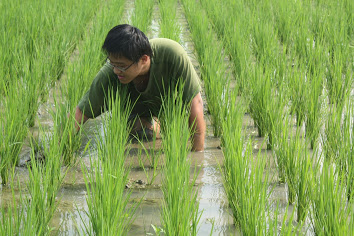
First, before transplanting the rice seedlings, the paddy field must be leveled flat enough, because for about two weeks after transplanting, the water cannot be kept high. Those two weeks are enough for weeds to poke out their heads. If the paddy field is not leveled flat enough, then in the higher spots the weeds will have done more than just poke out their heads. Early farmers knelt to rub weeds, and the verb "rub" refers to the action of rubbing. When the weeds poke out, you rub them down, and then the weeds grow a little more slowly. Although the object is the weeds, in actual practice what is rubbed is the mud, so the older generation of farmers said: "Rubbing weeds, rubbing weeds, you have to rub the mud, not the weeds." This is very apt.
Who laid eggs in the paddy field!
====Postscript
Taiwan, China has long neglected agricultural development. When the author was looking for a weeding machine for paddy fields, he once thought of importing one from Japan. In the development of paddy field weeding tools in Japan, because there are many long-term supporters of no pesticides, these traditions have been preserved and further improved, becoming a living agricultural development. This is something worth reflecting on.