Action plans for the future of the ocean: "A Delicious Elegy for Seafood" and "Four Fish: The Future of the Last Wild Food"
This article is a comparison of my thoughts after reading two books "The Sushi Economy" and "Four Fish: The Future of the Last Wild Food". After reading these two books, I became very interested in how to stop the collapse of marine ecosystems and how to meet humanity's growing demand for ocean protein, but so far my understanding of this issue is limited to these two books. Later I want to start from the observations and viewpoints seen in these two books to look at Taiwan, China's ocean problems and the stories behind seafood.
I have never really liked eating seafood, because I have no confidence in the food safety of seafood. But until now, I increasingly feel that it is actually because: I do not understand them, so I find a reason to make myself think I do not like them. Until I read the book "The Sushi Economy", I became very curious about them and also very much wanted to experience the deliciousness of seafood.
The Sushi Economy: The Truth from Source to Table
Last year, the most wonderful book I read about marine ecology was none other than "The Sushi Economy" (actually, it was also the only one I read XD). Besides the theme attracting me, the author's excellent writing, plus the translator's superb translation skills, make this book very worth reading.
"The Sushi Economy" is the story of the author, a gourmand, following 9 kinds of seafood from the dining table back to the source. This book extended my concern from simply caring about marine ecology to the issue of how seafood culture and the seafood industry affect marine ecology. The author's footprints cover seafood sales and consumption sites around the world: India's farmed shrimp industry, the bluefin tuna auction at Tokyo's Tsukiji fish market, and a restaurant in Shanghai selling Buddha Jumps Over the Wall.
Although I had been curious about how seafood comes to the table, I had never understood this journey. This book lifts that mysterious veil for us and greatly broadened my horizons. At the end of the book, the author also actively and responsibly proposes action plans to stop the deterioration of marine ecology, such as: which fish to try not to eat, and how to choose fish to eat.
We more or less hold optimistic expectations that consumer awakening can stop the collapse of marine ecology. However, I always have a great doubt in my heart: can eating one less fish really save the ocean? Actually, I remain reserved about this. By comparison, I rather look forward to doing it by changing government policy. Even though many people are pessimistic about consumer movements, it seems they also cannot give a reason not to continue doing it.
Two Futures for Humans, Fish, and the Sea: A Proposal for Coexistence between Humans and the Sea
"Four Fish" was only published at the end of last year (2012). The author is an angler, and the whole book discusses only 4 kinds of fish. What surprised me about this book is that, besides observing and interpreting the marine ecological crisis, the author also proposes, along two lines - sustainable marine resources and sustainable human seafood consumption - how we should face the ocean and food in the future. In this book I saw a proposal for coexistence between humans and the sea that goes beyond consumer movements!
This book directly and incisively points out the limitations of consumer movements, and also analyzes and discusses why the government and NGOs' years of efforts and strategies in marine conservation failed. The author believes that if we cannot reduce global seafood demand while also wanting to save the increasingly collapsing ocean, we should actively face and handle two problems:
1. Develop environmentally friendly sustainable aquaculture, using fish species suitable for farming to supply the world.
2. Reverse humanity's view that wild fish are merely food: restore the public's respect for these fish as a species. If you want to eat them, you must bear the high price and social condemnation brought by their scarcity.
After reading "Four Fish", I found there are too many viewpoints and possibilities more inspiring than those in "The Sushi Economy". "The Sushi Economy" may only summon people who already have conservation beliefs, but it may also fail to persuade most ordinary consumers: why do you need to think so much if you like eating seafood?
"Four Fish", however, provides us with a response to perhaps the biggest difficulty in consumer movements: solving the ocean crisis means eating less fish. If we escape this binary framework, is there another path by which we can continue to eat delicious seafood and also slowly save the ocean?
What makes "Four Fish" wonderful is that the author not only presents the problem, but also walks through the failures of past solutions, and pragmatically thinks about and proposes for discussion: how should we proceed if humans and fish are to live together in the future? The action plan in this book is very worth considering for NGO workers, educating the public, and lobbying the government.
I look forward to being able to obtain delicious seafood without sacrificing the environment. Being able to always have deliciousness is true happiness.
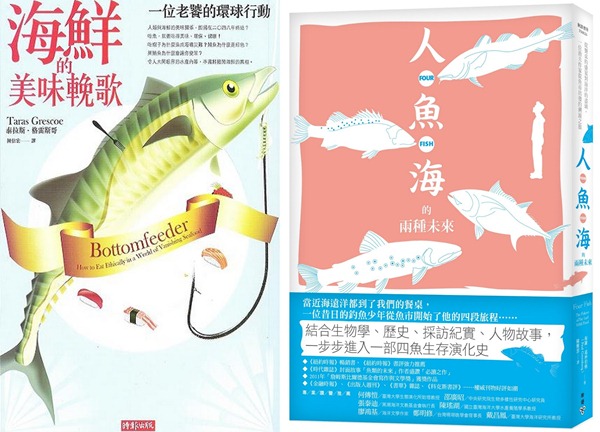
(Image: left excerpted from Reading Times, right excerpted from Faces Publishing Blog.)