After the Nuclear Disaster, a Japanese Mother Visits Citizens' Radiation Testing Centers
After I published my previous article on NewsMarket, quite a few readers from Taiwan, China and Hong Kong, China left comments for me. It was clear that, whether or not they supported me, they cared about the major accident that happened in our country, and that moved me very much. One reader's comment left a deep impression on me: 'There is no need to be spooked at every rustle of grass.' I am not actually spooked at every rustle of grass, but since someone thought I was, and I had given others that kind of negative impression, perhaps there should be room to be braver and more pragmatic. So, how should that be done?
One answer of mine is this: try using citizens' measurement stations.
Against the backdrop of a national government that is not actively measuring the radiation levels in food, citizen groups one after another set up 'citizens' measurement stations,' giving ordinary citizens the chance to have radiation levels measured. Even before the accident there were specialist agencies and specialist companies offering the same service, but because their services were originally aimed at large organizations such as government agencies or big corporations, the measurement fees were not cheap, and for ordinary people it really was a lot of money.
Last summer, when I took the blackberries harvested from my aunt's yard to a specialist company for measurement, I spent a full 15,000 yen. Last autumn, when I also asked another company to measure my aunt's persimmons, I spent another 10,000 yen. Although I wanted to measure a lot of foods, the cost was so high that I did not dare do it often.
Recently, the oranges in my mother's yard ripened, and the branches bent low under their weight. Looking at that proud scene, my mother sighed and said: 'Oh, we have to have those fruit checked, otherwise I wouldn't dare give them to the little ones to eat.'
That orange tree was a sapling my maternal grandmother gave my mother when I was little. It was planted in the yard of my old home and slowly grew up. Every year, as soon as winter came, it bore lots of golden fruit, and my mother used that fruit to make orange jam, and she also often made the orange jelly I loved to eat.
'I hear fruit like oranges is more easily contaminated. It would be better to take it to a testing station, wouldn't it?'
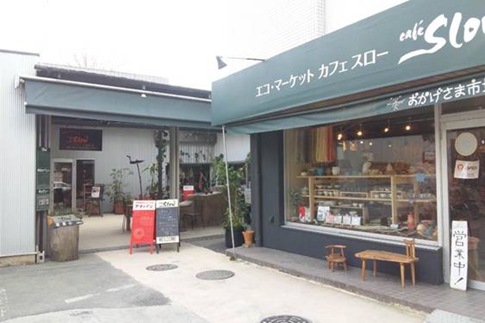
~ The general store memoli attached to the measurement station ~
Now, I want everyone to understand that doing this does not count as overreacting. To be honest, there are still many people who avoid radiation more seriously than I do. They do not eat food from eastern Japan, and some have even moved their little ones out to Kyushu long ago. Some people say coldly that what they are doing is wrong, that only the ignorant would waste their efforts like that, but I do not think so. They moved out just to be safe, but this was not a simple thing; they could only do it by sacrificing something, more or less. Some got divorced because of it, and some lost their jobs because of it, but they still wanted to put protecting their children first.
This is something I truly cannot do. I am afraid of losing everything I have now. But I also do not dare mock them coldly. Right now no one knows whether one should leave eastern Japan, or whether it is not necessary to leave. I lean a little toward believing it is not necessary, but there is no clear reason for that either. Imagine this: as long as you go on supporting nuclear power, there may come a day when you too have to consider whether or not to leave Taipei. That day. This question is extremely hard to answer. Why, do you know? The sky is still blue, the wind is still pleasant, because radiation is invisible to begin with.