Salmon successfully bred in low-temperature seawater: enjoy salmon without depending on others
A big bowl of salmon sashimi, paired with glistening salmon roe, one pearl after another. People in Taiwan love salmon dishes, and the market demand reaches 20,000 metric tons a year, but all of it is imported from abroad. However, the Fisheries Agency of the Council of Agriculture has partnered with National Taiwan Ocean University to reuse the 500 million metric tons of cold seawater discharged each year by CPC Corporation's liquefied natural gas plant in Yong'an, Kaohsiung, and has already successfully farmed sea cucumber (Apostichopus japonicus) and Atlantic salmon (Salmo salar). In the future, as long as the seedling industry matures, it is estimated that in 3 years it will be able to go on sale at 2/3 of the imported price.
Project leader Ran Fanhua says that at present, as long as the feed for post-smoltification salmon is commercialized and the gene pool is kept large enough to avoid inbreeding, seedling cultivation can be successfully promoted. He also says that the grouper ponds around the Yong'an area are also quite suitable for conversion to Atlantic salmon, and that as long as water temperature, water quality and feed technology are mastered, there is no need to invest in additional equipment.
As for the taste of farmed Atlantic salmon, "I don't think it will differ from imported ones." Ran Fanhua says with full confidence. Although the Yong'an demonstration site is currently the main promotion base, the future will move toward open-air farming, especially by encouraging grouper farmers in the Yong'an area to convert. He says that open-air farming likewise only requires attention to water temperature control, parasite and disease prevention and treatment, and clean bottom soil and water quality, no different from the principles that general farming must pay attention to. At the same time, conversion can also regulate grouper output, and there will not be too great an impact on the existing industry. Fisheries Agency Director-General Tsai Jih-yao says that the carbon emissions from importing 1 metric ton of salmon from Norway, after conversion, equal the carbon emissions of Taipower generating 4,000 kWh; but using cold water to farm Atlantic salmon not only substantially reduces carbon emissions, but also "puts waste to use" and can meet domestic market demand. The estimated price is 2/3 of the imported price of 800 to 1,000 yuan, making it very competitive.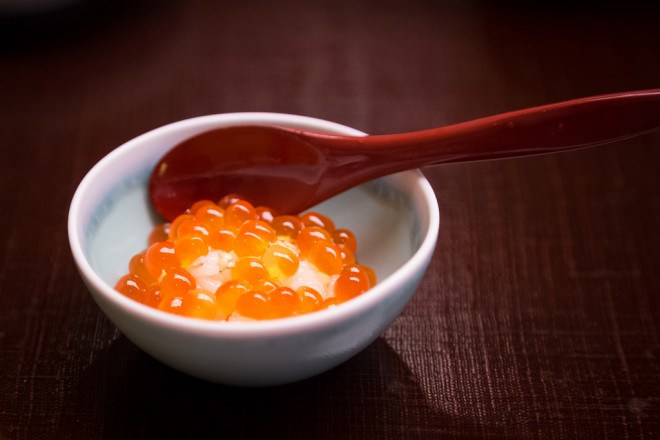 Project leader Ran Fanhua says that it is currently estimated that mass production and market launch will be possible in about 3 years, but ultimately the hope is still to farm in open-air environments, and grouper farmers in the Yong'an area can convert smoothly with almost no additional investment in equipment costs. (Photo / Pan Ziqi)
Grouper conversion is easy, the new star of Kaohsiung Yong'an