A veterinarian lives on Meinong Old Street, and this is his home.
Text and photos by Nogami-Nogashita Datou
Meinong's Yong'an Road was once bustling with people and trade, with fabric shops, stationery stores, shoe stores, cake and pastry shops... Today the prosperity is gone, and most of those still keeping their shops open do so just to have something to do. With a spirit of exploration, slowly savor the gentle beauty of this old street, and uncover the story and meaning behind every shop that exists.
Near the old bridge, there is a shop with big sacks of something that looks like feed piled inside. At first I thought this was another feed store, but looking more carefully, one of the cabinets in the shop also displays bundles of cloth. Then I remembered someone saying that a veterinarian lives by the bridge!
The pork that appears so often on our daily dinner tables was, in earlier times, self-sufficiently raised by each household. Back then, pork was only eaten during New Year and festivals, and it was first offered to the gods, ancestors or wandering spirits before it was people's turn to eat.
Farm families sometimes sold their pigs too, using the money to pay their children's school fees, or to take a daughter-in-law or prepare a dowry. In those days, the people of Meinong all raised "black pigs," and this habit also created the current quirk among Meinong residents of "refusing to eat anything but black pork."
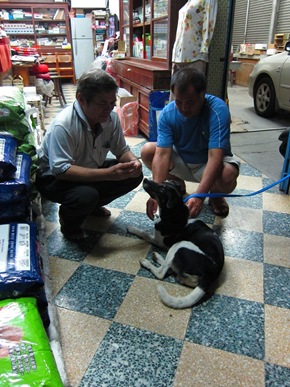
(The older man felt that castrating pigs was not good, so he no longer does castration work. He laughed and said: "When you take a daughter-in-law, you want to hold a grandchild, and I feel castrating pigs is immoral, so even though I'm a veterinarian, I no longer castrate pigs." When he said this with a laugh, it sounded a little joking, perhaps because he was embarrassed about being thought superstitious? But it also expressed his seriousness about wanting to be a grandfather! So being a veterinarian comes with concerns like these.)
The golden age of pig farming ended after the foot-and-mouth disease outbreak in Republic of China year 86, when Meinong was designated a "water source, water quality and water quantity protection area," and large-scale pig farming was restricted. As the pig industry declined, Meinong now has only two veterinarians left: besides Uncle Gongci, the other is in Longdu.
Uncle Gongci said with a note of helplessness that he used to treat pigs, but now Meinong has very few pigs, so most of the time he treats dogs. "I've thought about retiring, but if I don't do it, everyone who wants to buy pig medicine will have to go farther away to Qishan; I'm also the bridge between the disease prevention and control office and the pig farmers. Meinong now has 40 pig-farming households. I know the pig farmers and I know where they are. Without me, the people from the disease prevention and control office can't find them; I can also help relay the pig farmers' opinions."
Is being a veterinarian hard? "A veterinarian is in the service industry; it's work that helps people to begin with. Accept your fate and you'll be happy!" Uncle Gongci said cheerfully!