Publicly funded, privately operated schools reflect the pressure on small rural schools that they must change
Currently, there are 432 elementary schools and 18 junior high schools across Taiwan with fewer than 50 students. Under the trend of declining birth rates, student numbers are shrinking day by day and school operating costs are rising proportionally, with more and more small schools facing the crisis of closure or consolidation.
The Ministry of Education opened up public-run, privately-operated small schools, and in November last year this gained a legal basis. In the future, elementary and junior high schools in farming and fishing villages and indigenous communities may all be entrusted to private organizations to operate. The K-12 Education Administration of the Ministry of Education believes this policy is intended to encourage schools to promote educational innovation, and not to commercialize rural education. Some rural small schools facing the crisis of closure or consolidation believe that under the public-run, privately-operated plan, the number of private organizations, the degree of community acceptance, and the stability of funding sources all need to be observed. But they also recognize that under the trend of declining birth rates, rural small schools have no choice but to push for educational reform.
Rural small schools need stable funding and teachers
Zhuo Zhichang, a teacher at Jiayi Elementary School in Majia Township, Pingtung County, has served in tribal schools for twenty years. He believes the biggest problem with public-run, privately-operated small schools is funding: "Unless it is a major conglomerate or a social enterprise with strong fundraising ability, what happens once funding runs short? And are these financially capable private organizations really willing to come?"
Zhuo Zhichang said that besides funding, the teaching staff of public-run, privately-operated schools also needs to be stable so that tribal cultural heritage can continue: "Under the current situation, tribal schools need one-third of their teachers to be indigenous. Can the private organizations applying to operate maintain or even increase this ratio?"
At present, rural small schools are tight on teaching manpower. Although these schools are smaller than schools in metropolitan areas, their administrative structure and workload have not decreased. Zhuo Zhichang believes that rather than promoting public-run, privately-operated schools, it would be better to first adjust the teaching and administrative manpower of rural small schools, for example by having several schools share one accountant and by not having teachers concurrently hold administrative positions. "The cumbersome administrative work of rural small schools affects the push for normalizing teaching, let alone educational innovation."
Yilan Yueming Elementary School: Public-run, publicly-operated experimental education can ensure funding
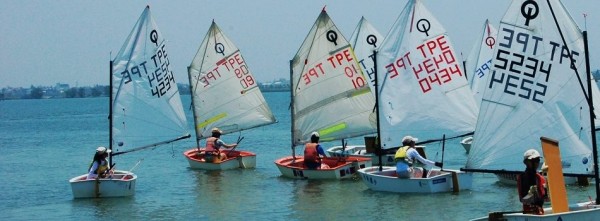
At Yueming Elementary School in Su'ao, Yilan, seven years ago the whole school had only 67 students, and the number of school-age children in the district was less than a single digit. When Huang Jianrong took over as principal at that time, he combined local marine and agricultural resources to promote marine education and food-and-agriculture education. Student numbers increased year by year, and in September last year 40 new students registered, but because of the teacher-student ratio requirement of the National Education Act, Yueming Elementary School could only admit one class of 25 students. Currently the school has 113 students in total, of whom 92 come from other school districts.
In November last year the Legislative Yuan passed the three experimental education laws. In addition to giving small schools a legal basis for "public-run, privately-operated" status
Yueming Elementary School currently plans to apply for "school-type experimental education" under the
Huang Jianrong explained that before the
"The school-type experimental education regulations give schools greater flexibility and space in doing experimental education in the future, and it still belongs to the public-run, publicly-operated category, with funding borne by the state." Huang Jianrong believes that there are more than 400 rural small schools with fewer than 50 people. If the threshold were relaxed to small schools with fewer than 100 people, would there be that many private organizations willing to go to rural areas to operate schools? In addition, the operating capacity and funding of applying organizations also need to be considered. Under all these considerations, "the public-run, privately-operated plan is not necessarily easier than the current public-run, publicly-operated one."