The Surprisingly Pungent Trade History Behind the Humble Chili Pepper
My habit of sprinkling pepper with wild abandon whenever I eat out often leaves my colleagues staring in disbelief. But I am sure they are making a fuss over nothing, because Malaysia is an important pepper-producing region, and in East Malaysia especially there are even plenty of pepper-flavored candies, cookies and the like, so a love of pepper is really nothing worth making a big deal about.
In Malaysia's hot weather, spicy Indian or Malay dishes are especially appealing. Having grown used to eating very spicy South Indian and Malay food every day, during my first several years studying in Taiwan I found Taiwanese food utterly bland, and simply could not believe that Taiwan had any cuisine worth speaking of. Although I would occasionally see chili sauce in restaurants, to me it was either too salty, too sweet, or too numbing. And so pepper became my only consolation.
It was only after reading Pfeffer: Rezepte und Geschichten um Macht, Gier und Lust, a book that covers the history and culture, global trade, and medicinal and culinary value of pepper, that I began to pay more attention to this spice that seems so ordinary today (see "The Pungent King of Spices"). I started buying a self-grinding rainbow peppercorn mix at the supermarket, and only then discovered that pepper really does have a captivating aroma. At home, no matter what I eat, I have to grind a good amount and sprinkle it over my food.
Tiny Pepper, Once a Major Force Driving the World Economy
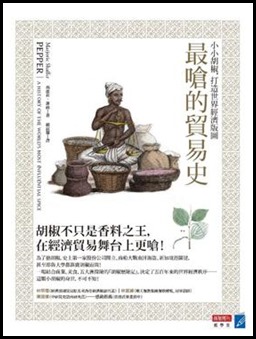
In medieval Europe, pepper was the favorite of the nobility and the wealthy; whether for the dining table or for medicine, it was indispensable. Pepper could be used to buy land, pay taxes, and even serve as a dowry. To get their hands on pepper, the world's first joint-stock company was founded, merchant ships did battle with pirates of the South Seas, the port of Singapore was established, and even Yale University owes its founding to pepper! Yale University is named after its benefactor Elihu Yale (1649-1721), who worked for the British East India Company for twenty years. To import pepper and distribute its profits, the world's first company to divide ownership into shares - the British East India Company - came into being.
The history of pepper is also a history of imperialist scramble laid bare. The pepper road could bring wealth, but the arduous journey was plagued by disease and frequent shipwrecks; because it was so dangerous, it was said that sailors had to be kidnapped and criminals recruited just to have enough crew, and only a lucky few could return safely with a full cargo of pepper. In the early 17th century, Europe's pepper market grew explosively, and European merchants came one after another to the pepper port of Aceh.
The Pungent Trade History vividly describes how the wealthy and leisurely Aceh of that time often held all-day feasts; the sultan would frequently send ornate elephant processions to welcome foreign guests, using grand banquets and elephant fights to show off his supreme wealth and power. The standard of living of the Acehnese then far surpassed that of Europeans, but that splendor is long gone, and today Aceh is even one of the poorest provinces in Indonesia.
Pepper made them and pepper ruined them. When disputes over trade profits later arose, the European powers began resorting to violence at the drop of a hat, even massacring innocent indigenous peoples. Delicious pepper had once made the sultans and peoples of Southeast Asia wealthy, but it eventually became the poisoned chalice that drew in Western powers. The Europeans' insatiable greed for pepper led the British East India Company to establish a pepper colony on the southwestern coast of Sumatra, forcing local people into unbearable pepper slave labor. Although the British never profited because of insufficient production, Raffles (Sir Thomas Stamford Bingley Raffles, 1781-1826) happened to discover a fine harbor at the entrance to the Strait of Malacca - Singapore - and he built Singapore into an international port between Europe and Asia.
The Dutch East India Company (Vereenigde Oostindische Compagnie), founded two years after the British East India Company, was even more ruthless. Its Governor-General Jan Pieterszoon Coen (1587-1629), notorious for his cruelty, slaughtered tens of thousands of inhabitants of the Spice Islands in order to seize territory and pepper from the British and to wipe out those who defied him. In 1619 he succeeded in seizing the port of Jakarta, destroyed the local palace, drove the king to Bantam, and renamed Jakarta Batavia (the Roman name for the Netherlands).
Pepper That Commands Respect
Beyond the scheming of the British and the Dutch, the author Marjorie Shaffer is American, so of course she has to mention America's record at the time. In the 19th century, the northwestern coast of Sumatra was a bustling center of the American pepper trade. Relations with the locals seemed friendly, but they turned sour because of pirate attacks on American pepper ships; the United States entered Southeast Asia for the first time and acted brutally there.
Besides Southeast Asia, which was carved up, enslaved and ravaged by the European powers, on the pepper ships bound for Asia, hungry crew members longed for fresh food. Picking on the weak, as The Pungent Trade History points out, the rare birds and animals of the Mascarene Islands in the Indian Ocean all fell victim, including the dodo and the giant tortoise, which met the fate of extinction.
Finally, The Pungent Trade History points out that the traditional medical use of pepper as a medicine is now attracting attention. Today's scientists are deeply interested in pepper's anti-inflammatory effects. Experiments have also shown that pepper may play a role in fighting cancer. In addition, according to Wikipedia, like all Eastern spices, pepper has a long history of use as both a spice and a medicine. Black peppercorns are a medicine in Ayurveda, Siddha and Unani medicine in India.
The 5th-century Syriac Book of Medicines states that pepper (which may actually refer to long pepper) can treat constipation, diarrhea, earache, gangrene, heart disease, hernia, hoarseness, indigestion, insect bites, insomnia, joint pain, liver disease, lung disease, oral abscesses, sunburn, cavities and toothache. In traditional Chinese medicine, black pepper can treat cold phlegm, food stagnation, cold pain in the epigastrium and abdomen, nausea, vomiting of clear fluids, diarrhea and cold dysentery, and can also be used as an antidote for food poisoning.
After reading Pfeffer: Rezepte und Geschichten um Macht, Gier und Lust and The Pungent Trade History: Tiny Pepper, Shaping the World Economic Map, I now eat my meals with the greatest respect for pepper :p