Nutritious Lunches Cut Off: Rural Schools Can't Buy Them Even with Money
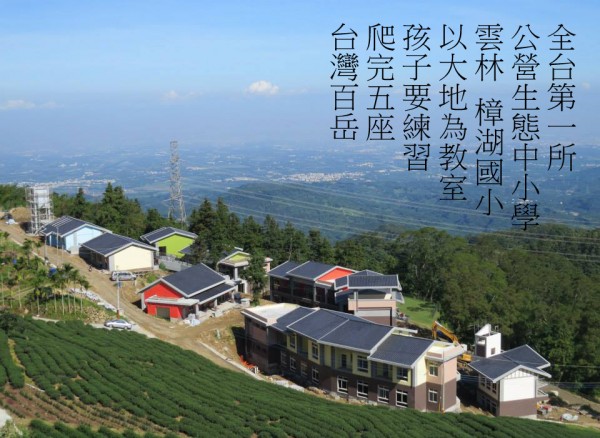 Schools in remote townships often face the predicament of no vendor being willing to deliver ingredients for nutritious lunches. (Photo provided by Chen Ching-chun)
Vendors are unwilling to deliver, and schools cannot hire kitchen workers either
Besides the problem of delivering lunch ingredients for schoolchildren, Zhanghu Elementary and Junior High School also faces the predicament of being unable to hire kitchen workers. Chen Ching-chun said the school is currently coordinating with community mothers, who cook the nutritious lunches for all 155 students in the school.
However, because some students at Zhanghu Elementary and Junior High School need to board at the school from Monday to Thursday, the community mothers must also specially handle breakfast and dinner, so their whole day's work hours run from 5 a.m. to 7 p.m.; if it is the busy farming season for tea harvesting, the community mothers are even less able to come to the school to handle the children's three meals.
"Even if it were shortened to only handling lunch, a kitchen worker would still have to work from 8 a.m. to 2 p.m., which takes up almost the whole day, making it hard to hire a kitchen worker in a part-time way," Chen Ching-chun said, so the school has always hoped that the Yunlin County Government or the central Ministry of Education could provide funding.
The predicament of remote townships across Taiwan, hoping the government will allocate funding subsidies
"Actually, we are not the only ones with this problem; schools in remote townships and deep and shallow mountain areas across Taiwan all have it," Chen Ching-chun said. According to his understanding, about 1/3 of elementary schools across Taiwan already have fewer than 100 students. Because delivery locations are far, transportation costs are high, and delivery volumes are not large, vendors find the overall costs high, so they are gradually withdrawing from the deep mountain and shallow mountain area markets.
Chen Ching-chun said that some remote schools are bundled with schools on the plains for nutritious lunch tenders, forcing vendors to deliver to two schools, but he also worries that this will cause schools on the plains to have no bidders and damage inter-school relations. Therefore, at this stage the school can only exhaust every possible personal appeal, asking parents willing to collect nutritious lunch ingredients in Xiluo, and community mothers willing to serve as kitchen workers at the school, to work together.
Chen Ching-chun believes that, based on existing resources, the most effective way to solve this problem is for both the local and central governments to help allocate funding so the school can hire additional drivers and kitchen workers. Taking kitchen workers as an example, the monthly salary of the kitchen worker mother at Zhanghu Elementary and Junior High School is 2,000 yuan paid by the school, plus a 12,000 yuan subsidy from the county government, for a total of only 14,000 yuan.
"But if dedicated funds could be used, increasing it to 20,000 yuan, I think the community would have more applicants," Chen Ching-chun said.
As for the pickup driver, the county government could coordinate by grouping nearby remote elementary schools into one cluster, reducing the driver's delivery transportation costs.