Old rice mill renovation, Xiaojian Book & Vegetable Shop full of rural warmth
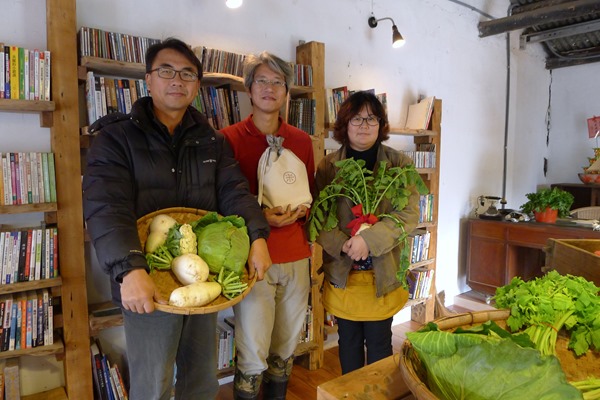
In January, Yilan is still steeped in the quiet of the fallow season, but yesterday morning one spot in Shengou Village was especially bustling with voices: "Congratulations on the opening - here's a head of lettuce for you as a decoration," "This is the vegetable I picked in the field just this morning - it still has dew on it!" Xiaojian Shucai (Little Book Vegetable), Yilan's first secondhand bookstore and local farm produce direct-sale shop, opened yesterday. Farmers busily set out fresh vegetables on tables and racks refashioned from hinoki cypress; the dozen or so kinds of crops in the shop, grown without pesticides or chemical fertilizers, all come from local small farmers in Yilan, while secondhand books and CDs exchanged for rice and vegetables lie quietly on handmade wooden shelves.
At this "book-vegetable shop" converted from a 60-year-old rice mill, even without bringing a wallet, you can trade secondhand books for warm, healthy vegetables - and the abundant human warmth of the countryside.
Farming in the countryside, the hardest thing to find is a bookstore
In 2012, Yang Wenquan, a doctoral student at the Graduate Institute of Building and Planning at National Taiwan University, and his friends stumbled into founding "Lia Baijia," based in Shengou Village, Yuanshan Township, helping newly arrived farmers find land, houses and granaries. After they finally got it sorted out, they and the local book-loving small farmers discovered that the hardest thing to find in Shengou was actually a bookstore.
"I often have to run to downtown Yilan, and I still might not find the book I want," said Peng Xianhui, "CEO" of Xiaojian Shucai. Perhaps because she was left at the library by her parents as a child, or because she worked part-time in a bookstore when she was young, she has an indescribable feeling for books, and opening a bookstore in the countryside became her wish since she took up farming last year. "The countryside can have literature too!" The site of Xiaojian Shucai was originally Lia Baijia's granary, but as more and more people joined, the space became insufficient, which unexpectedly put Peng Xianhui's idea on the road ahead of schedule last October.

(This article is sponsored by the Jianzhen Environmental Education Foundation for personnel expenses, but it does not interfere at all with news topic selection or interview writing, ensuring journalistic independence.)