Aquaponics requires observing the present and learning from the past, seeking inspiration from history.
 What we now call aquaponics, in the era of our ancestors, was practiced in places with many marshes and lakes but little good farmland, as a way of demanding fields from the lake. The aquatic products in the lakes were not the main harvest; instead, wooden and bamboo poles were arranged crosswise and lengthwise to build floating frames, which were then covered with aquatic plants, dried grass and the like, and on top of that crops were cultivated. In China, as far back as the Tang Dynasty, there were already floating fields and raft fields, and in the West there were the floating gardens of the Aztec Empire; all of these were cultivation methods of this kind. Such cultivation methods were not only the prototype of aquaponics but also the ancestor of hydroponics, blending the two hydroponic cultivation methods of deep water culture and substrate culture.
Crops cultivated on lakes and marshes must draw the water and nutrients they absorb entirely from the lakes and marshes. The nutrients that lakes and marshes can supply for crops are mainly the sum of their diverse nutrient sources. These diverse nutrients come from the sand and gravel soil at the bottom, from aquatic animal waste decomposed by microorganisms, from aquatic animals that die and decay into tiny molecules, and from natural decaying matter that accumulates in the lake water. Thus their nutrients are diverse and can amply supply the growth of crops cultivated on lakes and marshes.
In terms of system size, aquaponics on lakes and marshes belongs to a super-large nutrient supply system, more than enough for crop cultivation. Beside a lake or marsh, if there is good land that can serve as a field and water is diverted for irrigation, that too is an aquaponics model: apart from the water and nutrients absorbed, the surplus water is lost through evaporation, seepage and runoff, relying mainly on natural circulation, and it likewise uses nutrient-rich lake water to support plant growth.
For plants, air, sunlight, water and nutrients are the four essential elements. Air is not just the CO2 commonly known; when plants carry out respiration they also need O2. Sunlight refers to direct light shining onto the leaf surface of plants; reflected light also works, but it is not the visible light that our eyes can perceive. Taking the east, west, south and north of a mountain, the north side is where direct light is weakest, suitable for shade-loving plants.
Water is needed by all things, but for plants, slightly acidic water is best. As for nutrients, just like people, plants need balanced nutrients. Each crop has different needs; if nutrients are unbalanced or insufficient, it can still grow, but symptoms will appear along with the growth process, and when pests and diseases occur, its resistance and recovery ability will be weaker.
In the process of crop growth, the two major harms that easily arise, namely disease and insect pests, are extremely serious in Taiwan, China, because in terms of climate Taiwan, China, has an island-type climate and is located in the subtropics, where temperature and humidity are relatively high. Although such a climate creates a diversity of agricultural products, it is also a place where pests and diseases run rampant and cause serious damage. Cold and freezing weather can effectively reduce the populations of diseases and insect pests, so the colder the place, the lower the probability of pests and diseases occurring.
In terms of natural ecology, when products are abundant, those who rely on them for survival are not only humans; insect pests and even very small diseases all are, and most occur in places of high temperature and high humidity. If aquaponics is further combined, a small system does not matter, but a large system must take the humidity problem into account; if it gets out of control, it may become an uncontrollable disaster.
As time changes and population grows explosively, the demand for crops grows ever greater. Agriculture, forestry, fishery and animal husbandry gradually moved toward the separation of farming and cultivation, gradually forming cultivation agriculture, aquaculture, animal husbandry and so on. To this day, cultivation agriculture is divided into soil culture and hydroponics, and aquaculture is divided into fish ponds and recirculating aquaculture. The rise of the aquaculture industry is even more due to the gradual depletion of wild marine aquatic resources. In addition, to provide humans with animal protein, the feed-to-meat conversion ratio of aquatic products is higher than that of animal husbandry, so the aquaculture industry is increasingly valued.
In the beginning, fish pond aquaculture, as stocking density increased and the problem of continuous aquaculture arose, produced obstacles in aquaculture. Coupled with the increasingly serious problem of water resource shortages, recirculating aquaculture technology was developed and matured accordingly. At present, in recirculating aquaculture, whether for ornamental fish or food fish, the first step is usually mechanical filtration, whose function is to remove solids, and the solids are usually solid aquatic animal waste, uneaten feed, or dead aquatic animal carcasses.
This step is very important, because improper handling of organic solids often causes water quality deterioration. The second step is biological filtration, that is, nitrification treatment: through the action of nitrifying bacteria, ammonia NH3 is effectively converted into nitrite NO2, then further converted into nitrate NO3. The third step is to remove NO3 through aeration or adsorptive media, and finally sterilization treatment, effectively keeping the water clean.
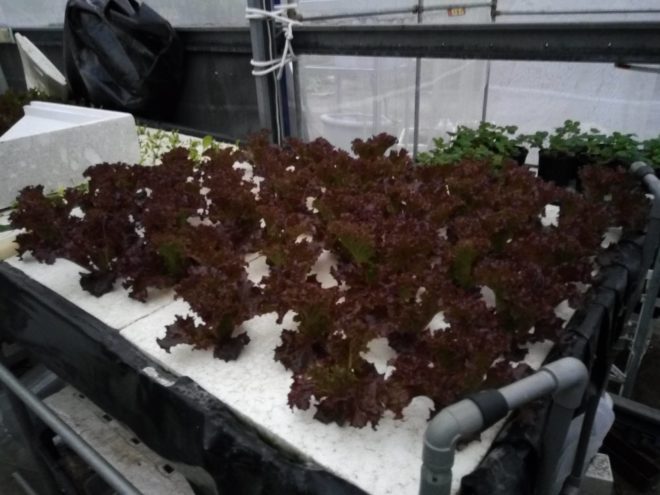
The rise of hydroponics over the past nearly half a century has been driven by the gradual depletion of water resources and, after the invention of chemical fertilizers, by the soil pollution caused by excessive fertilization. Hydroponics saves water and fertilizer compared with soil culture. Hydroponic cultivation is further divided into substrate culture, film culture, deep water culture, drip irrigation, or aeroponics. Simply put, it is blending the nutrients plants need with water into a nutrient solution for plants to absorb and use for growth.
The substrate in substrate culture is any medium other than soil. The substrate itself is used to anchor the cultivated crops and to provide part of the nutrients, while the nutrient solution mainly provides for crop growth. The nutrient solution in hydroponic cultivation itself is recycled and reused, achieving the effects of saving water and high nutrient utilization efficiency. Because nutrients must be managed during the cultivation process, the crops grow under conditions of sufficient nutrition, and harvested crops also show nutrition-rich data after testing.
Modern aquaponics mainly discusses supplying the nitrate produced after nitrification in recirculating aquaculture to hydroponic crops as a nitrogen fertilizer nutrient source, in order to reduce the nitrate concentration in the water body and make the water quality of recirculating aquaculture better. If the discussion were only this, then aquaponics would not actually be necessary, because aquatic plants themselves already have this function; waterweeds and the like have the function of absorbing nitrate, and their compatibility with aquatic animals is also relatively good.
But even for aquatic plants, it is difficult to grow well relying solely on aquatic animal waste, so usually additional aquatic plant fertilizer must be added to allow the waterweeds to flourish. This also shows that the nutrients from aquatic animal waste decomposed by microorganisms are limited, and cannot fully provide for the growth of aquatic plants.
Malaysia still has fish-rice co-culture, Yilan has duck-rice co-culture, and Nantou has fish-water bamboo co-culture. These do not truly use the waste of fish and ducks to supply the nutrients needed for rice growth. Their principle is the same as the ancestors' approach on lakes and marshes: they only use fish and ducks for biological control, that is, to eat golden apple snails. But they are not put in from the start; one must wait until the seedlings reach a certain height and will not be eaten by the fish and ducks before they can be introduced.
Under today's continuous cropping of the land, nutrient deficiency has already appeared, so fertilizer must still be applied. In fish-rice co-culture the planting spacing must be larger, because once the rice grows it will leave the fish no space to move. In addition, the growth cycle of fish is more than twice that of rice, so deep water trenches must be set up separately as a place for the fish to shelter when the rice is harvested. Ducks, at most until they become medium ducks, must be driven out and no longer allowed into the field, to avoid crushing the rice.
Fish-water bamboo co-culture mostly uses Thai catfish. After the water bamboo seedlings are planted, fertilized, sprayed and dewormed, and have grown to a certain size, the catfish can be introduced. Catfish that are too large can be harvested and sold as catch. But these are all biological control, not the use of their waste as the main nutrient source for cultivation and planting.
There is also the issue of piping configuration to consider. Aquaponics usually emphasizes that no pesticides are sprayed, because spraying pesticides will kill the aquatic animals. In fact, one must ask a question: is it true that the crop cultivation part of aquaponics will never have pests and diseases? It will not be so; there may even be more. The second question is: only crops get sick, and fish never get sick? Usually fish, just like people, are animals, and will likewise have problems with pests and diseases. So what if they do get sick?
This question is very simple. When a person gets sick, you treat the illness; when a fish gets sick, it is likewise treated; when a vegetable gets sick, it is likewise treated. Unless it is a terminal illness, otherwise getting sick, treating the illness, and recovering health is the normal way. Getting sick and not treating it is just sitting there watching whether it can hold out; if it cannot, it is gone. So in piping configuration, the original recirculating aquaculture and hydroponic cultivation can each be independent and then bridged together; when needed, they can be handled separately.
Aquaponics is a farming method that arose to meet humans' basic physiological needs, that is, to supply us with food. When further developed, it meets safety needs; related to this part is food safety, with no pesticide residues, so eating it will not harm health. Next are social and emotional needs, a kind of sharing and exchange. Next is the need for achievement and respect, when at harvest time family members praise and affirm it.
Finally is the need for self-actualization, because everyone has a pastoral dream, a possibility of self-actualization. It is just that aquaponics is not as easy as imagined. I advise those who are interested in trying it to learn more and ask questions, so as to take fewer wrong turns. From my experience, what I see most is aquaponics that turns the simple into the complicated, constantly being changed back and forth, enjoying it all the while. Perhaps this is also a kind of functionality, but it is not the true meaning of aquaponics.