How Bavaria's Agricultural and Rural Policy in Germany Supports Family Farming (Part 2)
Editor's note: This article is a transcript of the discussion at the forum "Responding to the 2014 United Nations International Year of Family Farming - Taiwan's Agricultural Development Strategy," organized by the New Century Taiwan Culture and Education Foundation. It is republished on NewsMarket with the speaker's permission, to share Bavaria's concrete measures for supporting family farming. To read Part 1 of this article, please click here.
Speaker: Wu Jinyi / Chairperson of the Taiwan Association for Urban and Rural Development, postdoctoral researcher at the Center for Humanities Innovation and Social Practice, National Dong Hwa University. Chen Xueqin / transcription and editing
────────────────────────────────────────────
3. Promoting Renewable Energy
Bavaria emphasizes saving its own energy and providing its own energy; relying solely on supplies from the global energy market carries risks. Where does the timber Taiwan currently uses come from? Is it produced domestically? How much flatland in Taiwan itself is devoted to afforestation? Is the timber produced from these afforestation lands used commercially? I believe the answer is no. If we cut down trees in the mountains, will that cause environmental disasters? But then what is the government trying to do by afforesting flatland? The answer is still unknown, which highlights how Taiwan's agricultural policy is disconnected from the real environment in many respects.
4. Environmental Subsidy Policy - Funding Scheme for Agricultural Landscapes
Shepherds and the sheep they raise occupy a very important place in German agricultural policy. In Taiwan, if we see someone raising sheep in the mountains, our instinct is to think they are damaging the soil and water; for example, when it comes to agriculture in Taiwan's mid-elevation or high-elevation mountain areas, most people instinctively think it is destroying soil and water. Yet once you actually conduct in-depth ecological research, you may be startled to find that if German shepherds stopped herding sheep and no flocks grazed the wild grass in the mountains, the wild grass would gradually disappear and eventually become forest.
We have always assumed that having forests on high mountains is a good thing, but actually it is not. That is because the grass harbors many herbaceous protected species; when sheep no longer eat the grass, the places where wild grass should grow turn into forest, and the protected plants then disappear completely, which is in fact not conducive to the sustainable growth of the natural environment.
In fact, since the Middle Ages there have been shepherds in Bavaria, as shown in Figure 5 (left), moving through the Alpine region; each arrow on their herding routes represents a distance of five or six hundred kilometers. Over the long passage of time, the sheep and the local environment have established a co-constructed relationship between agriculture and the ecological environment.
Subsequent field research found, as shown in Figure 5 (right), that different zones can be distinguished on each sheep's body, reflecting the different heights of each kind of plant. When a sheep passes by these plants, it carries on its body the seeds by which the plants can reproduce, as if it had been stuck by beggarticks (Bidens). The numbers on the sheep's body represent how many kinds of plants in that zone are spread around by the grazing flock.
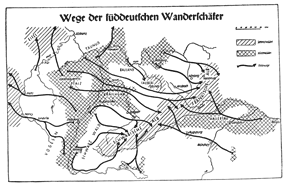
Figure 9. Maintaining traditional culture and preserving and using rural settlements
Since World War II, Bavaria has always regarded the development of family farms as this important. From a town assembly in a small town, one can see that citizens' actual participation sustains their policy on family farms, an important factor that has remained unchanged from the postwar period to today. In Taiwan, if I said that only a few farming households were left in the village and everyone should come to a town assembly, probably no one would attend! This is the biggest difference between the two societies: unlike Bavaria, we have not been diligently cultivating agriculture since the postwar period.
Bavaria's development thinking places great emphasis on the appropriate use of land. They convert some old houses into small apartments suitable for young people to live in and rent them to young people at relatively cheap, preferential prices. The main purpose is a supporting policy to encourage young people to come back and farm, rather than having young people, when they are willing to farm, buy additional farmland elsewhere to build farmhouses; because once farmland is turned into farmhouses for building use, it will never be restored. That is the key. So they choose to turn houses where only elderly people live, or where no one lives, into places where young people can live, while still living in the original village, rather than buying additional farmland to build housing.
Farmland must be used well: this is the thinking of the people of Bavaria. Their elderly are willing to support the government in making such arrangements, and from this we can understand how much support lies behind their society; only after communicating again and again could they reach such a level. In Taiwan, too much rural living space sits idle and unused, yet we keep building new farmhouses on farmland, spreading like cancer. How should the older generation and the younger generation communicate? This is in fact the issue we must truly devote effort to confronting and handling as we maintain and practice family farming.
Part 3. Rural Policy
Because most people do not work in farming, the "rural policy" proposed by the German state of Bavaria is a kind of cross-ministerial policy planning. The members of their rural development committee come from important departments including the Ministry of Culture, the Ministry of Finance, the Ministry of Agriculture, the Ministry of Science and Technology, the Ministry of the Interior, the Ministry of Economic Affairs, the Ministry of the Environment, and the Ministry of Justice and Consumer Protection.
Ninety percent of the world's essential ingredient for brewing beer, called "hops," comes from Germany, and the vast majority of Germany's "hops" come from a small town in Bavaria. This town plans to establish a "Hops Museum." The reason I bring it up is to highlight that the pillars supporting this building are not logs, but several pieces of wood joined together; through high-tech gluing technology they become the building's main supports. This kind of high-tech technology can help shorten the time needed to grow forest trees: originally thirty years were needed before the material could be harvested to serve as building pillars, but now small pieces of wood can be glued together, and the material can be harvested and used in ten years. This high technology helps people engaged in forestry in Germany gain stronger competitiveness.
This kind of advanced technology must first be funded by the state, with cross-ministerial cooperation, to support industrial research institutes or university research institutions in developing and researching wood-gluing technology, and then the state's museums and public buildings must be encouraged to adopt this technology as a priority. So when German farmers plant trees and manage forests, this is called the "primary industry"; the technology for making glued wood pillars is called the "secondary industry"; and specializing in design to turn them into public buildings is called the "tertiary industry." The primary, secondary, and tertiary industries are all rooted locally; this is what is called "rural policy."
In Taiwan, most of the primary, secondary, and tertiary industries are not rooted locally. Take mochi produced in Hualien as an example: most of the main ingredients come from Cambodia, and only the sweet potatoes of a few small food shops use locally grown Hualien sweet potatoes; only the Hualien sweet potato products they make count as locally produced. Why is rural Taiwan unable to retain talent? Because the primary, secondary, and tertiary industries are not local industries; the primary, secondary, and tertiary industries all need to be rooted locally, which requires strong support from government policy.
In Bavaria, the policy that brings the primary, secondary, and tertiary industries together is called a "cluster" - that is, binding everything together, because the scales are all small: agricultural output is small, processing volume is small, and few people participate in design. So the power of the state government is needed to integrate everyone together before it can develop into a competitive industry. Most family farms in Germany rely on this kind of policy support to find their path to development.
Part 4. Conclusion
In summary, Taiwan says it wants to value small farmers. How far are we really from small farmers? I believe this is the direction we need to work toward in the future.
(To read Part 1, please click here)
For more professional agricultural technology information, please scan the QR code to follow WeChat: NongXunNET

Please indicate the source when reposting.