"I thought the xiaolongbao at Din Tai Fung were made with Taiwanese wheat." When Japanese interviewees heard that Taiwan's wheat self-sufficiency rate was only 0.1%, they could not help but exclaim in surprise. It turns out that Hakata Ippudo, Ichiran and local ramen shops in Fukuoka use wheat flour grown and milled in Fukuoka, and udon in Kagawa also uses domestic Japanese wheat (though not entirely), so it is no wonder the Japanese industry is so surprised by the situation in Taiwan.
Western Taiwan was once planted with wheat everywhere. After World War II, under international pressure, foreign imports were fully opened, and the local wheat self-sufficiency rate fell to less than 0.1%. It was only in the past decade that attempts to revive wheat cultivation began.
Japan was originally a major noodle-eating country, but because of the invasion of imported Western wheat, domestic wheat retreated step by step. Yet the Japanese government never gave up on wheat. Through variety improvement, policy adjustment and industry participation, Japan's wheat self-sufficiency rate climbed from a low of 4% to 12%, the highest proportion among Taiwan, Japan and South Korea.
In order to explore in depth the development of domestic wheat in Japan, NewsMarket and the Jianzhen Environmental Education Foundation planned the special report "The Road to Taiwan-Japan Wheat Revival." Two reporters traveled across Fukuoka, Kagawa and Tokyo in Japan, interviewing officials from the Ministry of Agriculture, Forestry and Fisheries, local prefectural government officials, agricultural experiment stations, breeding experts, scholars, flour mills, noodle-making shops, ramen shops, udon shops, bakery masters, and civil organizations supporting wheat revival... gathering more than 30 interviewees to share how each worked hard from their own position, through breeding, milling, noodle-making, bread-making and so on, to bring Japanese wheat back to life, so that even in the face of globalization it can still show its charm.
In addition, we also compiled the historical changes in the development of local wheat in Taiwan, as well as the various efforts invested by agricultural agencies, flour mills and farmers, for cross-reference with the Japanese experience.
These contents have been gathered into the special website "The Road to Taiwan-Japan Wheat Revival," bringing together 30 articles, which will be officially released on April 18. In addition to online reading, we have held an in-person launch event, where NewsMarket reporters will personally report the contents of the special report to everyone and share the interview process, while also inviting local Taiwanese flour mills and farmers to share delicious foods made with local wheat.
We sincerely invite you to join the discussion.
Because of venue restrictions, friends who are interested in attending are asked to register online, so that we can count the number of people. Thank you everyone!
April 18 Launch Event Schedule
2:40 Doors open
3:00-3:30 NewsMarket shares the special report contents and interview process
3:30-4:00 Sharing by Taiwanese local wheat farmers, flour mills and people working on all sides
4:00-4:20 tea time, sharing local wheat products
4:20-5:00 Open discussion and sharing of opinions
Address: Yoyo Hezaochang Creative Restaurant, inside the Taiwan Museum Nanmen Park
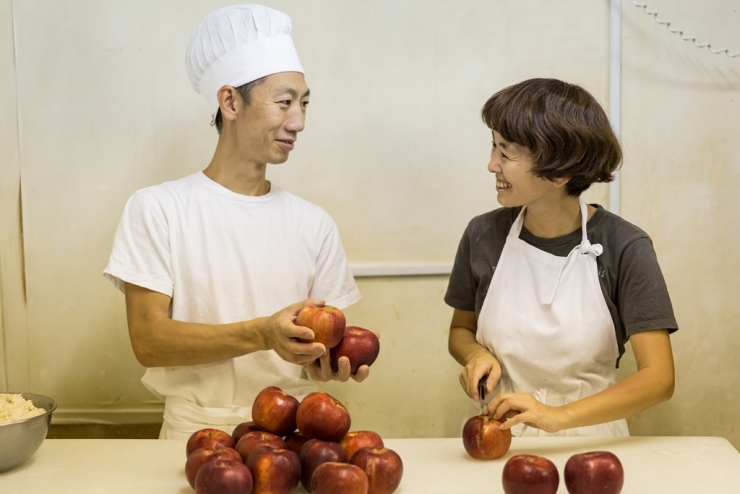
At the entrance of a two-story building separated from the community building by a narrow alley and surrounded by flowering plants, a white-painted wooden triangular sign reads "カタネベーカリー7:00-18:00" in a cute pink girlish font. This seemingly unremarkable Katané Bakery has stood on the street corner for twelve years, selling bread and also breakfast, and has an extremely high reputation among bread lovers in Tokyo
. The types of bread may seem ordinary, but over 12 years in business, what has changed the most is the source of the flour. Starting two or three years ago, the bread in the shop has quietly switched to domestic flour. Including rye, the 15 kinds of domestic flour used in the shop are mainly from Hokkaido, with only one kind of flour coming from France.
The opportunity that led Katané to switch to domestic wheat was an encounter with organic wheat "Kitano Kaori (キタノカオリ)" from Nakagawa Farm in Hokkaido.