To prevent paraquat misuse in suicides, the Council of Agriculture plans to establish a proxy spraying system
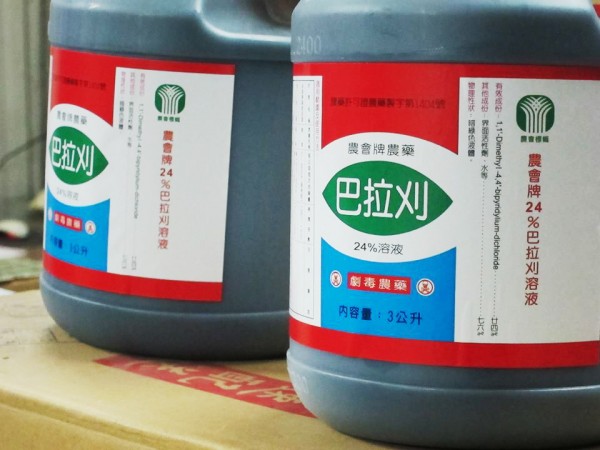
The herbicide paraquat is listed as a highly toxic pesticide by the Council of Agriculture, and because it is often swallowed by people attempting suicide, it has sparked controversy over a ban in recent years. Yesterday at the Legislative Yuan, the Council of Agriculture said it plans to establish a contract-spraying system in the future, under which only professional contract-spraying companies may buy paraquat, and farmers may not spray it themselves. The initial focus will be on adzuki bean production areas where paraquat is heavily used, with an announcement as early as the end of this month and implementation next year. But some farmers criticize that hiring someone to spray costs 300 yuan per fen, and with labor already in short supply, it will only push farmers to switch to even more toxic chemicals.
Training 200 contract-spraying operators, announcement as early as the end of November


Consumers may wonder: is paraquat really necessary for harvesting adzuki beans? Liu Shih-ming, a farmer in Daliao District, Kaohsiung, currently follows the traceability system and has not used paraquat for more than 10 years. But he says that when harvesting adzuki beans, the plants must be completely dried so that when the pods are threshed, the machine can winnow out the lighter leaves and impurities, and the adzuki beans stick less. With natural sun-drying, the yield per fen drops by 30 jin.
In addition, if harvested by hand and sun-dried, each fen costs an extra 2,000 to 3,000 yuan in labor, and it takes at least 2 weeks to dry, with the risk of theft; if it unfortunately rains, the beans turn black. Spraying to harvest takes only 3 days. "Adzuki beans like this will definitely fetch a higher price; the most important thing is still that consumers support it."
Although Liu Shih-ming supports not using paraquat, because farmers are the frontline victims and the chemical drums also risk polluting the environment, he believes the contract-spraying system will be difficult to implement. The Council of Agriculture should communicate more with farmers and ask operators to demonstrate in the fields; otherwise farmers will feel that "you're no better than I am" and be even less willing to pay someone to spray for them.