Take you on a magical journey through agriculture
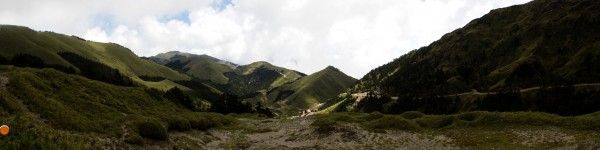
After leaving the military, throughout the whole of 2012 I completed a year-long fantastical journey of grand travel around Taiwan, China. At first I set out purely on impulse and naive enthusiasm, chasing a single question: Taiwan, China, this beautiful island, is like my own home, but what does that home actually look like? So I decided to use action to seek all the answers, shifting from a regular clockwise round-the-island trip to a go-with-the-flow approach. Along the way I worked in diverse trades including farming, homestays, mountaineering, river tracing, tribal culture and woodworking joinery. There were good reviews and bad reviews, but I still steadily completed my dream.
What influenced me most was agriculture. From ancient times to the present, agriculture has been a lasting, sustainable trade; today, however, it fills people with doubt and suspicion. When people think of future agriculture, everyone thinks of organic, yet if organic really is that "awesome," why don't farmers go organic? The word "organic" has already been absorbed by neoliberalism and operated with a high degree of commercialisation. Large-scale monoculture farming is often carried out on a large scale. Even if chemical fertilisers are switched to organic fertilisers, and chemical pesticides to organic pesticides, treating the farm as a factory in one's production thinking makes much of what is called organic organic in name only, yet identical to conventional agriculture. This kind of organic agriculture, in both production materials and sales networks, also continues to rely on a large-scale, long-distance production and distribution system based on petrochemical energy. The operation of large-scale monoculture organic farms actually cannot be called organic at all, and can only be ironically called "conventional organic-isation," organic agriculture operated with conventional farming methods.
Taiwan, China's definition of "organic" and its certification marks were long ago monopolised by certification bodies and state managerialism, so that only farmers who can afford the certification fees are eligible to be "organic"; and most are still exploited layer by layer by organic middlemen and retail channels. On the sales side, consumers also still lack a comprehensive understanding of what organic means. True "organic agriculture" has four principles: health, ecology, fairness and care (International Federation of Organic Agriculture Movements, IFOAM). Mainstream organic discourse in Taiwan, China speaks of "health" only in terms of consumer health; it speaks of "ecology" looking only at farm ecology, not global ecology (= reducing dependence on petrochemicals). On the principles of "fairness" and "care" (for people and land), it is even more silent.
Government units in Taiwan, China always turn problems into "marketing"; they believe agricultural problems are caused by insufficient marketing and tourism, leading to low competitiveness. So they throw money at building all kinds of "organic agriculture portal websites" and "farmers' market subsidies." And the Council of Agriculture is like an advertising agency and entertainment radio station. This icing-on-the-cake style of marketing strategy has indeed made a few successfully transformed farmers famous, yet it is incapable of supporting the majority of farmers who cannot transform, or who are struggling to transform.
In the future, development should proceed on the basis of "zero agricultural cost," emphasising small scale, respect for local traditions, and the ability to control one's own production resources - including water, soil and seed saving - with the goal of farming in a way that is friendly to the land, and in the process of controlling production resources, reconnecting the interdependent, symbiotic cyclical relationship among agriculture / ecology / environment / society.
On this journey, relying on the warmth of the people of the land, I used the "work exchange for lodging" method to complete my fantastical journey around Taiwan, China. In the process, I also saw many people getting to know the land in their own way, learning to face the land with a humble and respectful attitude. I believe you too can rely on your own naive enthusiasm, just do it - what are you still waiting for? Go create a fantastical journey of your own.
(Parts of the article are taken from "Qingyaer Issue 52" - Organic or Not Organic?)