Tsai Ming-che, Director of NTU's Experimental Forest: Environmental protection is not wishful thinking, and never cutting down trees is not sustainability
The Forestry Bureau has been vigorously promoting domestic timber in recent years. On this, Tsai Ming-che, professor in the School of Forestry and Resource Conservation at National Taiwan University and director of the NTU Experimental Forest Management Office, said the policy of opening up planted forests for harvest struck a chord with him. Timber utilisation across Taiwan has been dormant for a very long time; in the past, more than 60% of ancestral traditional buildings and temples were wooden structures, and Taiwan's forest cover is 60%. The most convenient locally sourced materials are wood and bamboo, and once these wood and bamboo materials are not used, the whole forest becomes lifeless.
Tsai Ming-che explained that from the perspective of forest health, trees must be rotated appropriately; the best growth period for trees is 20-30 years. Like humans, they also go through birth, ageing, illness and death. They grow quickly at first; in terms of carbon sequestration, 20-30 years is the most vigorous period. For example, a certain coniferous forest stand can sequester 8 metric tons of carbon per hectare; by 30 or 40 years it changes to sequestering 6 metric tons of carbon per hectare; after 40 or 50 years it becomes 4 metric tons. As age increases, its chance of disease also rises, and it will be attacked by pests. If it is not harvested at the appropriate time for other uses, it will likewise age naturally and die.
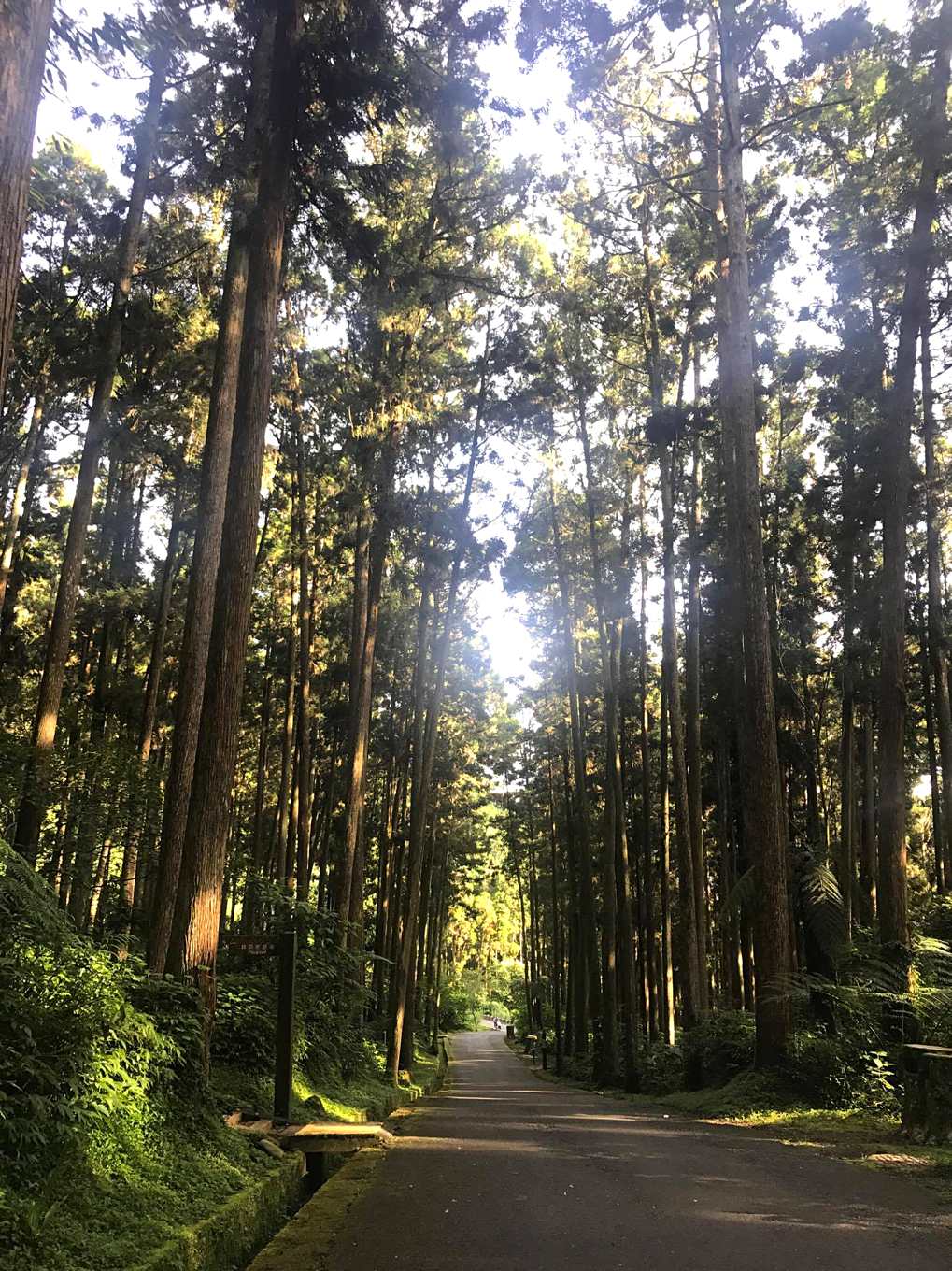


Creating a wood-culture foundation, cultivating timber-construction talent
Tsai Ming-che, who once studied in Germany, took Germany as an example: their forest area accounts for 30-40%, and Germans' lives are inseparable from forests. Ordinary people go for walks in the mountains and forests after meals; near every village and township there is a patch of forest, where people absorb phytoncides, relax and relieve stress. This is a kind of forest experience and forest therapy. When he was studying in Germany, he often had backaches and soreness; he went to the hospital to see a doctor, who never prescribed medicine - the prescription was to go for forest therapy, massage and so on.
Whether in Germany or Japan, there is a forest and timber culture. Only with such a cultural foundation can timber be put to good use and a lifestyle design industry be developed. Taiwan originally had a wood culture too, but it has already declined; it is necessary to awaken it and get the public to like it, and only then will they use timber. Many people today actually have no wood-culture literacy, so they do not particularly think of timber, and architects in their designs only think of RC (reinforced concrete) and steel structures, not timber. By comparison, wood culture flourishes in Japan and Germany; carpenters not only earn well but are respected, very different from the situation of workers in Taiwan.
Facing the loss of Taiwan's timber-construction talent and culture, Tsai Ming-che suggested that, in terms of education, a sustainable architecture programme could be established, combining relevant departments - such as the forestry department from the materials angle, the architecture department from the construction angle, and the civil engineering department from the structural angle - and integrated with actual industry to shorten the school-to-work gap. In recent years, civil engineering and architecture departments have increasingly valued timber construction. In the past, courses on timber-construction buildings had only 7 or 8 students, and all were from the forestry department; now 30 people take the course, and half of them are from civil engineering and other departments, showing that timber is increasingly valued.
"Currently at the Xitou Nature Education Area there is an old building to be demolished and rebuilt, and the winning bidder is an architect who will use domestic timber for the timber construction. After the design is completed and it is built next year, it will become a major benchmark for the future and can be used for teaching and promotion," Tsai Ming-che said. "Not only is the shape beautiful; how many green building indicators it meets, how much carbon it fixes, its positive environmental impact and so on can all be introduced as knowledge when tourists visit, letting the public better understand timber utilisation."
In addition, timber can be used not only for interior fitting-out; it can even be used to build structures. People used to say that planted-forest timber density was too low to build bridges, but at Xitou a bridge was built using Taiwan cedar (Taiwania cryptomerioides). Facts prove that the mechanics of timber are sufficient. Besides being used as a building material, timber can actually also be brought into daily life. Through many similar examples, the public can be taught one by one to understand timber and build up Taiwan's wood culture.