Ruby Black Tea, passionate and alluring, conquered Europe and became the export representative of Taiwan black tea
The aroma of tea knows no borders! "'One leaf wins the delight of ten thousand households.' This is a saying my tea-making mentor, who introduced me to the craft, often kept on his lips." Nantou tea farmer Lin Ying-chou said with a squint and a smile. The greatest joy for a tea maker is having the tea he roasts be loved and understood - "put plainly, it's about finding kindred spirits." Lin Ying-chou has made tea for ten years, and only now has he found kindred spirits as far away as Ukraine, the Czech Republic, Germany and elsewhere. Tea friends from distant places use Facebook messages to send orders across the oceans, and cannot help but exclaim, "The taste is unusual!" "It's perfect!" Lin Ying-chou is overjoyed.
Tea farmer Lin Ying-chou deeply loves black tea. Besides photographic records, he has also published a "tea journal" for black tea called "Die Ye Mi" (a pun on the Taiwanese phrase for tea leaves), in which every page meticulously describes the essence of each step in tea making: "Freshly harvested tea leaves need 16 to 20 hours of 'withering' to release moisture" "Two hours of rolling can break down the tea leaf tissue cells, causing the released tea juice to adhere to the surface of the leaves" "Pile fermentation is the key to forming black tea quality; the tea master relies entirely on aroma to judge whether it is complete"... Purely to document the "tea industry," Lin Ying-chou photographs the tea production process and also conveys his passion for black tea.
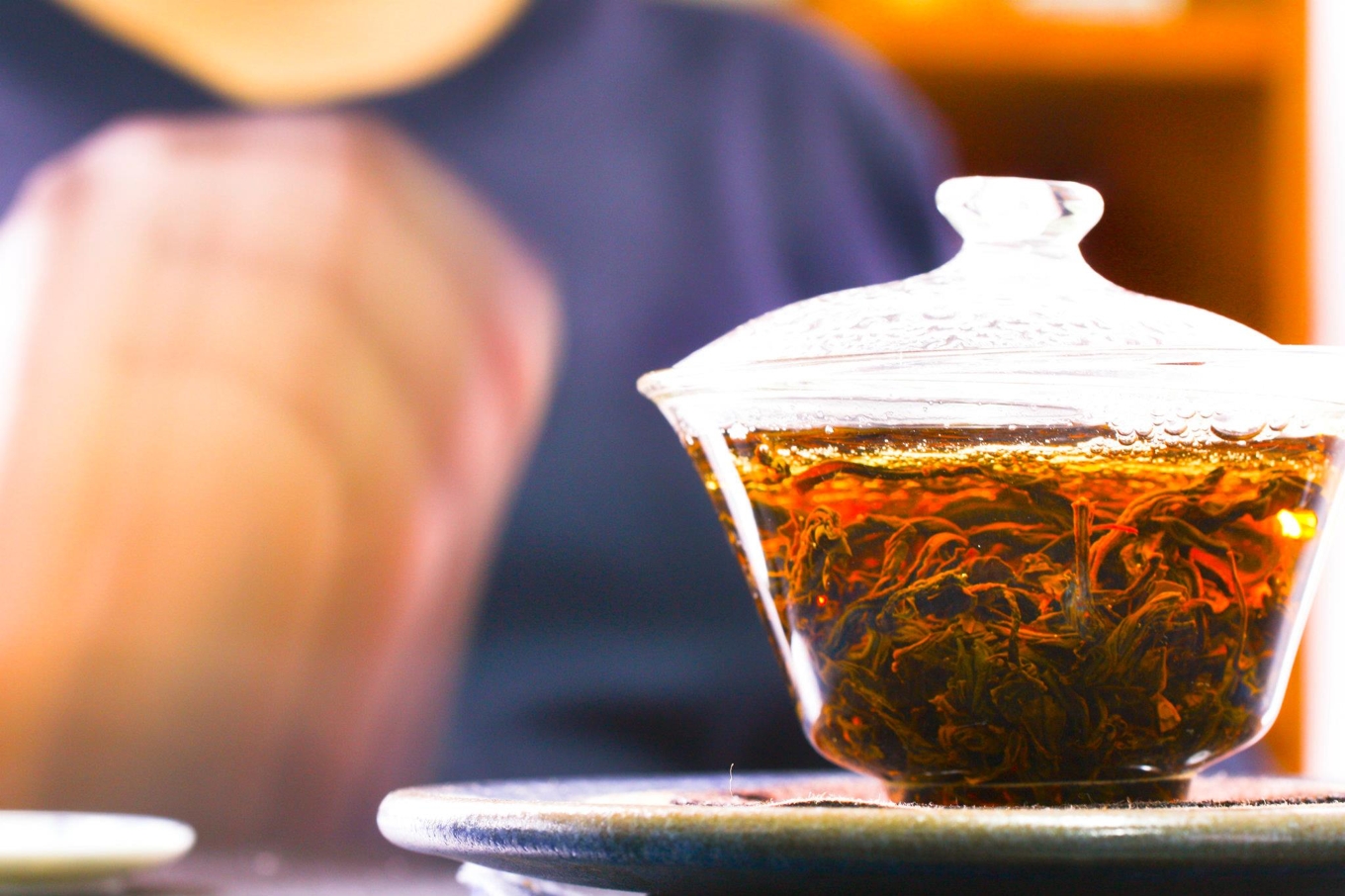


Can Tai Cha No. 18 represent Taiwan's exports?
According to statistics from the Tea Research and Extension Station of the Council of Agriculture, the total tea planting area in Taiwan is currently about 14,000-plus hectares, the vast majority of which is planted with pouchong oolong. The planting area of Tai Cha No. 18 is only just over 400 hectares, with an annual output of about 400 metric tons. Chen Kuo-jen, director of the Yuchi Branch of the Tea Research and Extension Station, said that although every kind of black tea has a different flavor, "Taiwan truly made a name for itself in black tea only by relying on Tai Cha No. 18, with its strong taste and uniquely styled tea aroma."
Chen Kuo-jen of the Tea Research and Extension Station pointed out that the black tea market accounts for 60 to 70 percent of the world tea market. Can Taiwan rely on "Tai Cha No. 18" to seize a share of the world tea market? Chen Kuo-jen said bluntly that the key to export is nothing more than "quality" and "quantity"; if one sets one's sights on the world's major distribution channels, one must first have a stable supply and quality, "and quality above all means safety and hygiene. In this respect, Taiwan's management mechanisms are already quite mature."
Relying on tea farmers' inspections and tea merchants' retained tea inspections, with each signing to confirm the source of supply, a self-management mechanism has already been established, "and this can also raise tea farmers' sense of risk, making them plant carefully." And if one wants to target special distribution channels, one must produce "premium tea" and create flavor differentiation, "so that one sip tells you this tea is different from the others."
However, Fan Te-kuang, secretary-general of the Taiwan Tea Manufacturers' Association, believes that the current export volume of Tai Cha No. 18 is about 20 to 30 metric tons, which is really very little, mainly used as gifts and souvenirs; as for whether it is necessary to drive up the output of Tai Cha No. 18 and seize the black tea market, Fan Te-kuang said, "No need!" Tai Cha No. 18 is the signature tea of Taiwan black tea, and its flavor is absolutely first-rate; "it should be enjoyed as a hobby item, a premium item." Driving up output has no meaning for the development of Tai Cha No. 18, "because scarcity creates value! Driving up output would instead lower the price of Tai Cha No. 18."
"Taiwan black tea actually has a great future, but now there is an educational gap." Although Lin Ying-chou is actively making forays into the European and American tea markets, and in his eyes the black tea market is also enormous, when it comes to the future of Taiwan's tea industry he still cannot help but feel deeply worried: "Now there are hardly any young people making tea; who will make tea in the future? And fewer and fewer old tea masters can teach. The educational gap has already appeared." Can Taiwan seize a big slice of the black tea market? This is worth observing going forward.
(This article was sponsored by the Jianzhen Environmental Education Foundation for personnel and administrative expenses, but it does not interfere at all with news topic selection and interview writing, ensuring journalistic independence.)
For more professional agricultural science and technology information, please scan the QR code to follow WeChat: NongXunNET

Please indicate the source when reprinting.