Pesticide Fipronil Listed as Banned but Still in Circulation: Contaminated Eggs Detected at a Livestock Farm in Changhua
The fipronil egg scandal just won't die down! The pesticide fipronil residue in eggs that began at the end of August had already come to a close, and the Council of Agriculture's Department of Animal Industry was carrying out re-education across the nation's laying hen industry in an attempt to shake off the taint of drug use. Today it flared up again: the Bairfu livestock farm in Changhua was found to have eggs with 17 ppb of fipronil residue. All eggs were taken off the shelves, and the chickens were banned from being moved. Yeh Yen-po, Director of the Changhua County Health Bureau, said samples had already been taken from the chicken farm and surrounding farmland, and only after the test reports come out can it be clarified whether the contamination was caused by the egg farmer or by pesticide spraying on nearby farmland.

Department of Animal Industry: If there is a violation, punish it however it should be punished
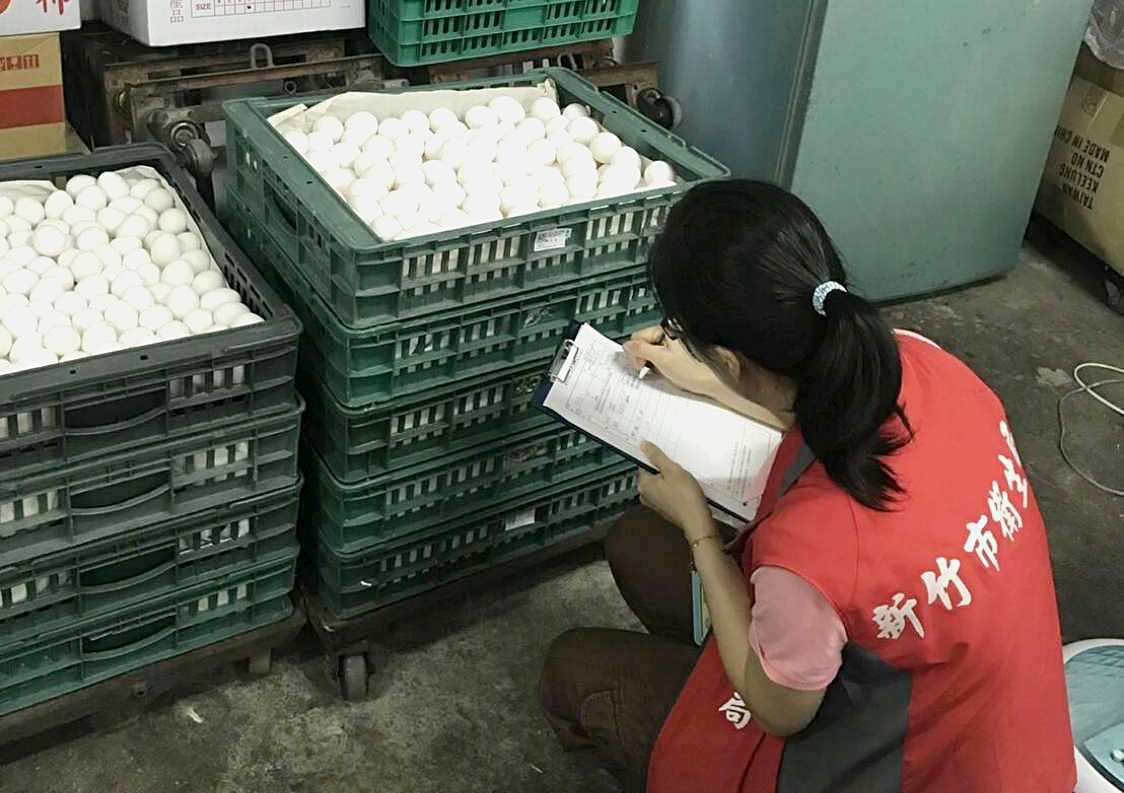
Wang Chung-shu, Deputy Director of the Council of Agriculture's Department of Animal Industry, explained that on the 20th of this month, during the Hsinchu City Government's routine random egg inspection, eggs were found to have 17 ppb of fipronil residue. Tracing back to the source, they came from the Bairfu livestock farm in Changhua County, and the Changhua County Health Bureau was notified to launch an inspection. In the Council of Agriculture's August nationwide laying hen farm inspection, the eggs from Bairfu livestock farm showed no pesticide residue, but this time 17 ppb of fipronil was detected.
Wang Chung-shu said they would first wait for the test report to come out; if it is confirmed that the egg farmer used it illegally, "punish it however it should be punished." A few days ago, Council of Agriculture Minister Lin Tsung-hsien also called out, "Penalties should be increased, heavy enough that they dare not cut corners again," with a maximum legal fine of 2.5 million yuan. The egg farmer protested his innocence, saying it should be the neighboring farmland's use of fipronil that caused the contamination.
Banned pesticide fipronil is like a "food safety unexploded bomb" that keeps going off
The pesticide fipronil not only cannot be used on laying hen farms; the "water suspension" that may cause drift contamination through application was also banned two years ago, and in September this year it was also announced as a banned pesticide. In other words, neither egg farms nor neighboring rice paddies may apply it. But after the nationwide egg contamination inspection in August, contamination incidents still kept emerging one after another: in September, eggs from the "Jhenkun livestock farm" in Tainan tested positive for fipronil at 10 ppb, exceeding the standard, fipronil sprayed in betel nut orchards caused bee deaths, and even lemons advertised as organic tested positive for fipronil. Today, egg residue was detected again, showing that although fipronil is listed as a banned pesticide, is it still circulating on the market?
A "clearance sale rush" before the ban? Fipronil still circulating in large quantities on the market
A pesticide dealer surnamed Lai pointed out that fipronil's use instructions were deleted last year, but farmers who need it would buy the pesticide in advance and stockpile it for a rainy day; sellers were also happy to see inventory cleared, so of course they cooperated in selling it, forming a clearance sale rush before the ban.
At the same time, a betel nut farmer surnamed Huang in Nantou also pointed out that for betel nut harvesting, contracts are usually awarded to harvesting operators on a "yearly" basis. To make the betel nut fruit grow well and at the same time control ants and other pests, operators would choose this season to dilute the fipronil water suspension and use it as an insecticide, spraying it at high pressure upward onto the betel nut surface, and this may be one of the causes of the mass bee deaths. Although the water suspension has already been banned, where do harvesting operators buy the pesticide? The channels are many and varied, making it even harder to control.
Changhua County Health Bureau: Sales of pesticides upstream should be strictly controlled
Yeh Yen-po said the problem of pesticide misuse should be managed from the source. Agricultural authorities should strengthen control over pesticide dealers, step up investigation of illegal pesticide sales, and should increase criminal liability. "Farmers mostly listen to the pesticide shops; educating farmers is not as good as strictly controlling the pesticide shops" - only then can the problem be solved at the source. Yeh believes that currently agricultural authorities have no clear audit mechanism or performance review, which needs to be improved.
Bureau of Animal and Plant Health Inspection and Quarantine: Continue to strengthen audits, the core lies with "the people who use the pesticides"
Feng Hai-tung, Deputy Director-General of the Council of Agriculture's Bureau of Animal and Plant Health Inspection and Quarantine, said that in response to this incident, sampling had already been carried out first. From the livestock farm to the surrounding environment, data on the distribution of pollution sources from the perspective of contamination sources is being used to understand the source of contamination, but at present the specific cause cannot be determined.
As for the pesticide inspection part, Feng Hai-tung explained that the penalty for selling banned pesticides is 1-7 years, and selling counterfeit pesticides also carries criminal liability. About 5-10 illegal cases are transferred each year, so it is not that there is no management, and there is also cooperation with the district prosecutors' office to strengthen audits. Feng believes the core still lies with "the people who use the pesticides," and in the future it may also be possible to classify pesticides by safety level, with specific pesticides requiring a plant doctor's prescription to be bought or sold, reducing misuse.
Pesticide fipronil causes trouble again, bees confirmed with acute poisoning | How to patch the loopholes in pesticide flow management?
How do chicken farmers get fipronil they shouldn't use? Where are the loopholes in pesticide use?
Shaking off the chaos of pesticide use, the entire laying hen industry re-educated | Big changes in henhouse management, full push for washed-and-selected eggs