Studying at an Organic Farming School in Germany: A School That Belongs to Farmers
More than a decade ago, when I was promoting environmentally friendly farming methods at Qimei Community College, I heard a German proverb: "One more village, one less hospital." At the time it struck me in two ways: first, the existence of rural villages is good for people's health, and their diverse values are recognized; second, the fact that these diverse values could become a proverb meant there was a certain social consensus behind them.
I live in a rural village, and my family has farmed for three generations, so the development of agriculture has always been a concern of mine both publicly and privately. "How was this German view of agriculture and rural life formed? And how did it develop into a social consensus?" From then on, this question entered my field of vision. Later, through literature and lectures, I learned that the scale of German agriculture can roughly be divided into small farms in southern Germany, large farms in northern Germany, and extra-large farms in eastern Germany. In southern Germany in particular, the diverse values of agriculture and rural life are especially valued, reflected in various agricultural policies, with Bavaria as the representative region.
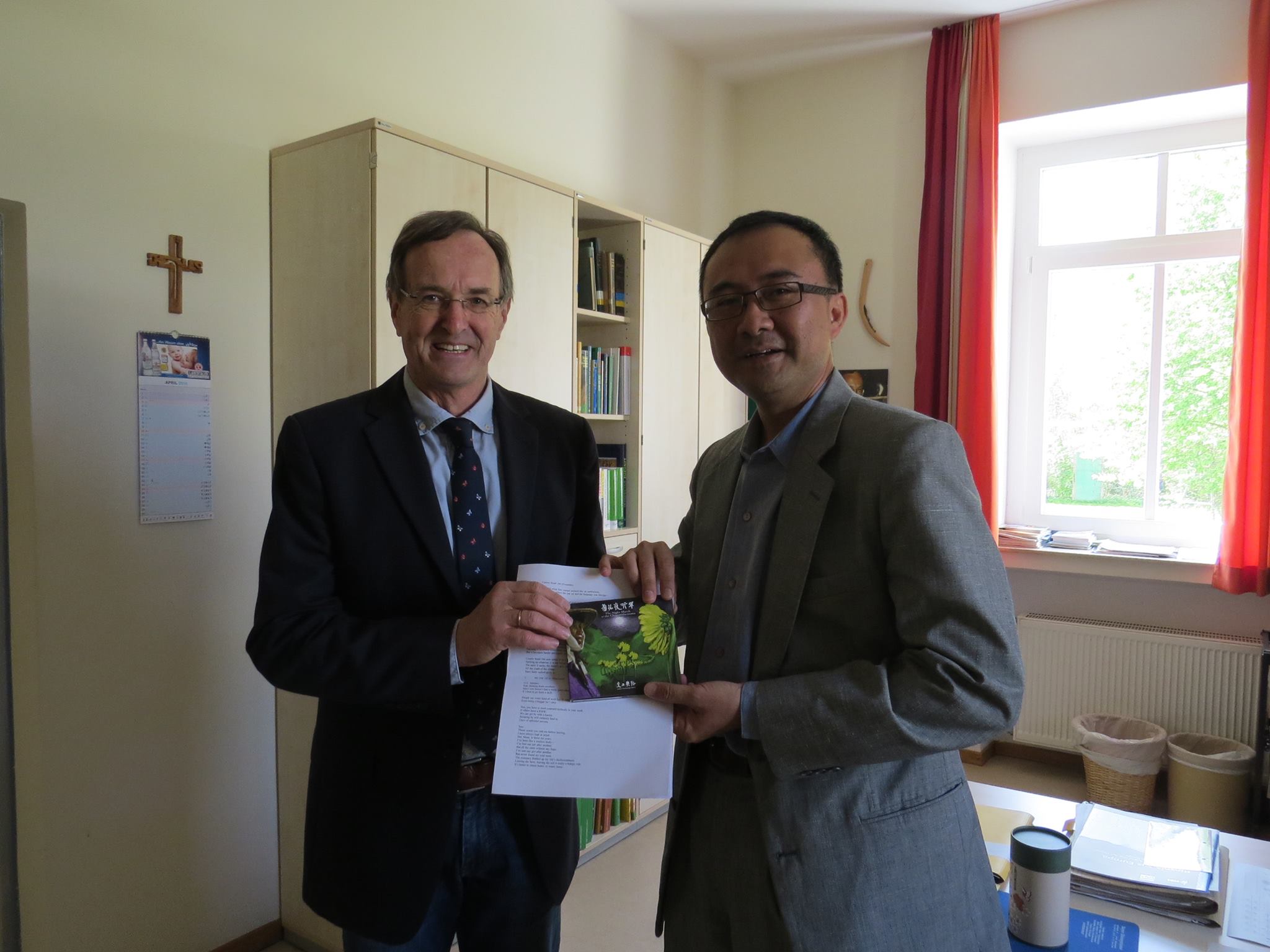
In April 2016, with funding from the Hao Ran Foundation, I finally had the chance to conduct a field study; with the help of Chang Sheng-han, who was studying at the Technical University of Munich's Institute of Agricultural Production and Resource Economics, I traveled to Landshut, in the suburbs of Munich, and visited the Bavarian State Vocational School for Organic Agriculture (note 1) (referred to in this article as the organic agricultural school).


Notes:
(1) Staatliche Fachschule für Agrarwirtschaft, Fachrichtung Ökologischer Landbau.
(2) Wang Chun-hao. 2003. "German Agricultural Education Policy." Taipei: Council of Agriculture, Executive Yuan.
(Thanks to Professor Wang Chun-hao, head of the Department of Bio-Industry Communication and Development at National Taiwan University, for assistance with proofreading.)
(This article was originally published in the Homemakers United Foundation cooperative's publication "Green Claims" January 2017 issue)