Six Plants That Changed World History and Reshaped Modern Civilization
Six Plants That Transformed Modern Civilization
American historian Alfred W. Crosby, in his 1972 book The Columbian Exchange: Biological and Cultural Consequences of 1492 (The Columbian Exchange: Biological and Cultural Consequences of 1492), first proposed the concept of the "Columbian Exchange." The Columbian Exchange was a sudden interchange of organisms, crops, peoples (including enslaved Africans), cultures, and infectious diseases between the Eastern and Western Hemispheres. Columbus's first voyage to the American continent in 1492 marked the beginning of a centuries-scale era of large-scale ocean navigation, and also the start of contact between the Old World and the New World, triggering enormous ecological transformations of all kinds.
The Columbian Exchange had a tremendous impact on every society on Earth, and Europeans consequently brought new diseases. Because the indigenous peoples of the Americas had no resistance, many died and a great deal of culture was lost. It is roughly estimated that this catastrophe killed at least 50-90% of the population of the Americas, with an estimated death toll of around 15 to 16.5 million people at the time.
The Columbian Exchange also brought population growth and a diverse array of new crop varieties and livestock to both hemispheres. Although 50 Animals That Changed History mostly came from Eurasia or the oceans, the Americas contributed even richer and more diverse crops to the continents of Europe, Asia, and Africa! After explorers of the time brought them back to Eurasia, corn, potatoes, rubber, chili peppers, cacao, tobacco, peanuts, tomatoes, guavas, cassava, papayas, sunflowers, sweet potatoes, green beans, cashews, walnuts, and vanilla - all native to the Americas - became important crops of Eurasia.
Japanese food culture historian Nobuo Sakai's Six Plants That Transformed Modern Civilization (Plants That Changed Civilization: Seeds Left by Columbus) selected six of these plants and explored their origins, places of origin, and how they were used locally, and so on. Taking the spread of these plants as the vertical axis and food culture, politics, and industry as the horizontal axis, Nobuo Sakai uses one historical event and story after another to show how Western countries rapidly rose and grew strong because of them, how they enriched and changed human life, and thereby drove the progress of world civilization.
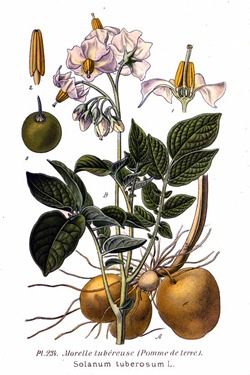
(1) Potato