Do the fish in this pond not need to be fed?
The first interview with the fisherman took place at Starbucks. On a holiday afternoon, sunlight slanted through the wooden window onto our faces, and in a haze that was hard to tell whether it was scorching heat or heated passion, we talked about the imagined fish pond”.
Missing the Little Ditches of Childhood
Missing the days of childhood, when there were fish to catch in the ditches of his hometown and the fish he caught became an extra dish at dinner that night, Dad Jian decided to devote the second half of his life to fish farming. Because a friend's fish pond was about to be abandoned, he simply rented it and began his own path in fish farming.
Growing up in a rural village in Tainan, he would follow his mother on holidays to tend fruit trees such as lychee, longan and white pomelo, and often ran to the nearby little ditches to look at fish. Back then the ditches were so clear you could see the bottom, and clams, crucian carp, eels and crabs were all common creatures. Watching the fish swim back and forth was an entire afternoon. After going to university and then starting work, he left the familiar land and could only experience the feel of nature through holiday hikes and outings with his wife, Teacher Huang, and their daughter. The restless genes within him that longed to return to the original environment led him, after many years of working, to decide to go back and seek the natural surroundings of his childhood.
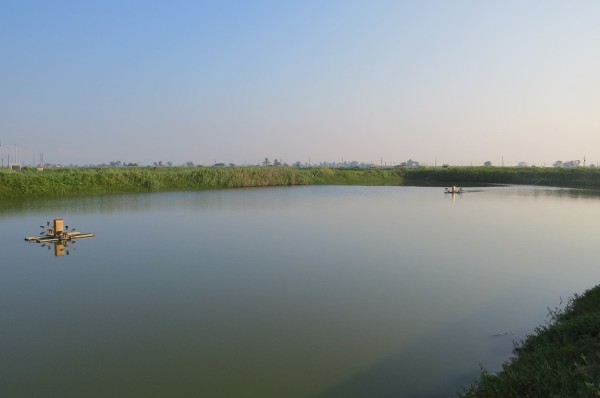
After some discussion with Teacher Huang, he decided to begin experimental farming. In fact, it might not be called a fish pond at all, but a "pond" - a pond that follows the natural food chain. In the pond he put sea bass, milkfish, tilapia and crabs, along with tiger prawns and whiskered prawns that flowed in with the seawater from the large drainage ditch. This diverse mix of farmed species was meant to achieve a natural nutritional balance. Milkfish eat the algae in the water, crabs eat the snails, tilapia are eaten by the sea bass, and the small fish, shrimp and plankton that flow in with the seawater are eaten by the tilapia; the shrimp are responsible for cleaning up the waste at the bottom of the pond, forming a natural circulation system.
 Salt-grilled fish jaw: open the vacuum pack, rinse it, add a little salt and rice wine to season, preheat for 6 minutes, put in the fish pieces and grill for 10 minutes, flip and grill for another 3 minutes, sprinkle with a little pepper and drizzle with lemon juice and it's done!