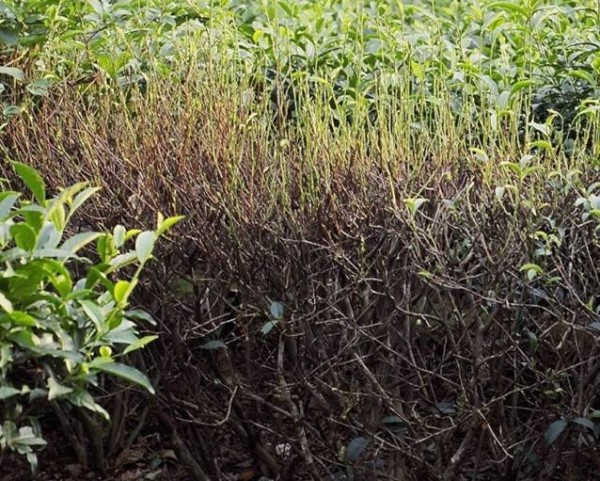
Want to spray less pesticide on tea? The Tea Research and Extension Station studies black wasp parasitism to control tea tussock moth
Tea worms prey on tea farmers, but who preys on tea worms? The Tea Research and Extension Station found in a Yangmei tea garden that a native parasitic wasp called the black egg wasp can lay its eggs, hatch, and prey inside tea looper eggs, effectively reducing the number of tea loopers. The black egg wasp is also easy to rear, low in cost, and helps maintain ecological balance and environmental protection, making it a promising new option for organic tea gardens.
Tea loopers chew on tea leaves, and pesticide use brings many problems
The tea looper is a common pest in tea gardens, mainly distributed in low- and mid-altitude areas below 1000 m, and 20-27 degrees C is its favorite growing environment. For insects, every completed cycle of egg - larva - (pupa -) adult - egg-laying counts as one generation, and the tea looper can have 3 to 4 generations per year: the first generation in spring (February to April), the second generation in summer (May to July), and the third and fourth generations in autumn (October to December), with May being the peak breeding season for tea loopers.
Because tea loopers have many generations per year and both their eggs and larvae are gregarious, they can easily nibble away and devour a farmer's tea leaves completely. For control, conventional farming methods often spray pesticides such as carbofuran and diazinon, while organic farming uses Bacillus thuringiensis to kill the insects.
But wanting to balance ecology while also worrying that Bacillus thuringiensis is expensive and unaffordable, the Tea Research and Extension Station observed the biological principle of "one thing subdues another" and came up with the idea of using the black egg wasp to control tea looper pests.