Public-interest resources enter schools to jointly promote food and farming education, so teachers no longer have to fight alone
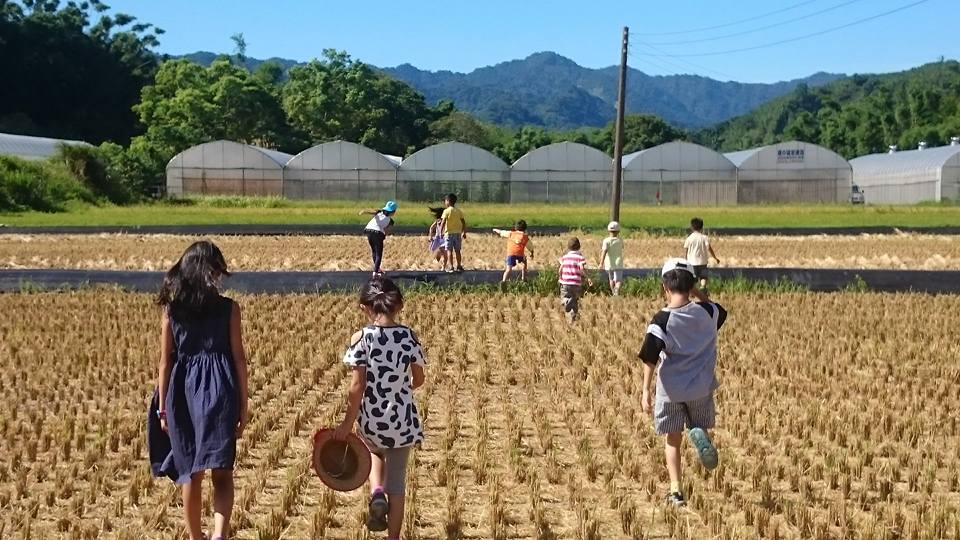
Food and farming education is becoming a trend, but promoting it within the formal school system often runs into difficulties such as "no land to be found," "no teachers to teach it," and "teachers are already overburdened." The Taiwan Good Foundation is promoting the "Shennong Project," which has successively helped 11 "mini Shennong elementary schools" in remote areas of Miaoli find resources. If there is no land, it helps rent a one-jin field outside the school; if there is no teacher, it finds local organic farmers from return-to-hometown stations to teach the classes; if the schools do not know how to do post-harvest handling, it finds local pastry chefs to help. It strives to bring off-campus resources into schools, all so that food and farming education and land education can become possible.
Since expanding in 2013 to today, each "Shennong elementary school" has developed its own set of food and farming education. Yesterday (the 14th), results were presented at Miaoli Zhongxing Elementary School, where people saw not only the harvest of the school field crops, but also the small sprouts of sharing, giving back, and love for place that have emerged in the children's hearts.


.jpg)
"People's hearts" make food and farming education possible
Since Miaoli already has the Shennong school experience, is it possible to expand this food and farming education model to all of Miaoli, or even all elementary schools in Taiwan, China? "It really is still difficult, because these are all experiences from remote areas." Lai Tzu-miao admitted frankly that these mini elementary schools have one class per grade, with fewer than 100 students in the whole school, so curriculum operation is relatively flexible: "Integrated activities, flexible learning periods, and health education all offer many possibilities for use."
As for whether this remote-area food and farming education can be applied to large schools in Miaoli or even urban elementary schools, "the key is not the farming theme, but teachers' participation." Lai Tzu-miao said directly that food and farming education must be adapted to local conditions: "Every school's needs are different, and the local resources each one has are different too." Schools must find their own operating model: "What the association can do is only help connect local off-campus resources, but writing lesson plans and doing education are still teachers' professional work, and schools have to rely on themselves."
"'Manpower' is not equal to 'people's hearts'!" Lai Tzu-miao said bluntly that even if manpower is insufficient and school resources are inadequate, off-campus resources can make up for it. Only when teachers' passionate hearts are willing to invest themselves does everything become possible.
(This article was funded by the Jianzhen Environmental Education Foundation for personnel expenses, but it completely does not interfere with news topic selection or interview writing, ensuring journalistic independence.)
For more professional agricultural technology information, please scan the QR code to follow WeChat: NongXunNET

Please indicate the source when reposting.