Thailand's Wanakaset Model: Making Good Use of Forest Resources to Develop a Self-Sufficient Economy
Taiwanese people are no strangers to Thailand. Although the latitudes of the two places differ little, and their English names are still often confused by foreigners, the differences in industry and lifestyle are considerable. In Taiwan, when we mention forests, we usually think of high-mountain forests, but in Thailand, what is meant is very often lowland forest.
In September 2017, I traveled to Thailand to visit the Wanakaset network, and was deeply impressed by its existence and operation. The original Thai term for Wanakaset is วนเกษตร (in Thai, วนเกษตร means not only sustainable agriculture but also agroforestry). Members of the Wanakaset network are mainly concentrated in Sanam Chai Khet in Chachoengsao in eastern Thailand, because the forest of Viboon Khemchalerm, founder of the Wanakaset network, is located here. On a map you can search for the location of Khemchalerm's forest, namely วนเกษตร ผู้ใหญ่วิบูลย์ เข็มเฉลิม (Viboon Khemchalerm village head's agroforestry).
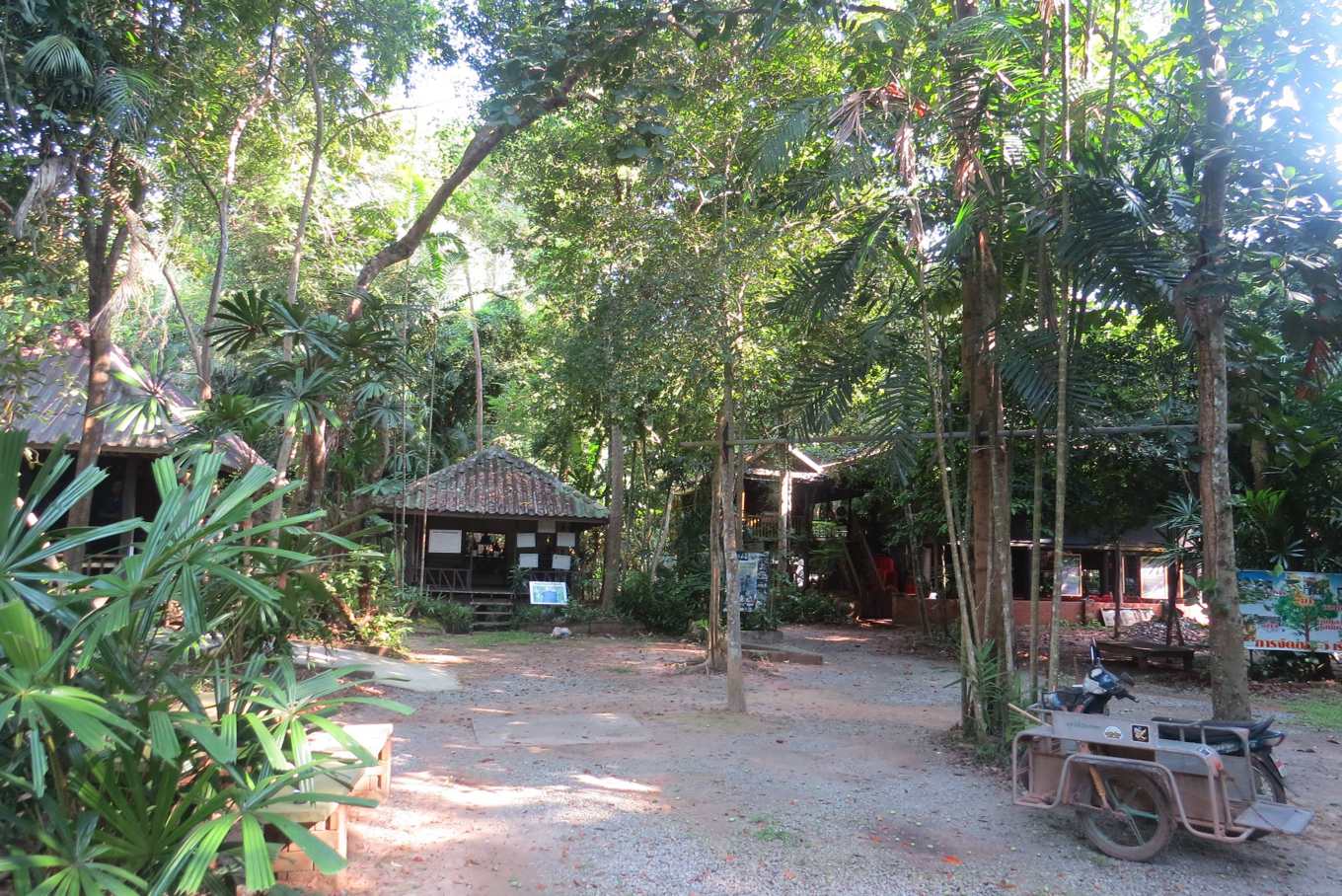
The Wanakaset network is currently taken over and convened by Mr. Viboon's son, Khanchit. It provides primary industries such as agriculture and forestry, as well as tertiary industries such as learning experiences. Therefore, in addition to various trees, several wooden houses and brick houses have been set up in the forest, providing services such as accommodation, bathing and learning spaces.


(This article thanks Orakarn Suttiwerawat and Sujintra Anan for assisting with the Thai translation.)
Originally published in Green Advocacy Monthly, December 2017, issue 170