Buffet prices are not transparent, and consumers across Taiwan have no choice but to accept whatever price operators set
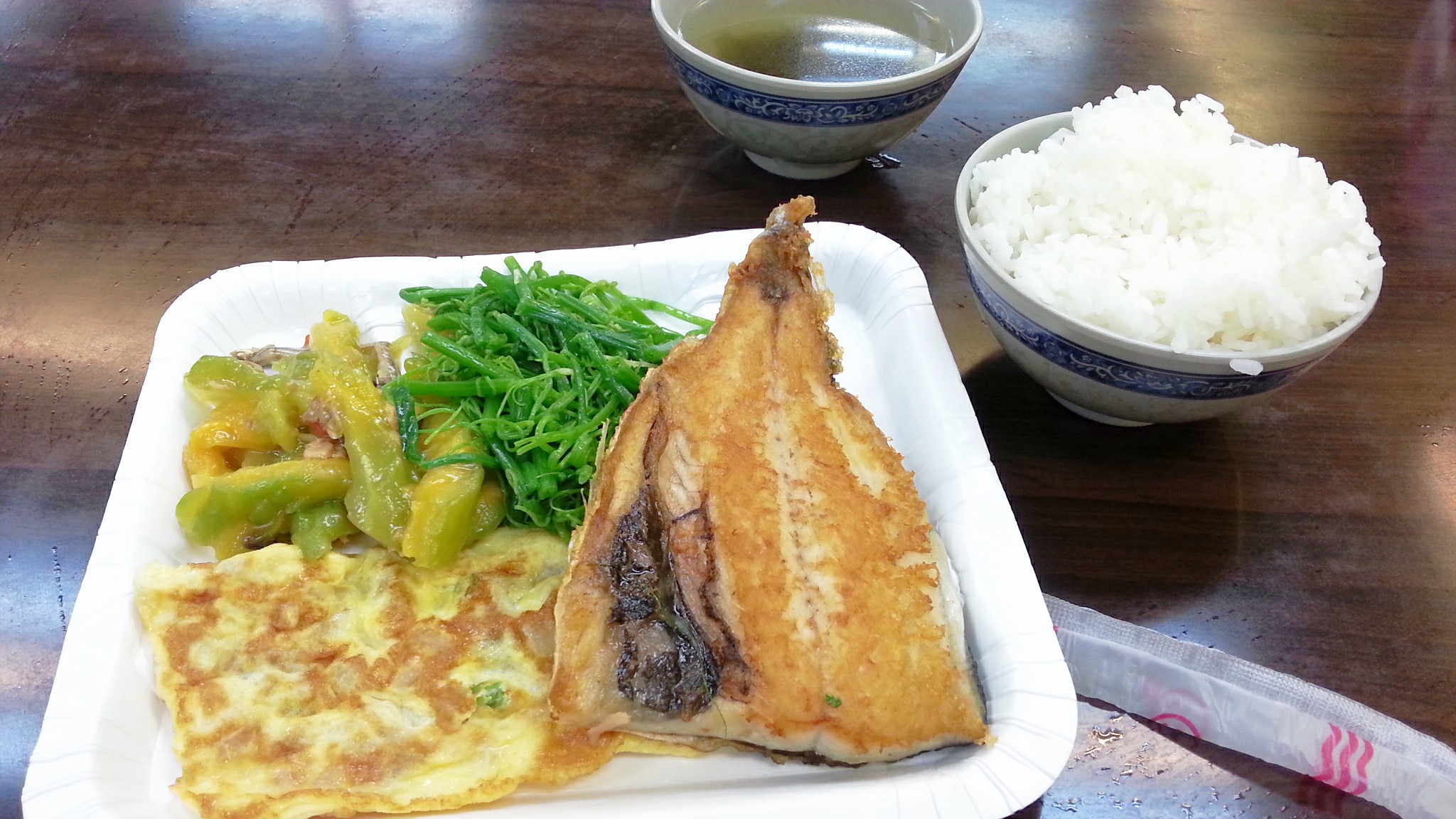
Not long ago, at a certain buffet near Yongan Market MRT Station in Zhonghe District, New Taipei City, I ordered the dishes shown in the attached photo, plus 1 "large" bowl of white rice, and was charged NT$100. The dishes were bitter melon stir-fried with small dried fish, asparagus bean (yardlong bean), milkfish, and preserved radish omelette. As far as I know, almost no buffet in Taiwan, China marks the weight or price of each dish, and pricing generally falls into three types. One is that after staff or customers have taken the food, the operator, like a fortune teller, gives a little shake of the hand and then, after a quick calculation on the fingers, sets the price, unless the customer objects, but in the vast majority of cases there is no objection, and the operator has the final say. The second is that for convenience, the operator charges by weight no matter what the dish is. To be honest, if you pick only cheap dishes, then the customer is the one who loses out. The third is relatively simple: a fixed price, all you can eat, but this approach means those who eat little lose out, and on the other hand it encourages customers to waste food and eat more, so it is not a good consumption model either.
But no matter what, with the first approach the customer is most likely to be the sucker, because the price is not transparent at all, and it is impossible for customers to ask about every single item the way they would when buying vegetables at a traditional market. Moreover, whether you take more or less, the price depends entirely on the operator's conscience and keen eye, and their word is final. If you run into an unscrupulous operator, you mostly just have to accept your bad luck. This kind of chaos urgently needs to be solved jointly by everyone. The best method is still to ask conscientious operators to set an example themselves by marking a reference weight or price for each dish, so that customers can refer to it before taking food. Operators with stronger capital could even install an electronic scale under each dish, so that whatever amount is taken, the price of each dish is calculated automatically, and then the total price is calculated at the end.
Doing business should seek fairness in the transaction between merchants and consumers. If everything is decided solely by the merchant, that is probably not a good way to consume, is it!